The Oliynyk Lab

Publications

Highlighted

Our research is special in the sense that we do exploratory synthesis, trying to learn about structure-property relationships of various compositions and crystal systems. Many of these properties are valuable, such as superconductivity, negative thermal expansion, thermoelectric conductivity, neutron absorption, etc. and therefore can afford various benefits to society.

Much of our work should be accessible on an open-access basis. However, if you cannot locate a specific manuscript online, please feel free to contact us!
cifkit: A Python package for coordination geometry and atomic site analysis
Sangjoon Lee, Anton O. Oliynyk
Journal of Open Source Software  ·  15 Nov 2024  ·  doi:10.21105/joss.07205

cifkit is a Python library to process crystallographic data and calculate structural features, essential for effective machine learning models

All
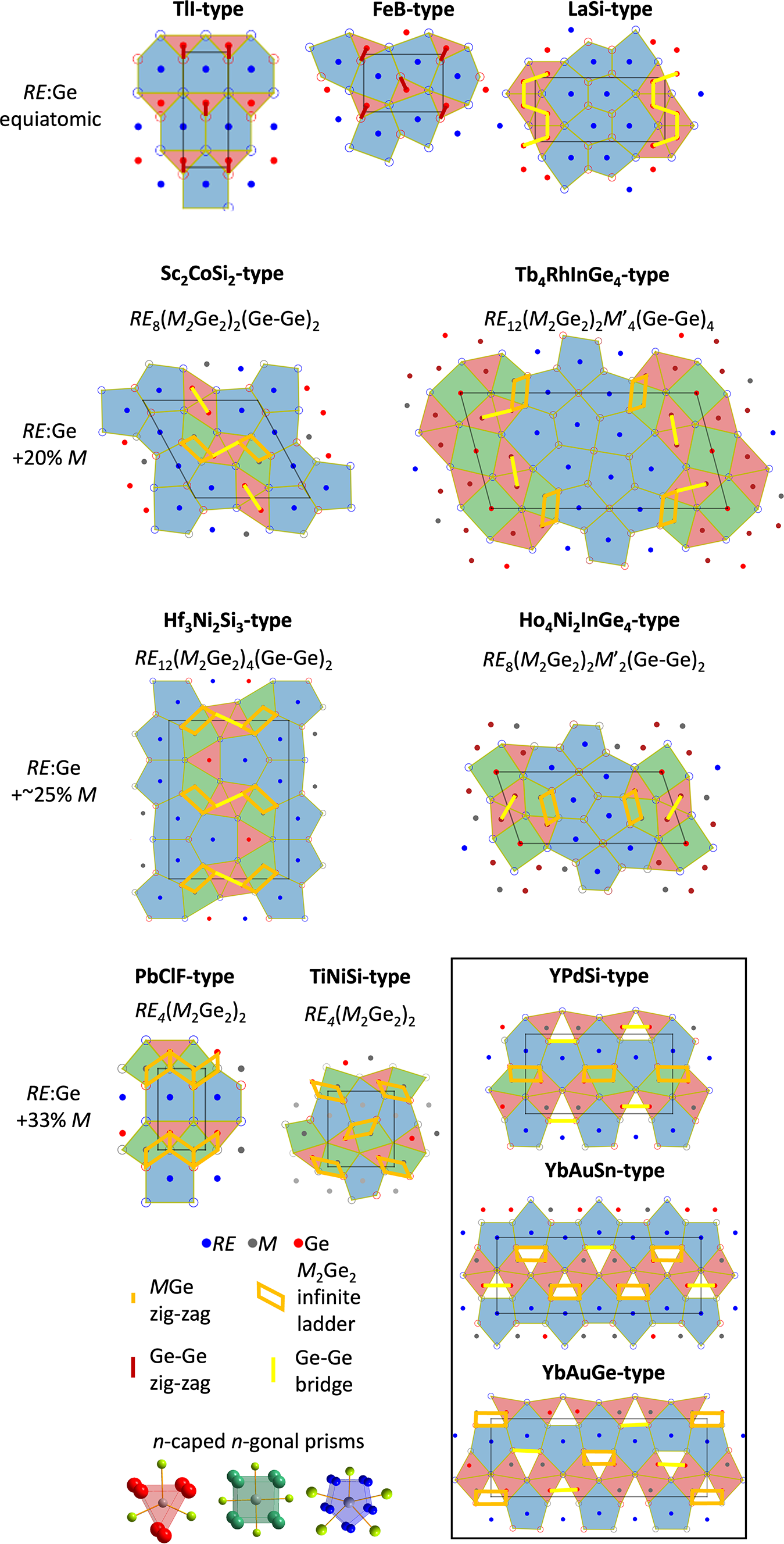
84. Disentangling Structural Patterns in Quaternary Germanides with Materials Informatics and Exploratory Synthesis: RE4IrInGe4 (RE = Y, Ce–Nd, Sm, Gd, Ho–Er) Series
Anna Ponomarev, Balaranjan Selvaratnam, Emil I. Jaffal, Danila Shiryaev, Anton O. Oliynyk
Inorganic Chemistry  ·  13 Apr 2026  ·  doi:10.1021/acs.inorgchem.5c05813
Figure 1 for Disentangling Structural Patterns in Quaternary Germanides with Materials Informatics and Exploratory Synthesis: RE4IrInGe4 RE Y, Ce Nd, Sm, Gd, Ho Er Series Figure 2 for Disentangling Structural Patterns in Quaternary Germanides with Materials Informatics and Exploratory Synthesis: RE4IrInGe4 RE Y, Ce Nd, Sm, Gd, Ho Er Series

Simple classification models helps to identify the parameters, which influence the formation of complex intermetallics; This helps to construct structure diagrams and propose the mechanism for the phase formation
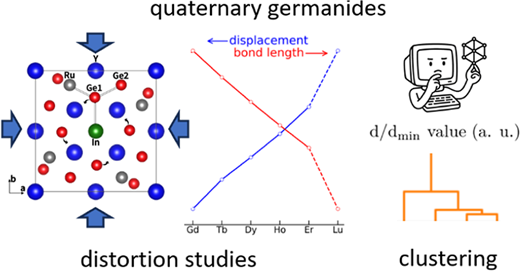
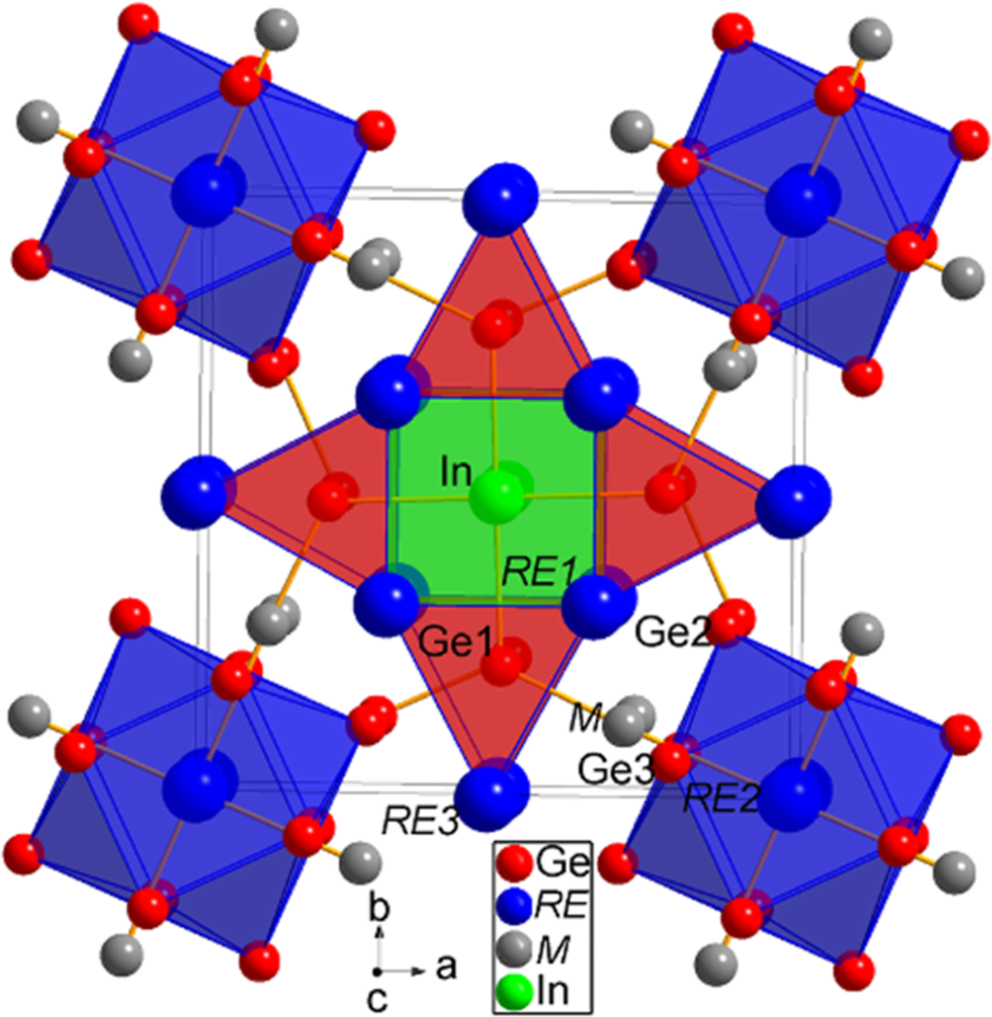
83. RE7M4InGe12 (RE = Y, Gd-Er; M = Rh, Os) Quaternary Germanide Series Expansion with Structural Motif Clustering
Natalia Pozdnyakova, Emil I. Jaffal, Danila Shiryaev, Brook Xhabrahimi, Balaranjan Selvaratnam, Anton O. Oliynyk
INORGANIC CHEMISTRY  ·  2026  ·  doi:10.1021/ACS.INORGCHEM.5C04639

Novel quaternary intermetallics were prepared. To explain their structure DFT calculations were employed as well as the neighbour environment clustering, which helps to construct structure diagrams
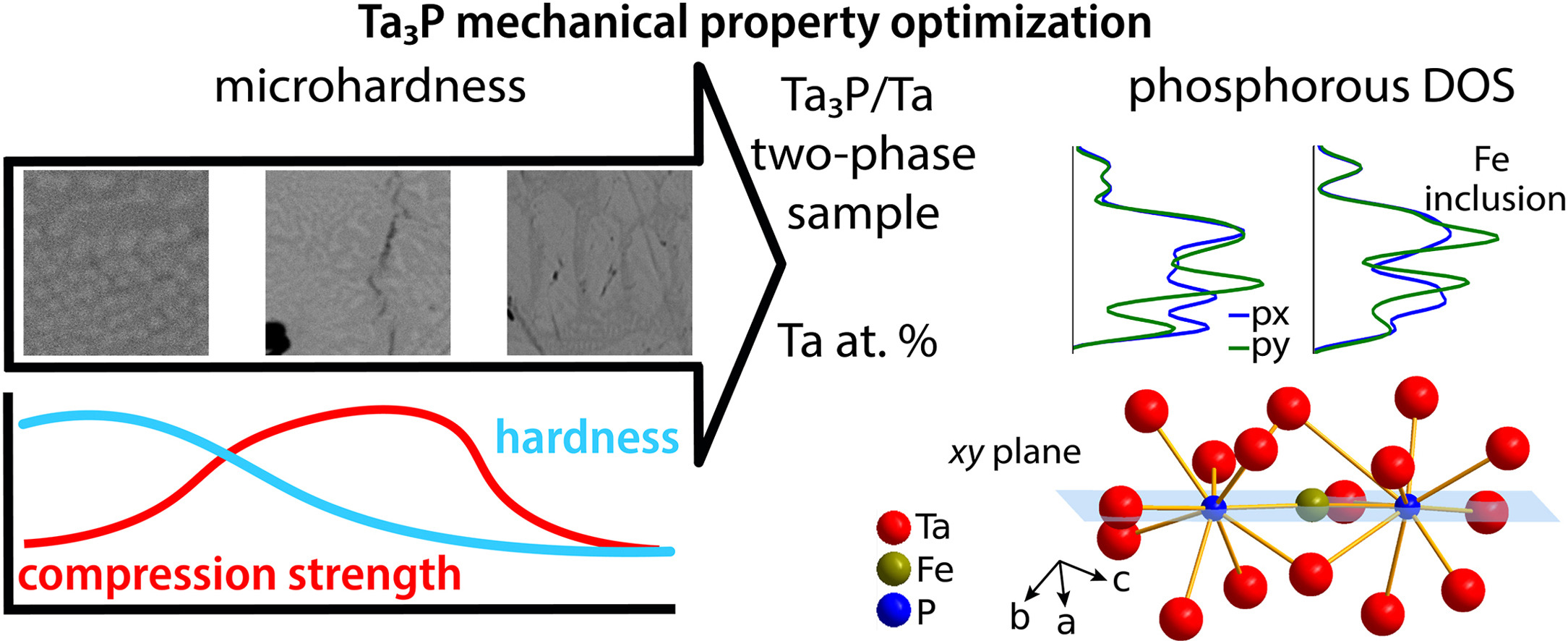
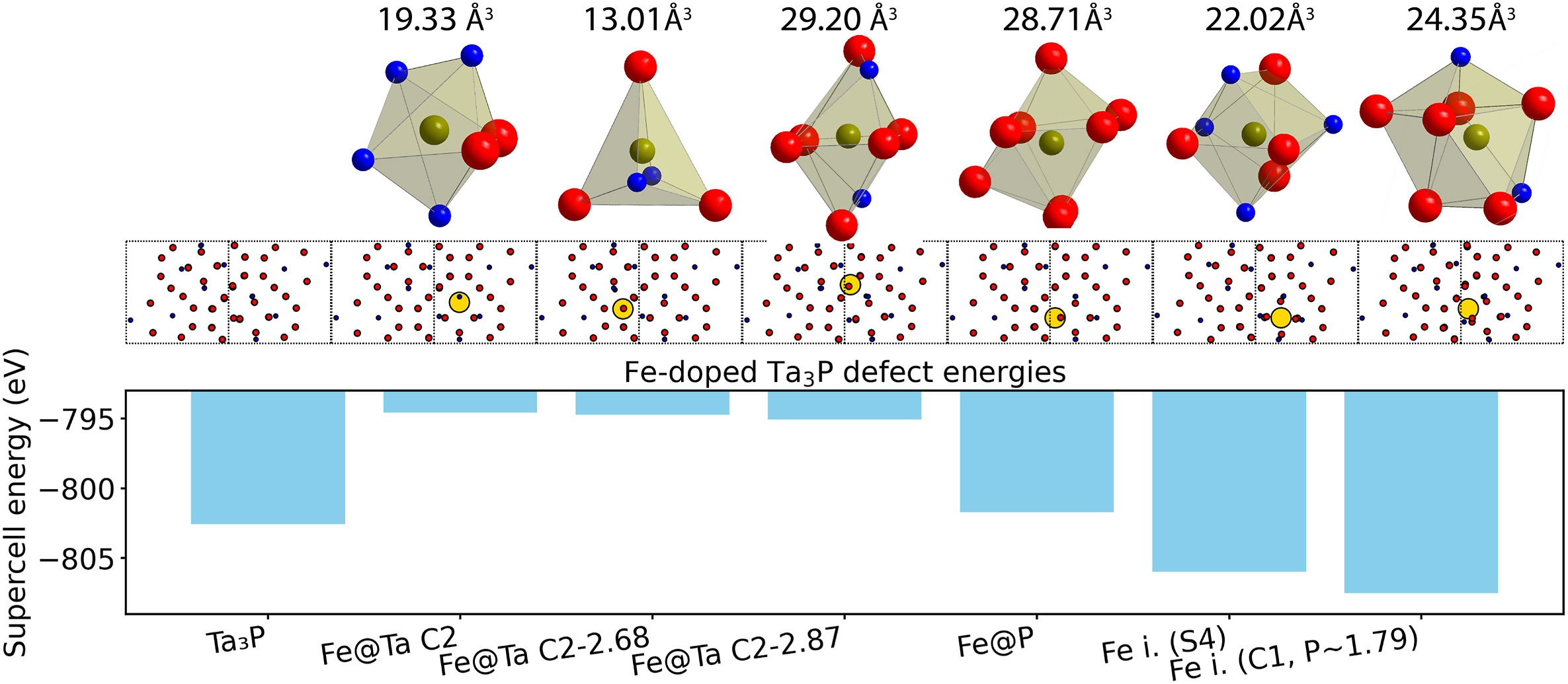
82. Investigating mechanical properties through defect chemistry in hard binary phosphide material Ta3P
Emil I. Jaffal, Danila Shiryaev, Balaranjan Selvaratnam, Anton O. Oliynyk
SOLID STATE COMMUNICATIONS  ·  2026  ·  doi:10.1016/J.SSC.2025.116250
Figure 1 for Investigating mechanical properties through defect chemistry in hard binary phosphide material Ta3P Figure 2 for Investigating mechanical properties through defect chemistry in hard binary phosphide material Ta3P

Mechanical property optimization was done with modification of microstructure through two-phase sample preparation. Solid solution occurring through accommodation of additional Fe was evaluated with the most appropriate site estimation and explained through electronic structure
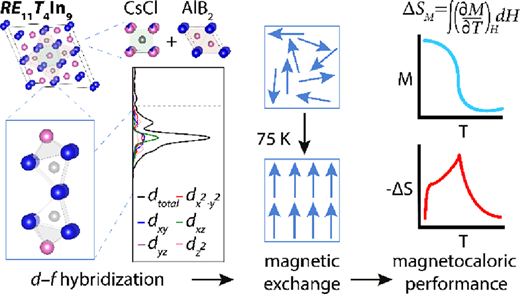
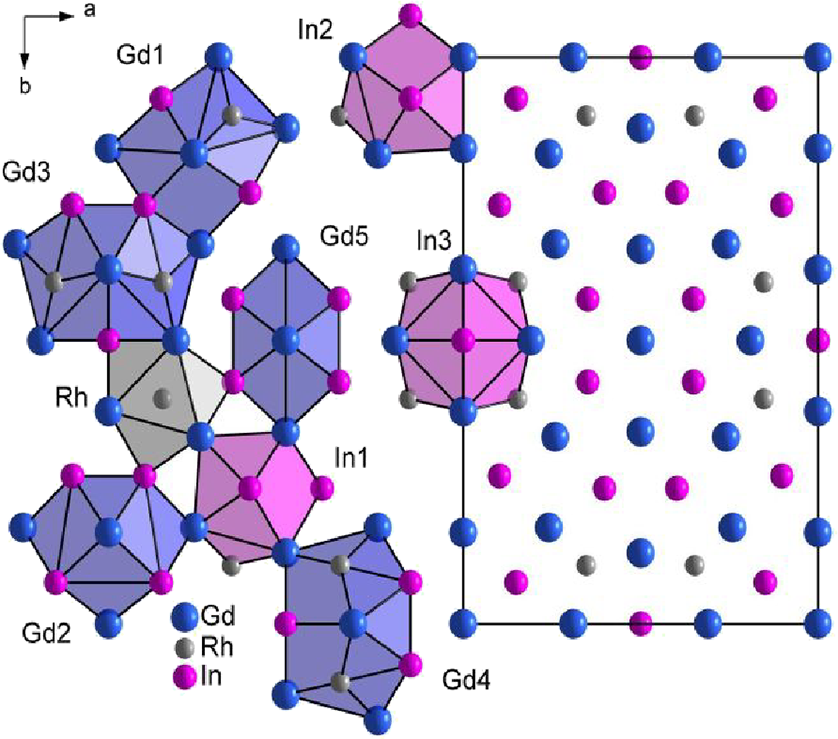
81. Improving Thermal Cycling Stability and Magnetocaloric Efficiency via Orbital Competition and Entropy Engineering in Rare-Earth Rhodium Indium Layered Intermetallics
Yuriy Tyvanchuk, Volodymyr Babizhetskyy, Stanisław Baran, Andrzej Szytuła, Volodymyr Smetana, Emil I. Jaffal, Balaranjan Selvaratnam, Anja-Verena Mudring, Anton O. Oliynyk
CHEMISTRY OF MATERIALS  ·  2026  ·  doi:10.1021/ACS.CHEMMATER.5C03286

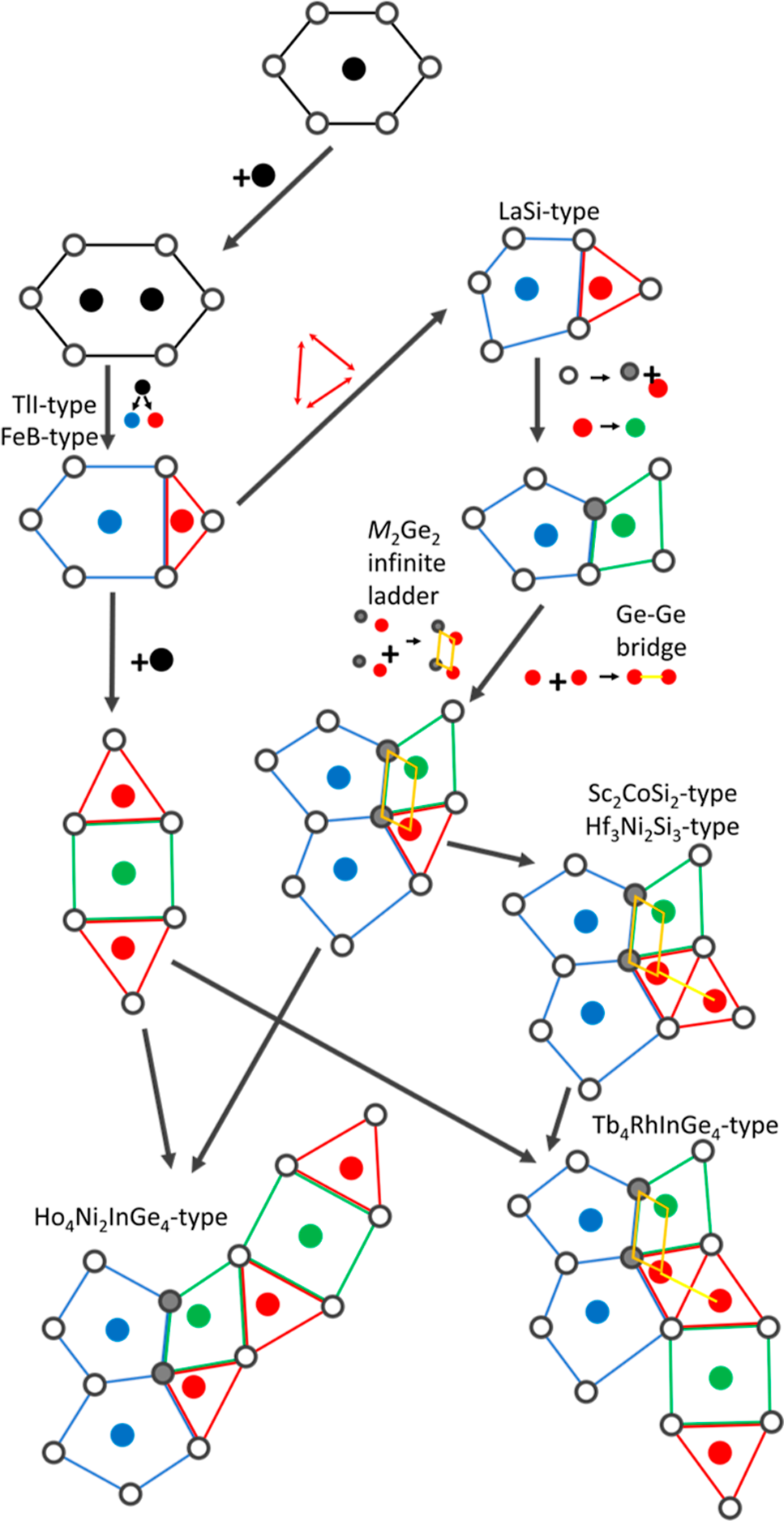
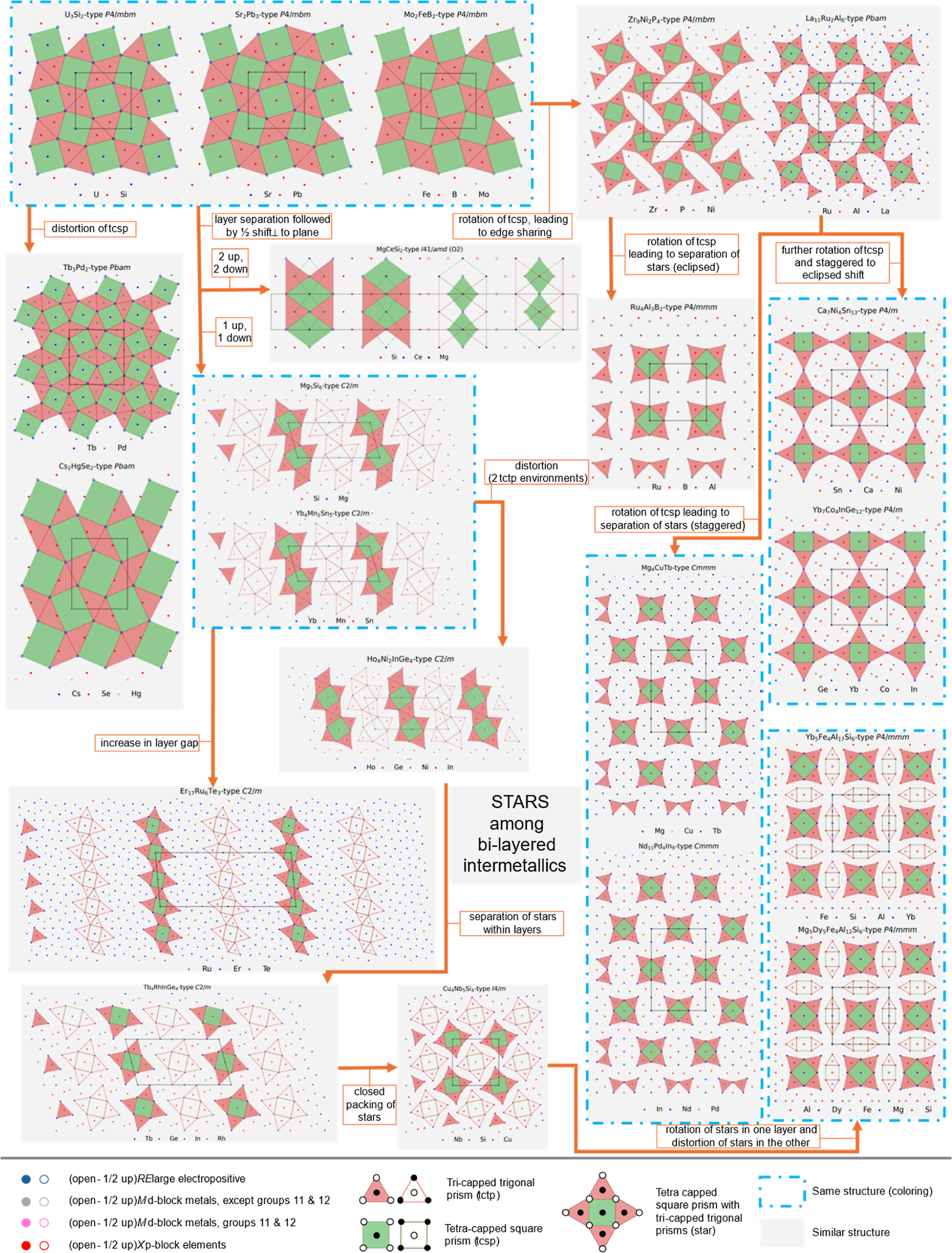
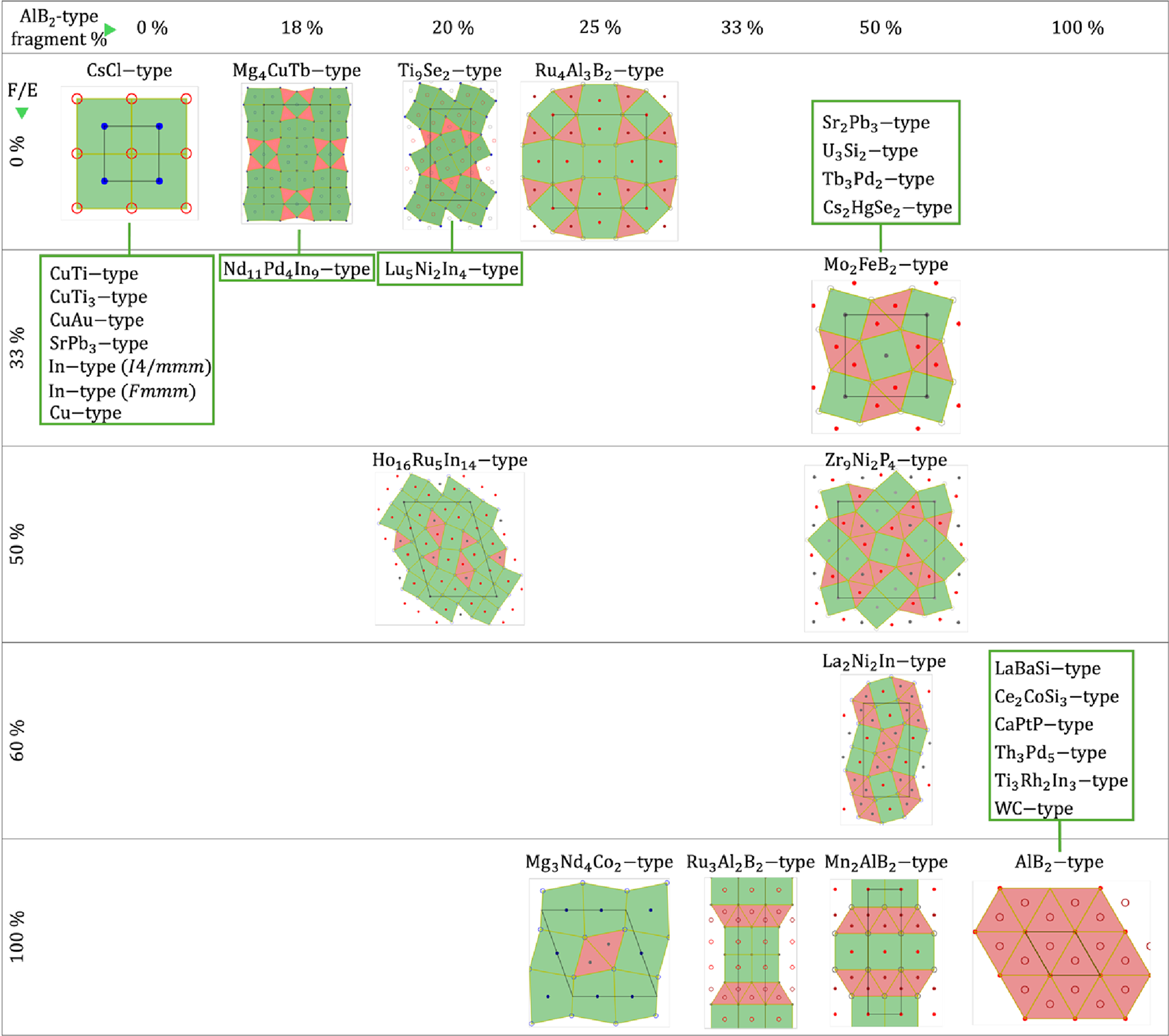
The structure of novel RE11Rh4In9 intermetallics was visualized with CsCl- and AlB2-fragments. We developed a web application which allows used to quickly evaluate the structure and compose a connectivity diagram revealing the proximity of structures built based on similar fragments. RE11Rh4In9 features orbital competition resulting in entropy engineering, which highlights competitive magnetocaloric performance of these materials
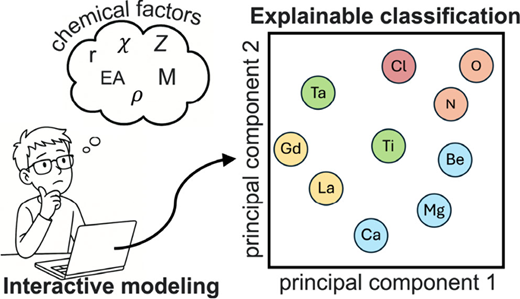
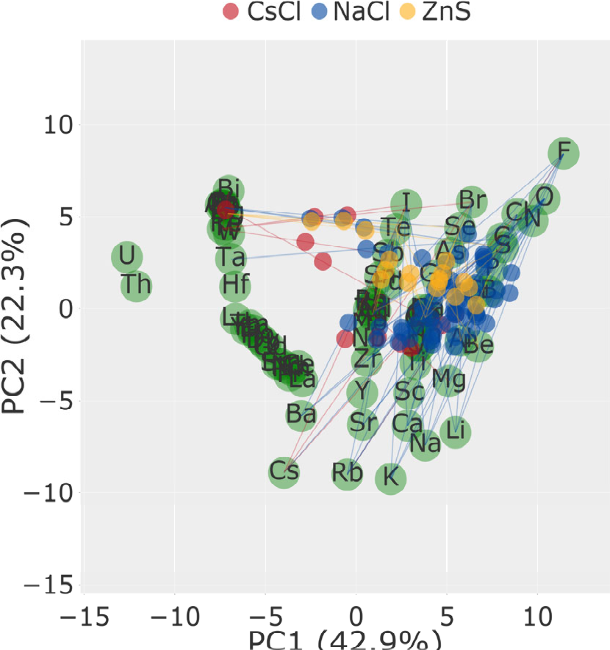
80. Exploring Feature Engineering for Crystal Structure Classification: Interactive Applications of PCA and PLS-DA Clustering
Danila Shiryaev, Balaranjan Selvaratnam, Yujing Sun, Emil I. Jaffal, Anton O. Oliynyk
JOURNAL OF CHEMICAL EDUCATION  ·  2026  ·  doi:10.1021/ACS.JCHEMED.5C00723
Figure 1 for Exploring Feature Engineering for Crystal Structure Classification: Interactive Applications of PCA and PLS-DA Clustering Figure 2 for Exploring Feature Engineering for Crystal Structure Classification: Interactive Applications of PCA and PLS-DA Clustering

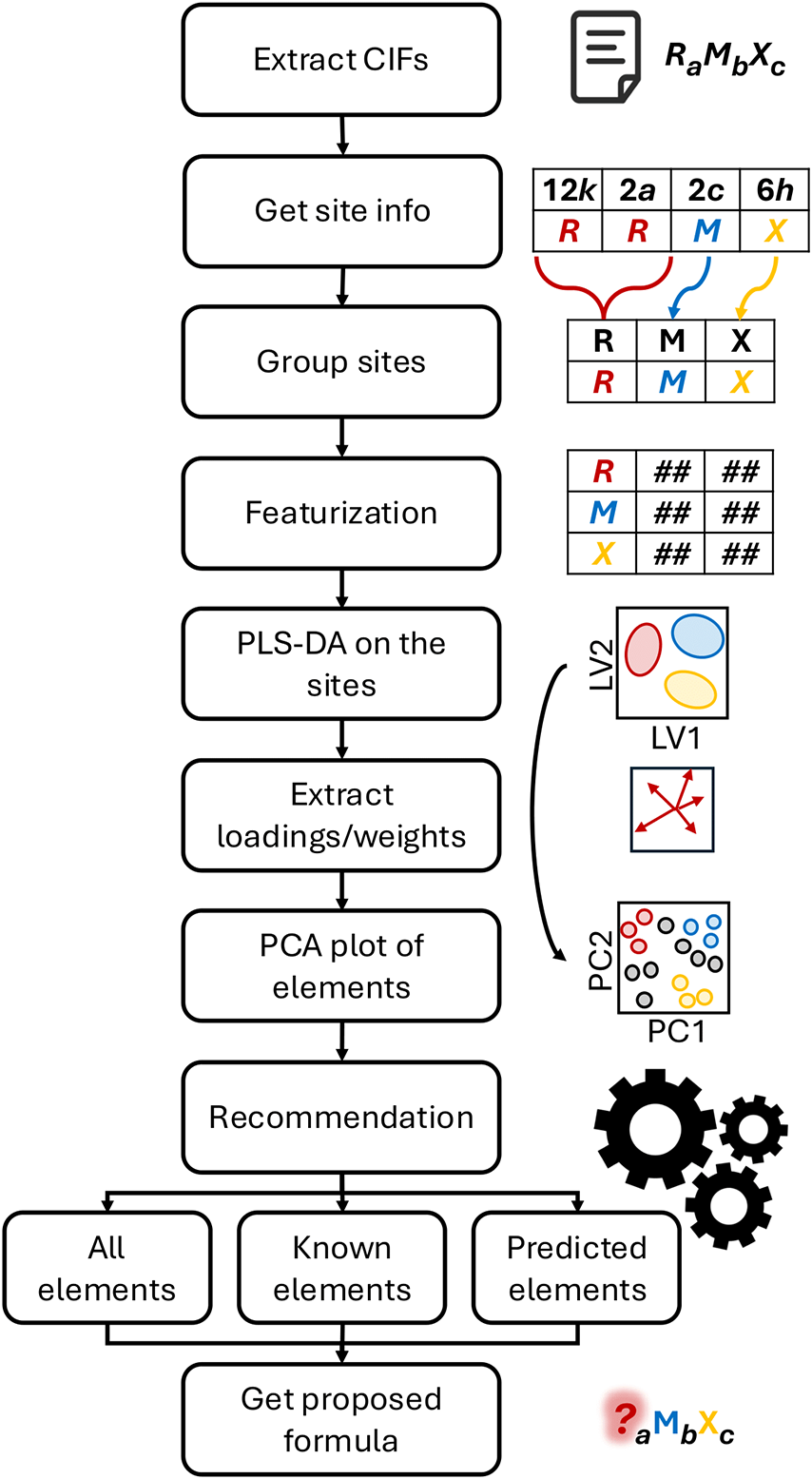
Bringing our machine learning experience to classrooms to teach students how to apply simple machine learning models to solve chemical problems. In this activity, students try to help Linus Pauling from 1929 to re-invent the radius ratio rules or propose a better solution to the classification problem with the wealth of the available data
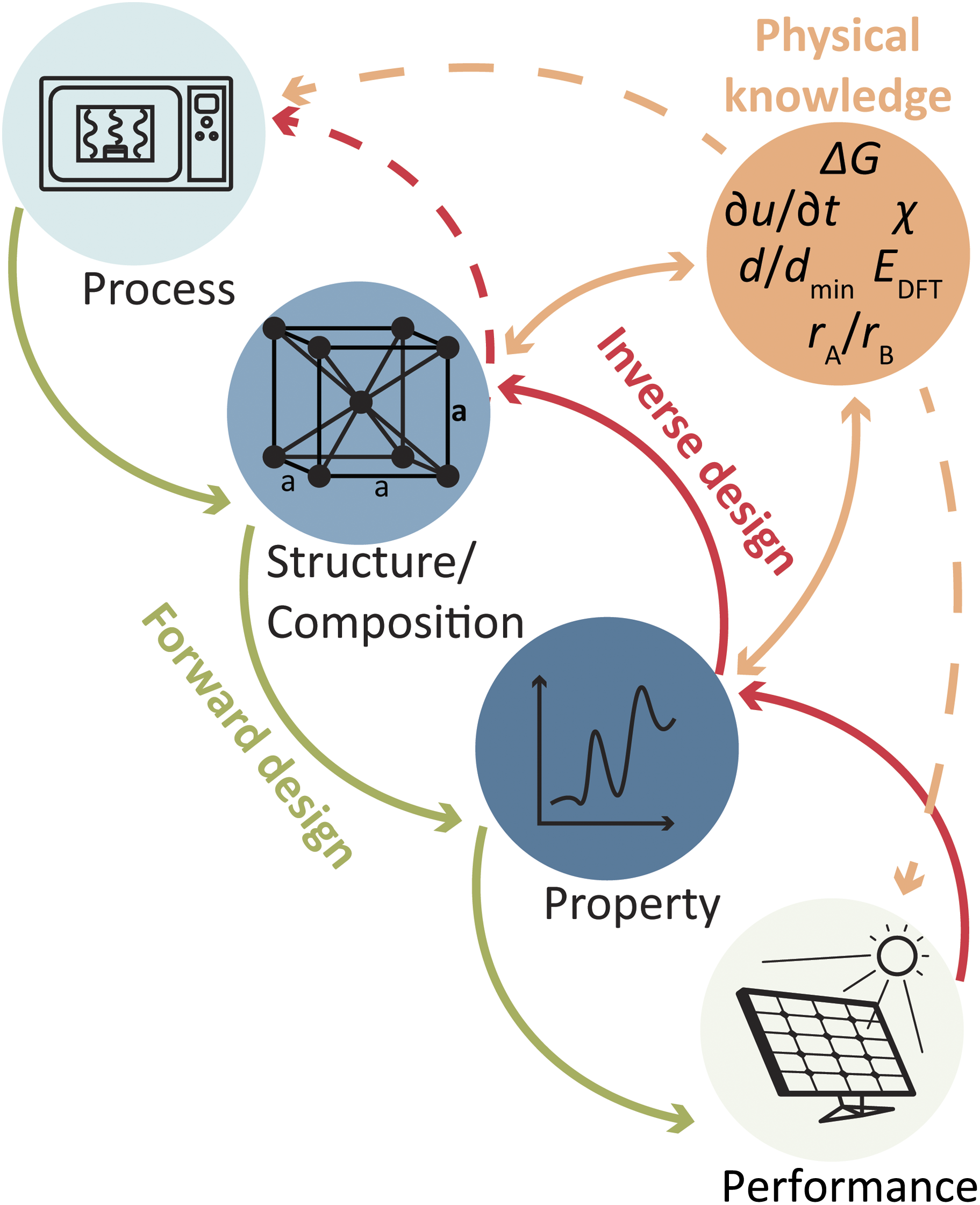
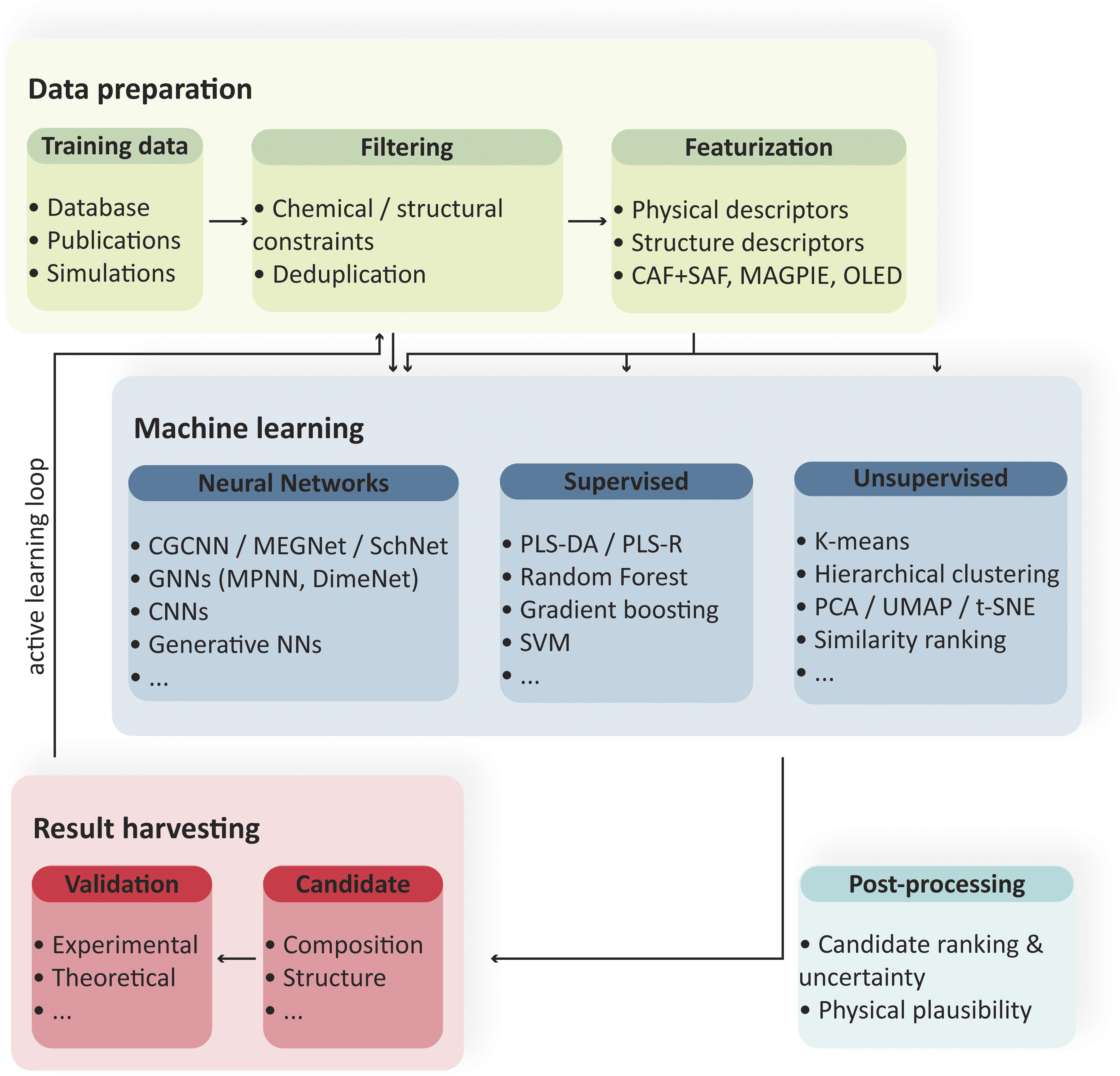
79. Achieving a scalable machine learning workflow for crystal structure discovery with experimental validation
Danila Shiryaev, Emil I. Jaffal, Sangjoon Lee, Balaranjan Selvaratnam, Anton O. Oliynyk
Digital Discovery  ·  2026  ·  doi:10.1039/D6DD00132G
Figure 1 for Achieving a scalable machine learning workflow for crystal structure discovery with experimental validation Figure 2 for Achieving a scalable machine learning workflow for crystal structure discovery with experimental validation

Review of the recent (up to 2026) machine learning works, which resulted in experimental discoveries; Explanation of the discovery paradigm, which includes physical knowledge extraction in its core
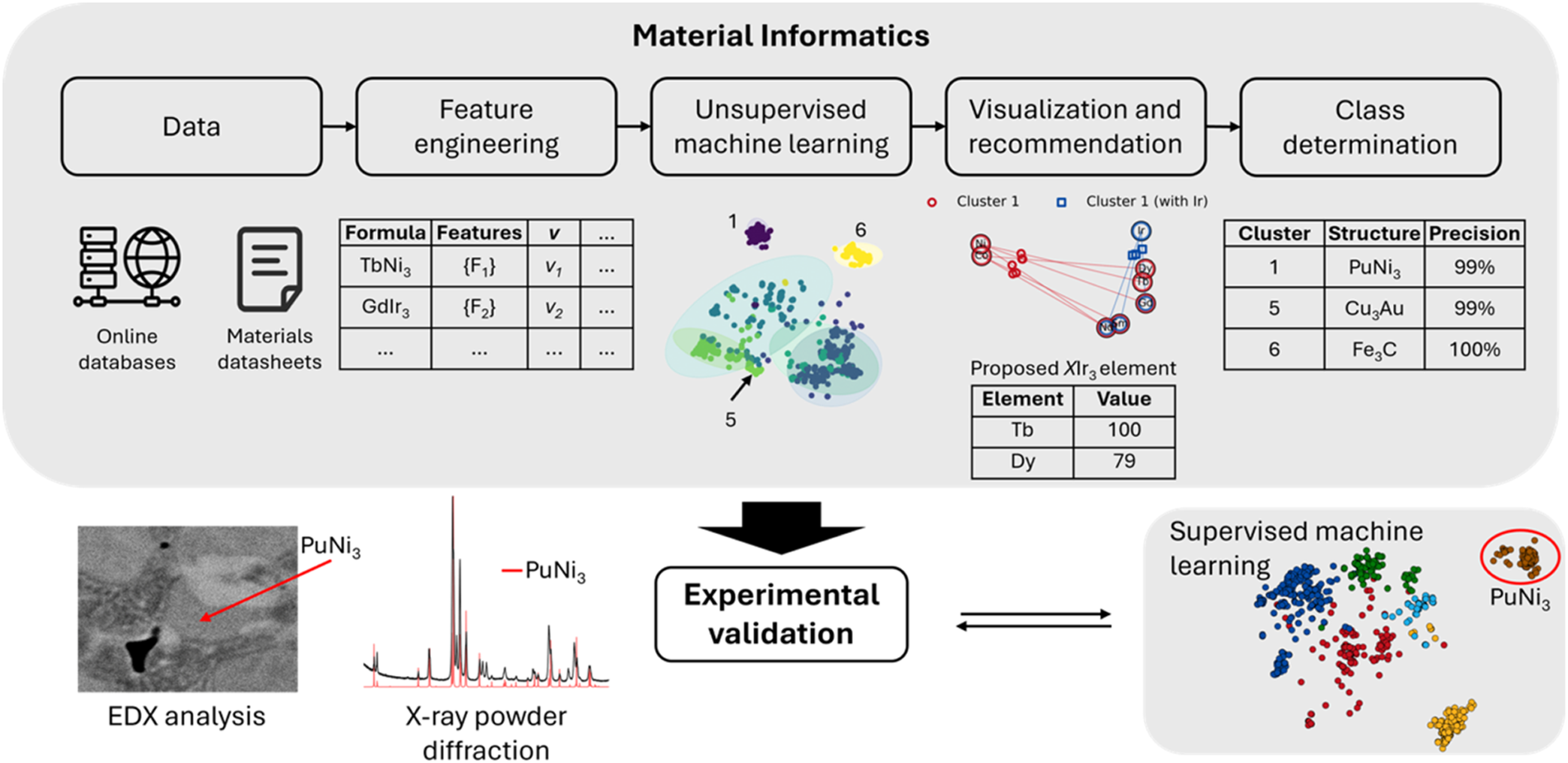
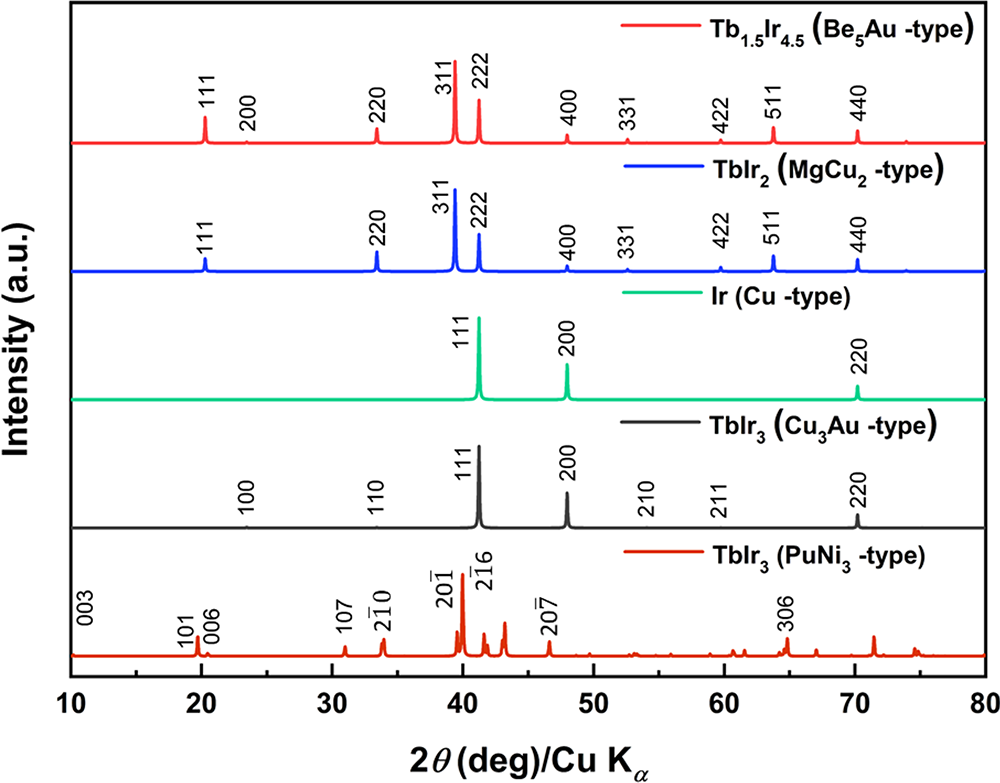
78. Unsupervised Machine Learning Prediction of a Novel 1:3 Intermetallic Phase with the Synthesis of TbIr3 (PuNi3-type) as Experimental Validation
Siddha Sankalpa Sethi, Arnab Dutta, Emil I. Jaffal, Nishant Yadav, Danila Shiryaev, …, Anirudh Machathi, Sangjoon Lee, Karabi Das, Partha Pratim Jana, Anton O. Oliynyk
JOURNAL OF THE AMERICAN CHEMICAL SOCIETY  ·  2025  ·  doi:10.1021/JACS.5C03510

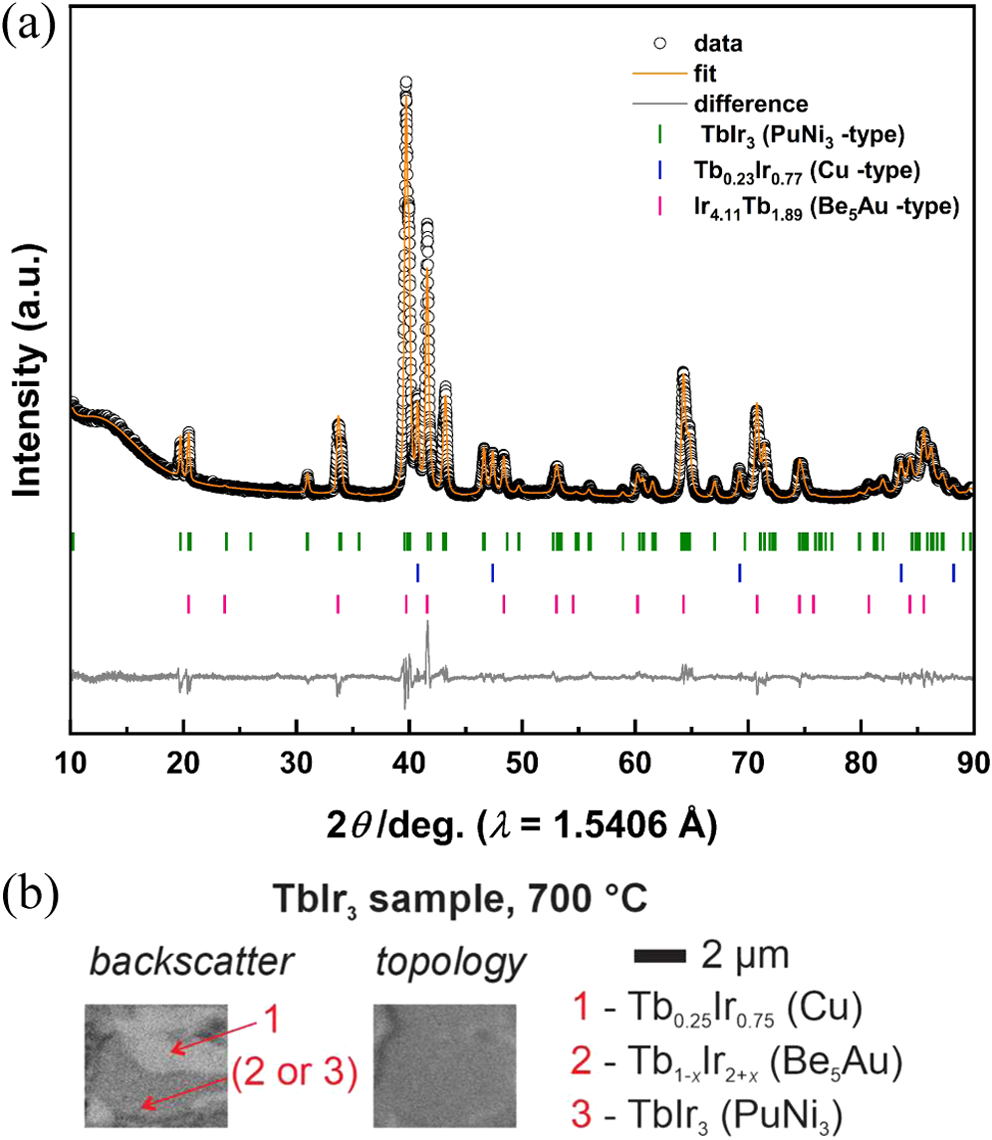
This is the first time unsupervised machine learning method was applied to discover a novel material. The biggest advantage of unsupervised methods is the suggestion of counterintuitive candidates, which otherwise would never be realized in the lab. Here we made a new polymorph modification of TbIr3 to experimentally validate the method
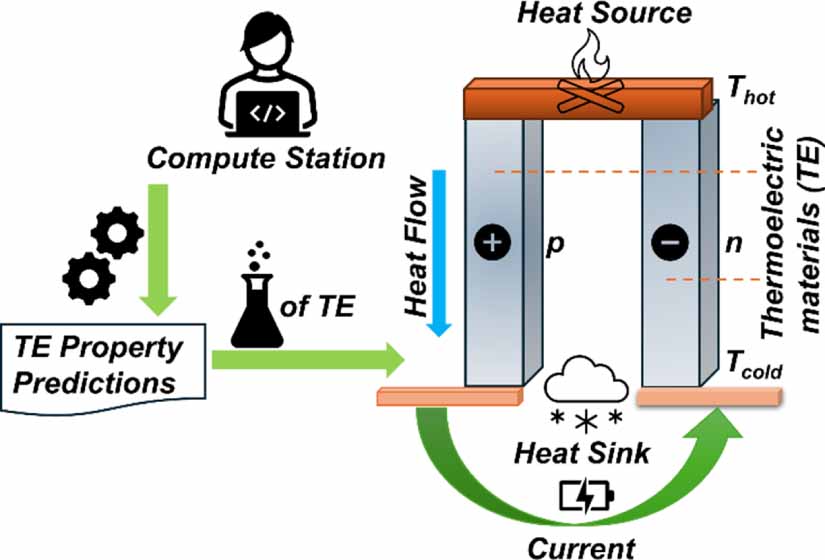
77. Recent strides in artificial intelligence for predicting thermoelectric properties and materials discovery
Nikhil K Barua, Sangjoon Lee, Anton O Oliynyk, Holger Kleinke
JOURNAL OF PHYSICS-ENERGY  ·  2025  ·  doi:10.1088/2515-7655/ADBA87

This perspective underscores and examines recent advancements and approaches from the materials community in artificial intelligence to address the challenges in the thermoelectric area. It explores the possibility for these advancements to surpass existing limitations.
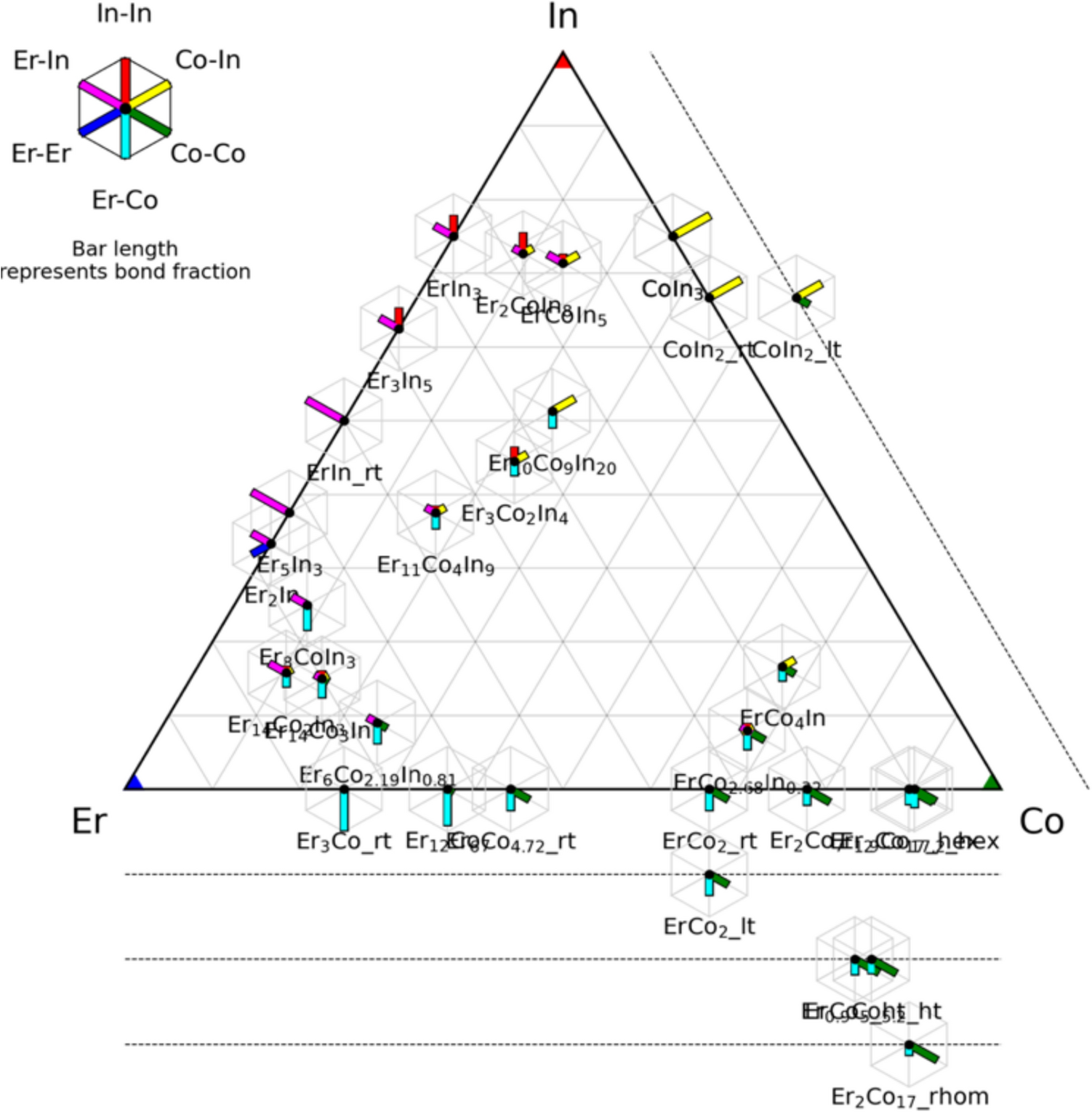
76. Materials Informatics Tools to Analyze Crystal Structures: Crystal Structure of the Novel Ternary Indide ErCo2In
Yuriy Tyvanchuk, Sangjoon Lee, Volodymyr Babizhetskyy, Volodymyr Smetana, Anja-Verena Mudring, Mariya Dzevenko, Emil I. Jaffal, Balaranjan Selvaratnam, Anton O. Oliynyk
INTEGRATING MATERIALS AND MANUFACTURING INNOVATION  ·  2025  ·  doi:10.1007/S40192-025-00400-X

Materials Informatics tools can be helpful in cases when DFT has limitations (highly correlated electron systems and site deficiency/mixing). Additionally, it helps to visualize crystallographic data in a high-throughput way, revealing bonding patterns to explain chemistries. For instance, the series of RE-containing intermetallics can begin or end abruptly, to explain this phenomenon we propose to visualize the bonding preference within the systems
75. Explainable Recommendation Engines to Predict Complex Intermetallics: Synthesis and Characterization of Gd10RuCd3, a Neutron Absorption Material
Brook Xhabrahimi, Emil I. Jaffal, Danila Shiryaev, Nikhil K. Barua, Madison Donohoe, …, Mariam Ismail, Balaranjan Selvaratnam, Ehsan Niknam, Holger Kleinke, Anton O. Oliynyk
JOURNAL OF THE AMERICAN CHEMICAL SOCIETY  ·  2025  ·  doi:10.1021/JACS.5C11646

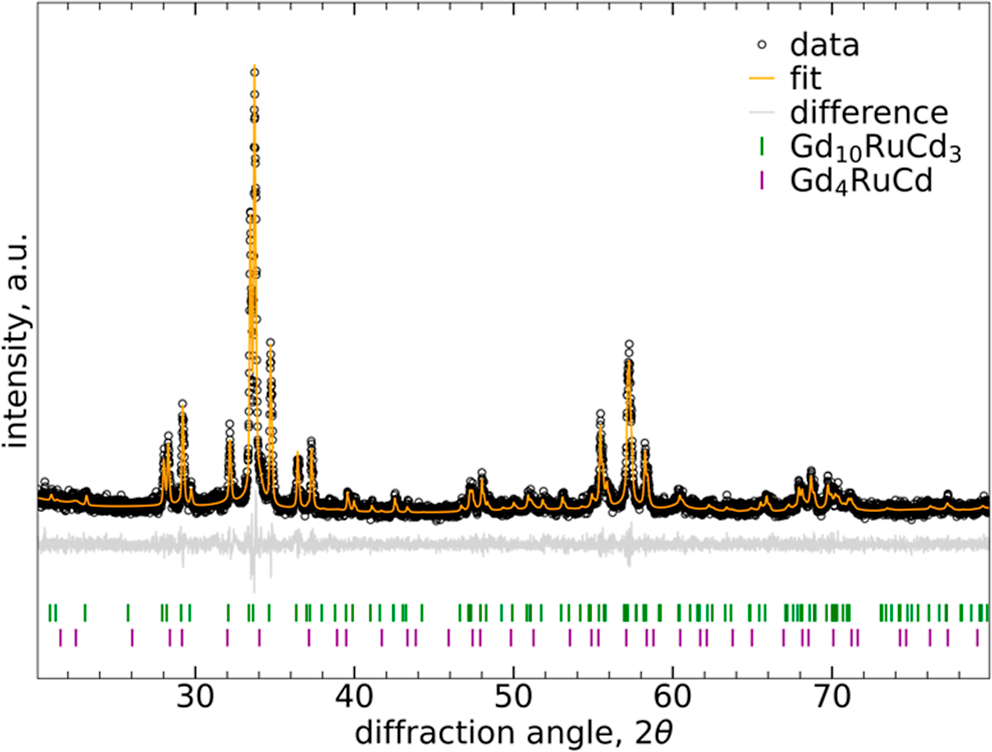
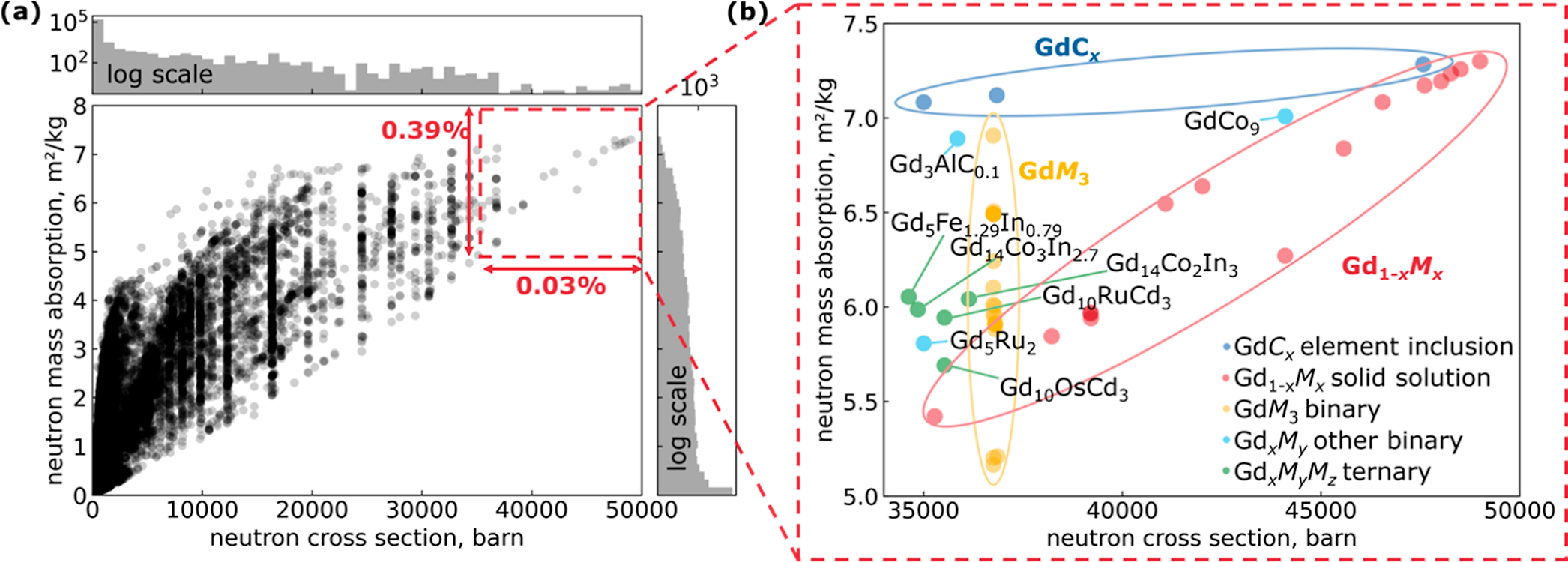
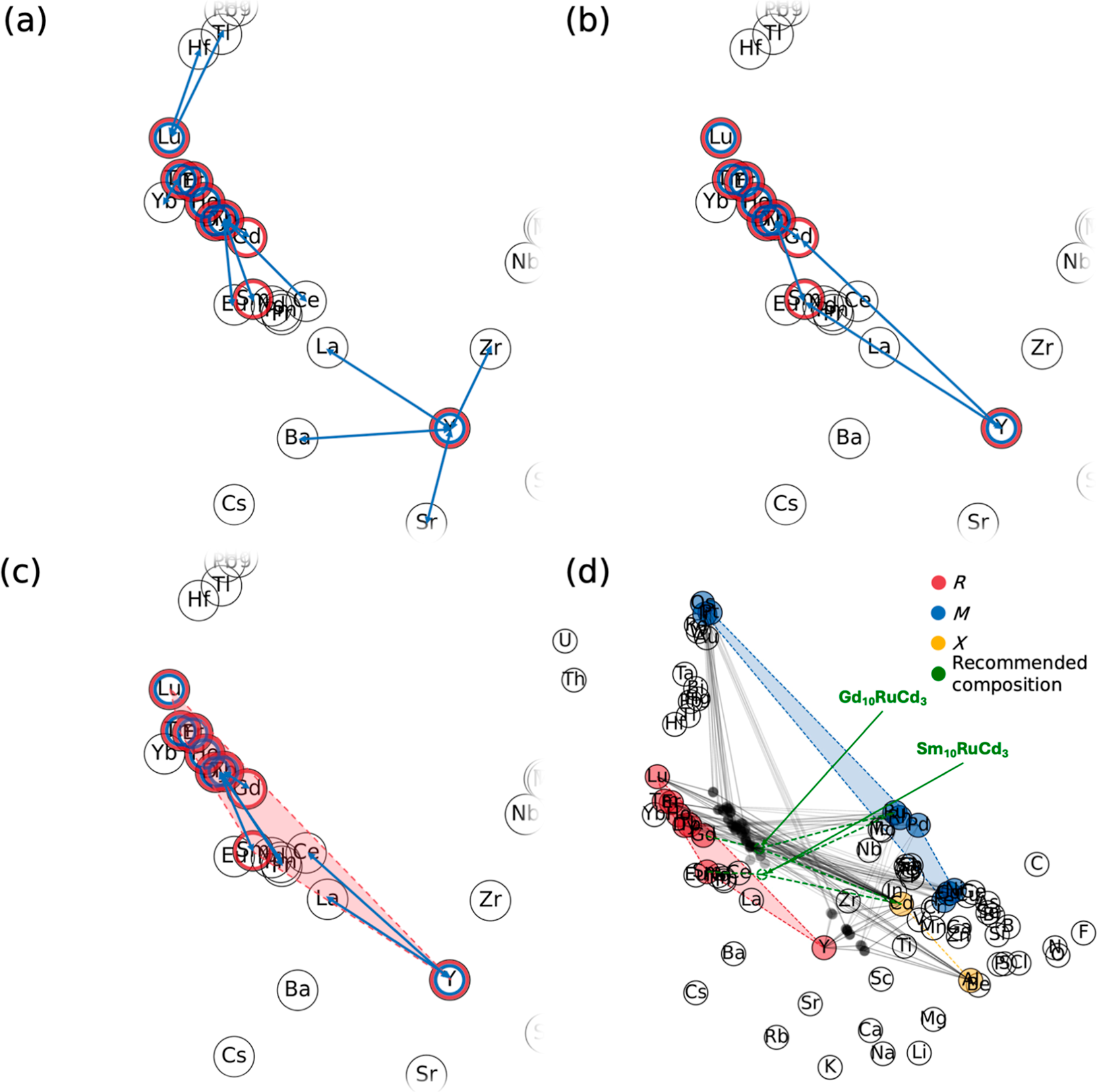
We developed a recommendation engine to predict the best candidate to expand structure type series. To validate it, we target material with the Gd- and Cd-rich composition, which results in outstanding neutron absorber material Gd10RuCd3
74. Dataset of prototype structures adopted by intermetallic compounds with AB stacking
Balaranjan Selvaratnam, Emil I. Jaffal, Danila Shiryaev, Anton O. Oliynyk
DATA IN BRIEF  ·  2025  ·  doi:10.1016/J.DIB.2025.112138
Figure 1 for Dataset of prototype structures adopted by intermetallic compounds with AB stacking Figure 2 for Dataset of prototype structures adopted by intermetallic compounds with AB stacking

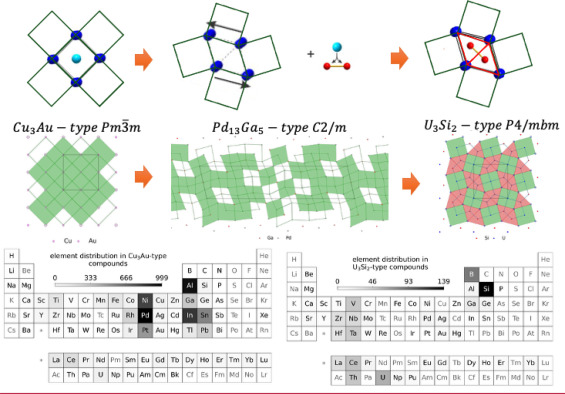
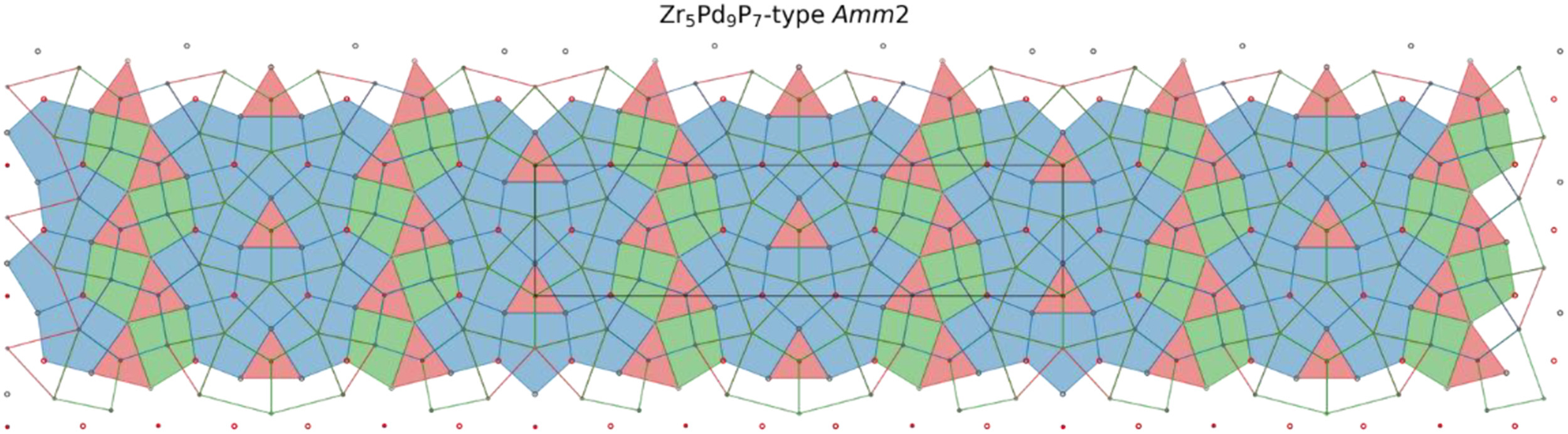
A large portion of crystallographic databases are structures composed of flat atomic layers. These structures are easy to visualize with the space-filling prism stacking. We developed an online-application which allows you to visualize the prism stacking instantly from your CIF files.
73. Composition and structure analyzer/featurizer for explainable machine-learning models to predict solid state structures
Emil I. Jaffal, Sangjoon Lee, Danila Shiryaev, Alex Vtorov, Nikhil Kumar Barua, Holger Kleinke, Anton O. Oliynyk
DIGITAL DISCOVERY  ·  2025  ·  doi:10.1039/D4DD00332B

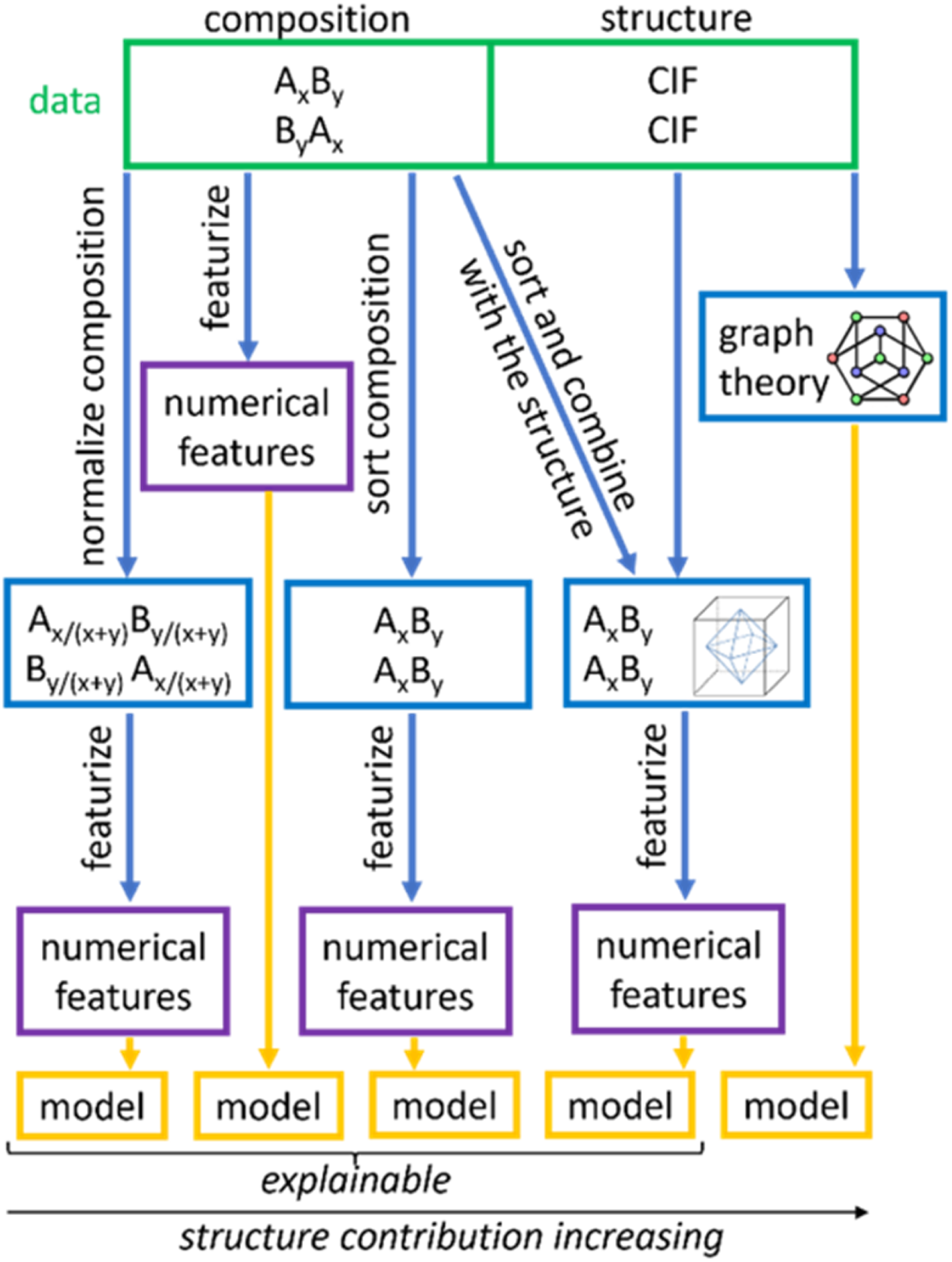
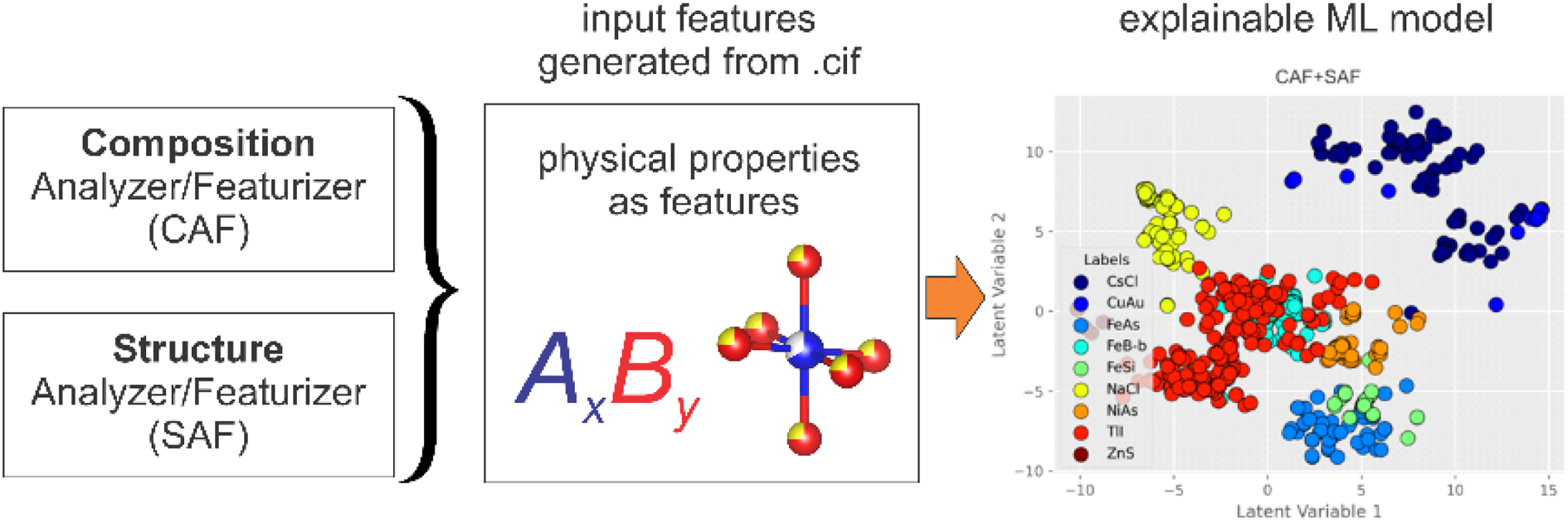
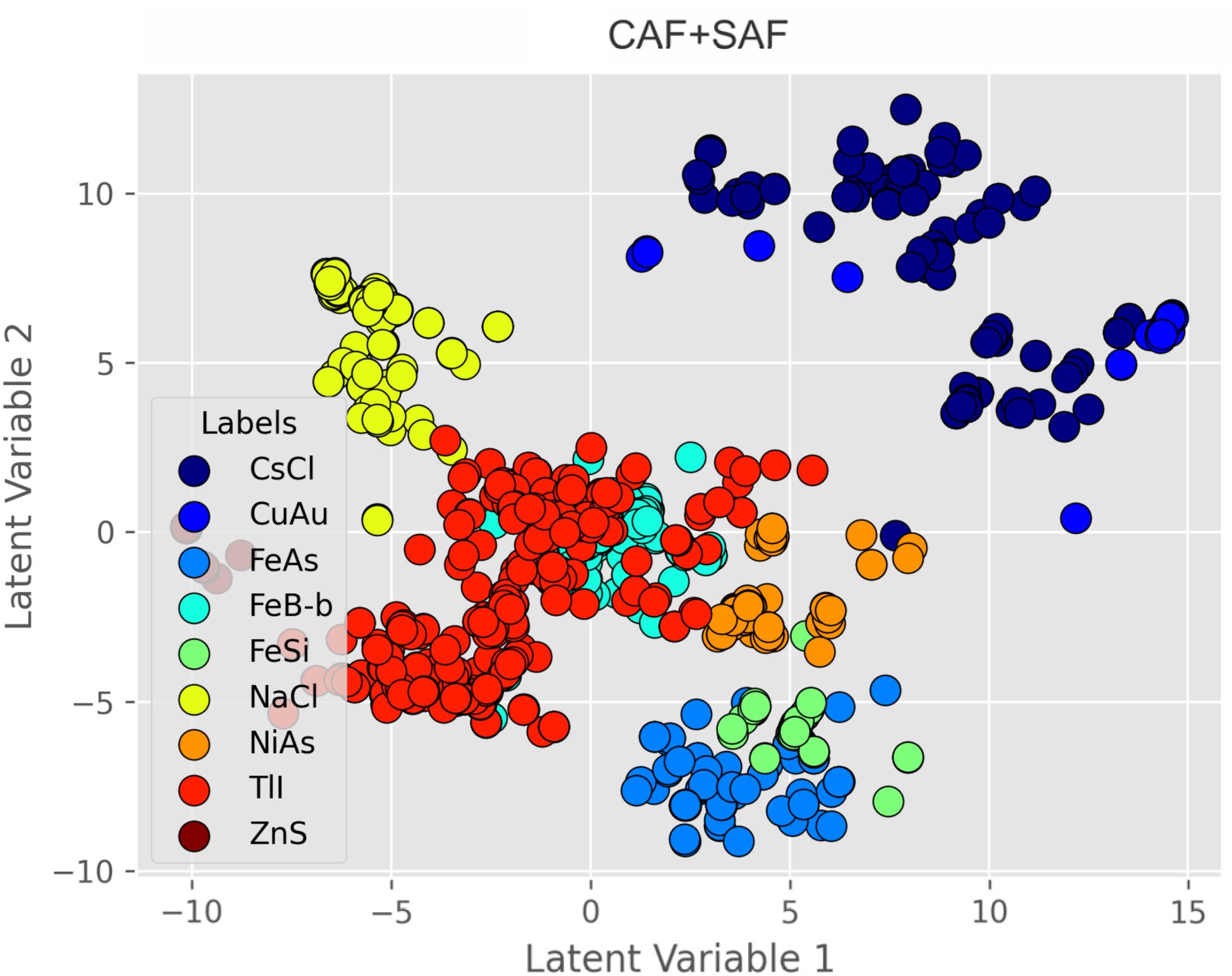
We evaluate available features for the problems in materials science and test them for a classification problem to conclude the effectiveness of the class separation based on the features, not the model. The newly-developed CAF and SAF features overperform the competitors’ features

72. cifkit: A Python package for coordination geometry and atomic site analysis
Sangjoon Lee, Anton O. Oliynyk
Journal of Open Source Software  ·  15 Nov 2024  ·  doi:10.21105/joss.07205

cifkit is a Python library to process crystallographic data and calculate structural features, essential for effective machine learning models
71. Thermoelectric Material Performance (zT) Predictions with Machine Learning
Nikhil K. Barua, Sangjoon Lee, Anton O. Oliynyk, Holger Kleinke
ACS APPLIED MATERIALS & INTERFACES  ·  2024  ·  doi:10.1021/ACSAMI.4C19149
Figure 1 for Thermoelectric Material Performance i zT i Predictions with Machine Learning Figure 2 for Thermoelectric Material Performance i zT i Predictions with Machine Learning

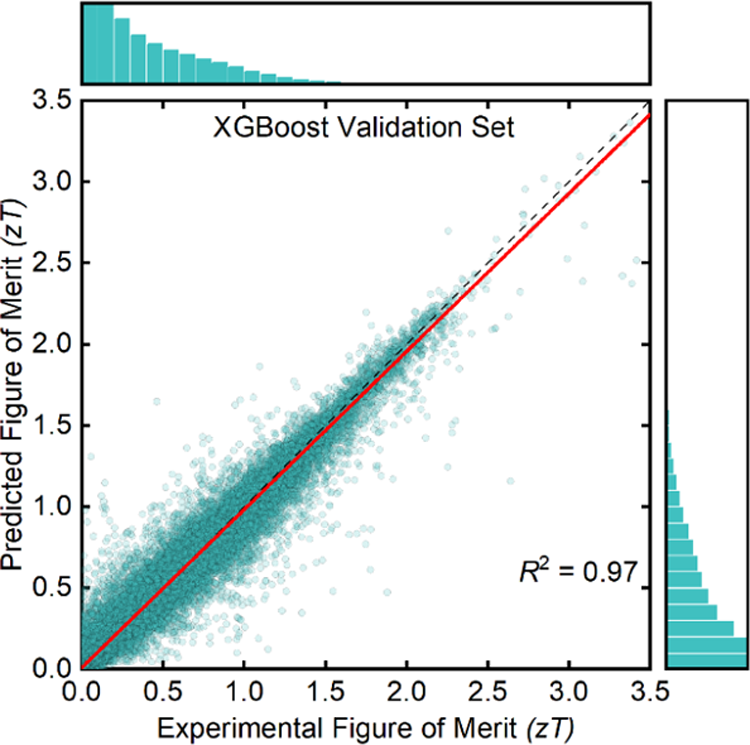
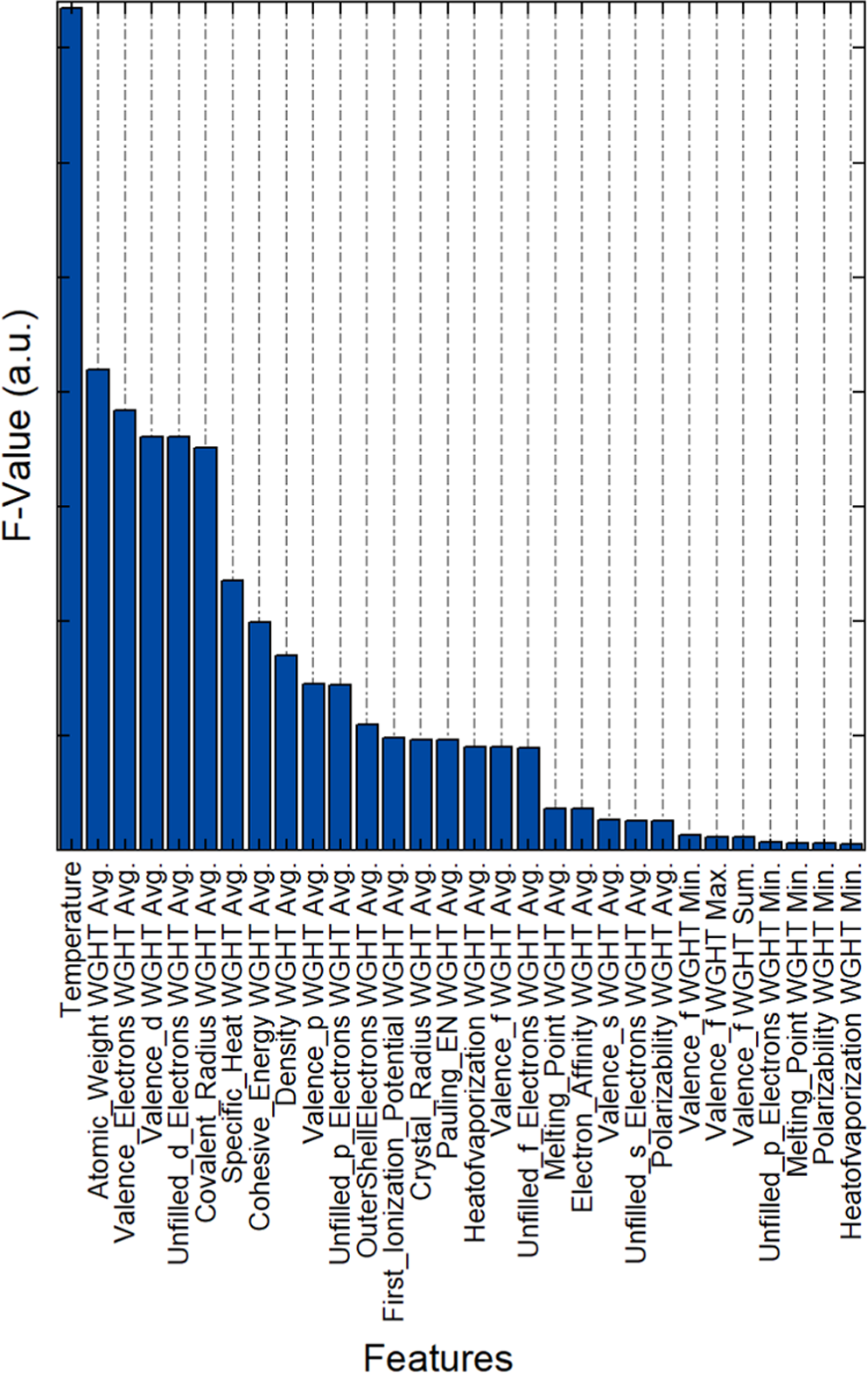
Prediction of the figure of merit of thermoelectrics is a challenge as there are a few complex phenomena happening at the same time. Using an experimental data set, our study is one of the few examples that predict a complex zT property directly across the entire gamut of TE materials.
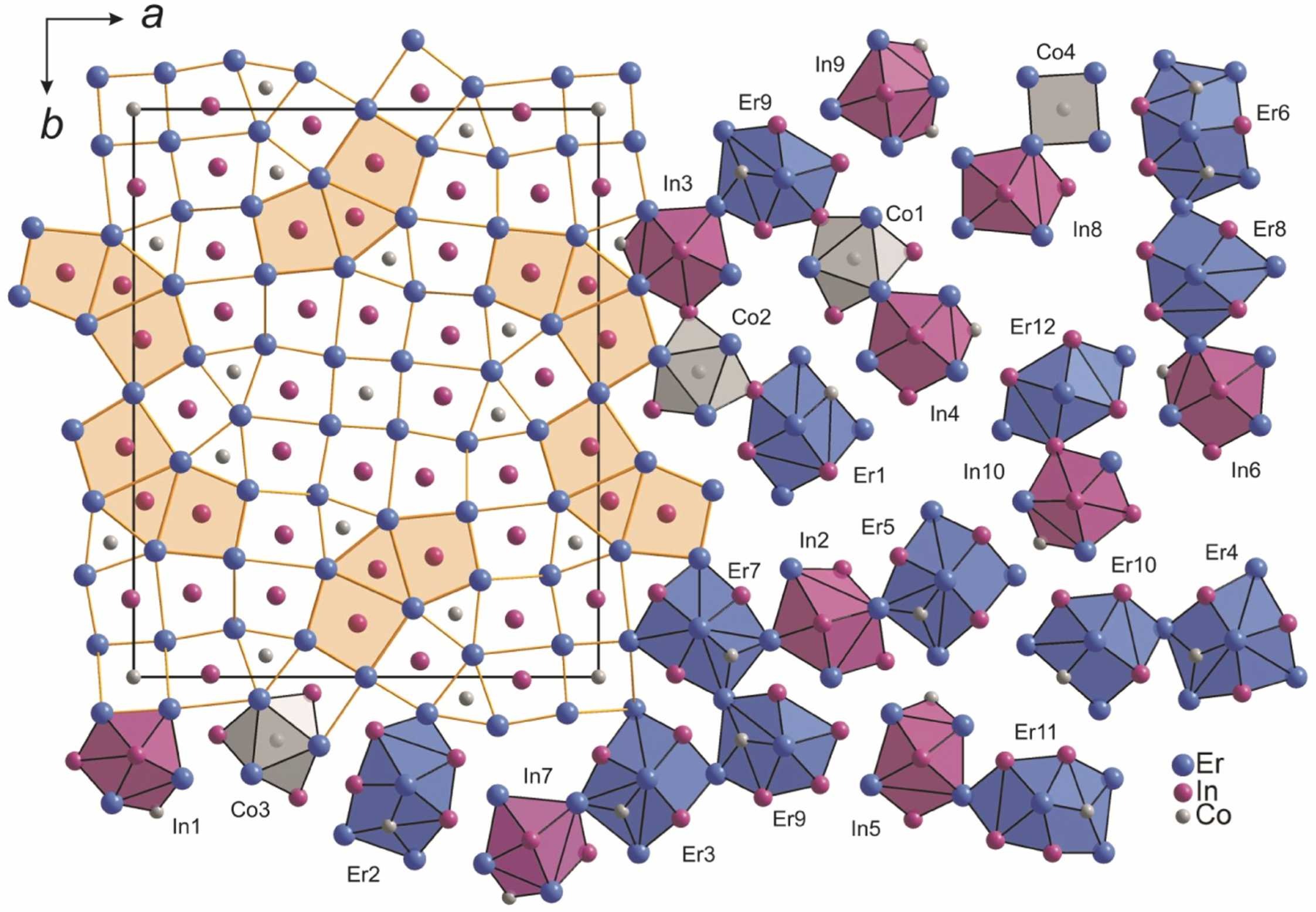
70. The crystal and electronic structure of RE23Co6.7In20.3 (RE = Gd-Tm, Lu): A new structure type based on intergrowth of AlB2-and CsCl-type related slabs
Yuriy Tyvanchuk, Volodymyr Babizhetskyy, Stanisław Baran, Andrzej Szytuła, Volodymyr Smetana, Sangjoon Lee, Anton O. Oliynyk, Anja-Verena Mudring
JOURNAL OF ALLOYS AND COMPOUNDS  ·  2024  ·  doi:10.1016/J.JALLCOM.2023.173241
Figure 1 for The crystal and electronic structure of RE23Co6.7In20.3 RE Gd-Tm, Lu : A new structure type based on intergrowth of AlB2-and CsCl-type related slabs Figure 2 for The crystal and electronic structure of RE23Co6.7In20.3 RE Gd-Tm, Lu : A new structure type based on intergrowth of AlB2-and CsCl-type related slabs

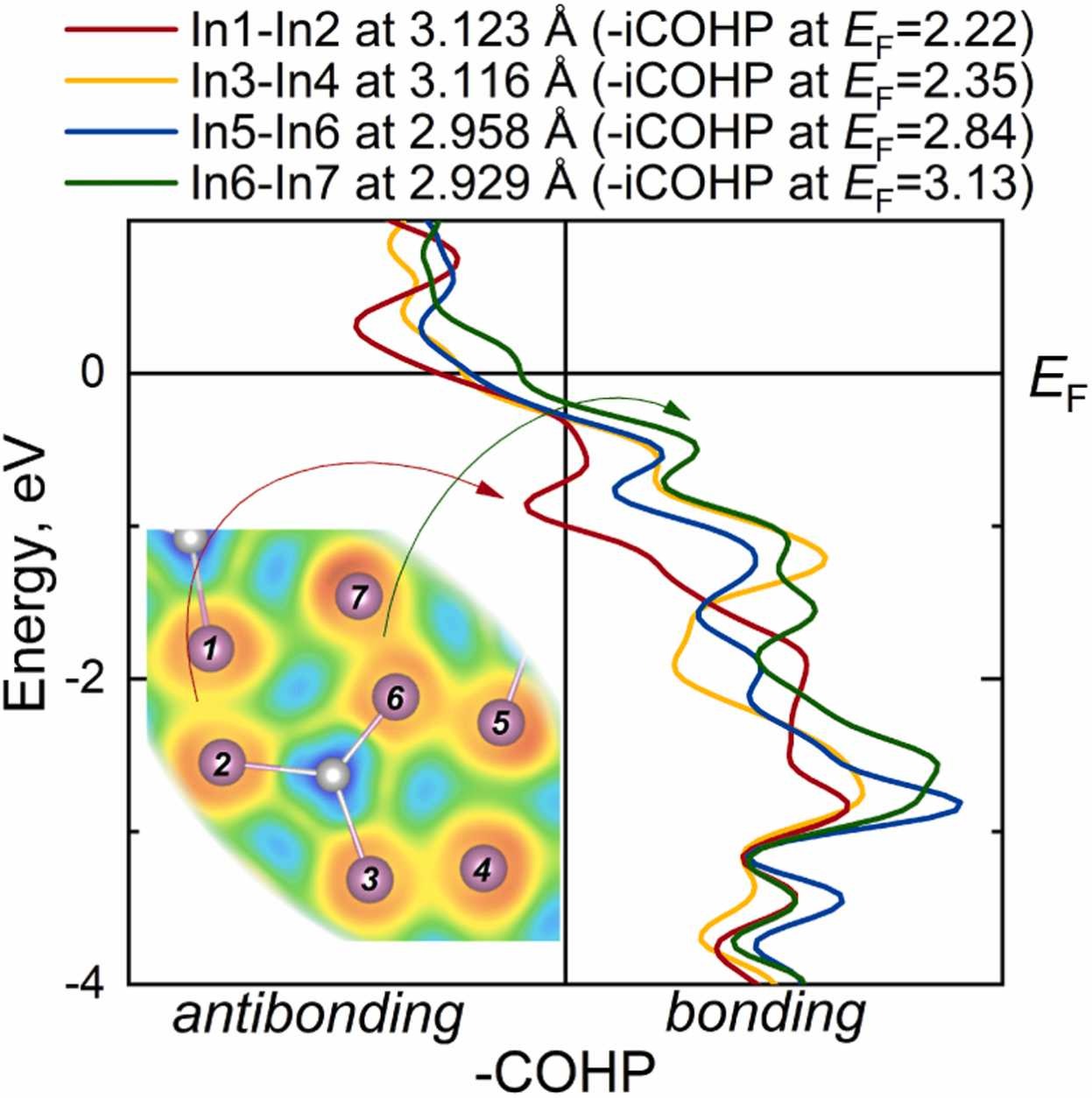
A large RE23Co7In20 ternary intermetallic structure is composed of CsCl- and AlB2-type fragment, featuring a diverse In-In bonding interaction, which open many more structural possibilities for novel structures in the RE–M–In ternary systems
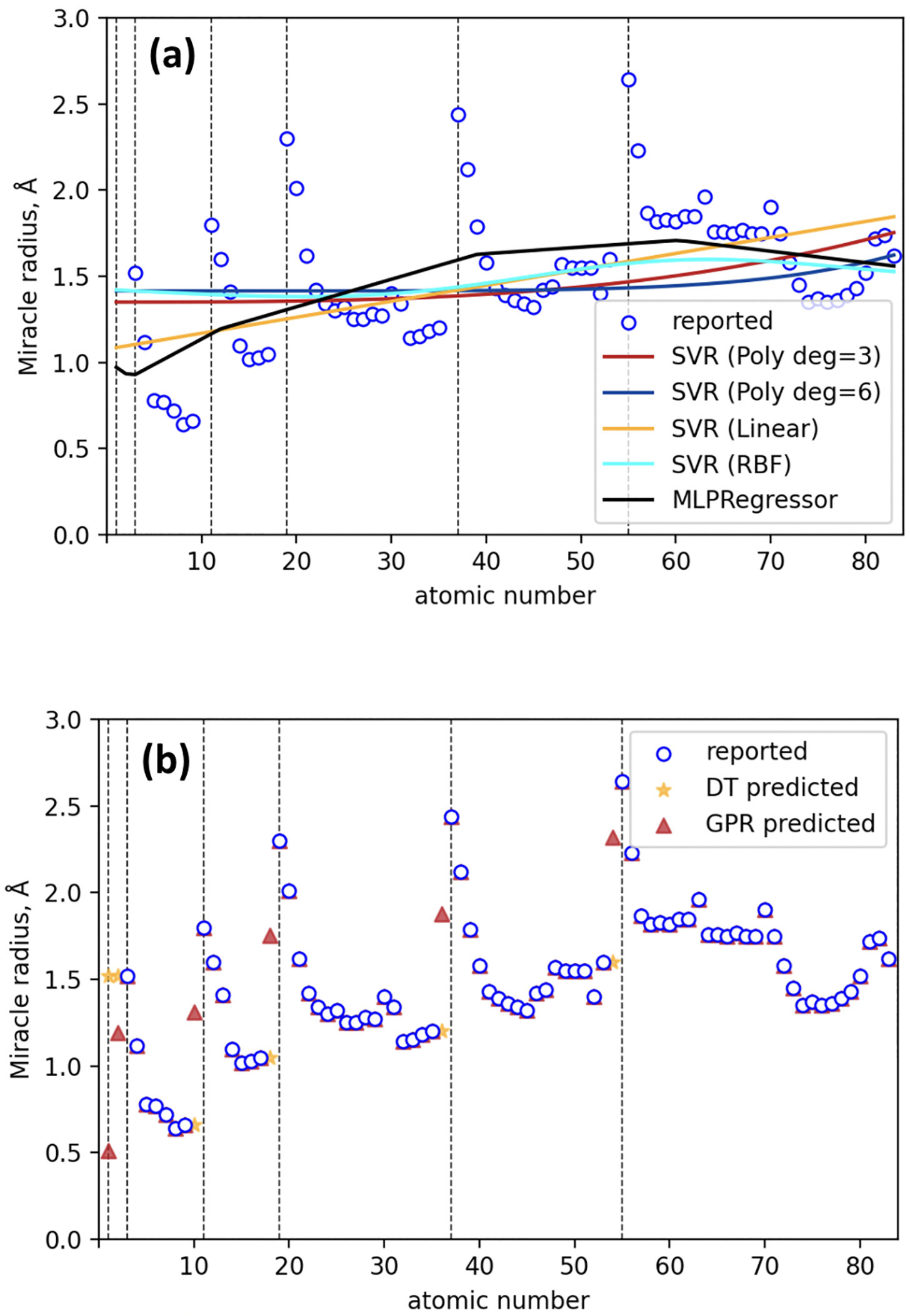
69. Machine learning descriptors in materials chemistry used in multiple experimentally validated studies: Oliynyk elemental property dataset
Sangjoon Lee, Clio Chen, Griheydi Garcia, Anton Oliynyk
DATA IN BRIEF  ·  2024  ·  doi:10.1016/J.DIB.2024.110178

Good quality descriptors are essential for effective machine learning models. We compile a table of descriptors used in various experimentally validated predictions. Any missing values were interpolated and extrapolated with GPR predictions
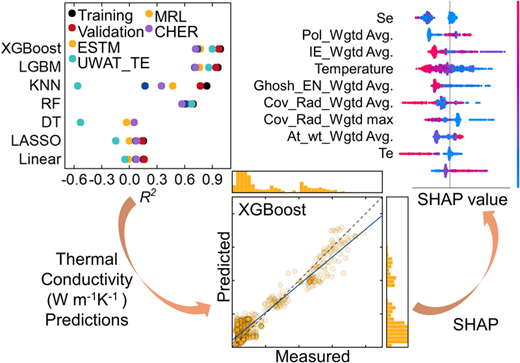
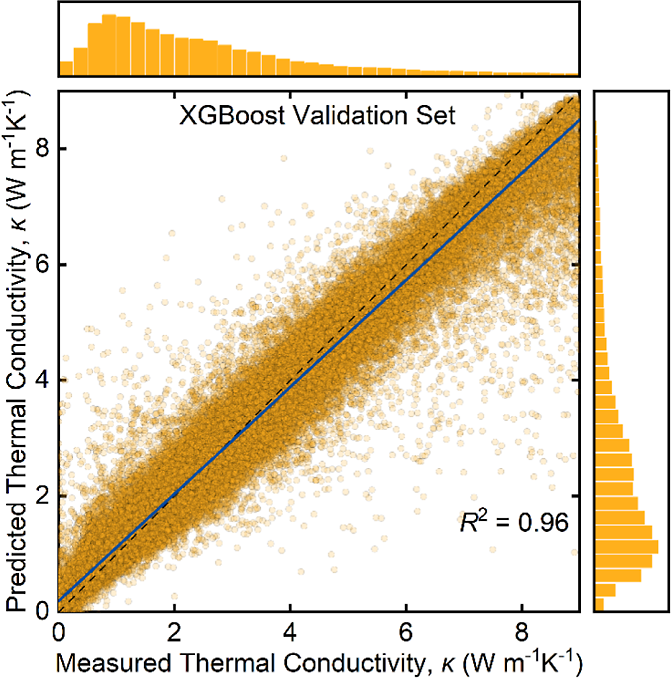
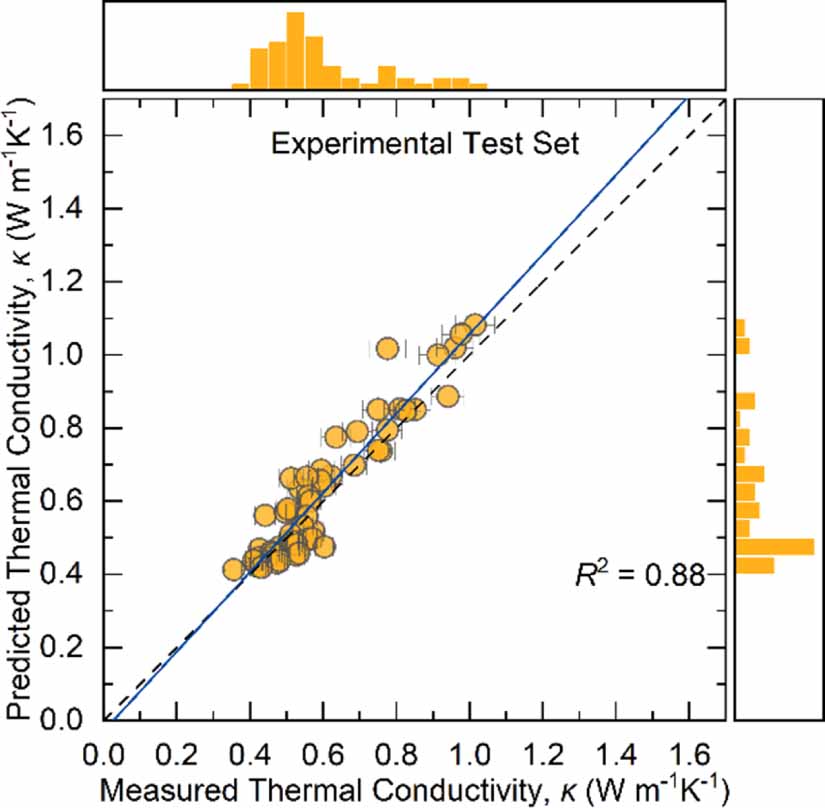
68. Interpretable Machine Learning Model on Thermal Conductivity Using Publicly Available Datasets and Our Internal Lab Dataset
Nikhil K. Barua, Evan Hall, Yifei Cheng, Anton O. Oliynyk, Holger Kleinke
CHEMISTRY OF MATERIALS  ·  2024  ·  doi:10.1021/ACS.CHEMMATER.4C01696
Figure 1 for Interpretable Machine Learning Model on Thermal Conductivity Using Publicly Available Datasets and Our Internal Lab Dataset Figure 2 for Interpretable Machine Learning Model on Thermal Conductivity Using Publicly Available Datasets and Our Internal Lab Dataset

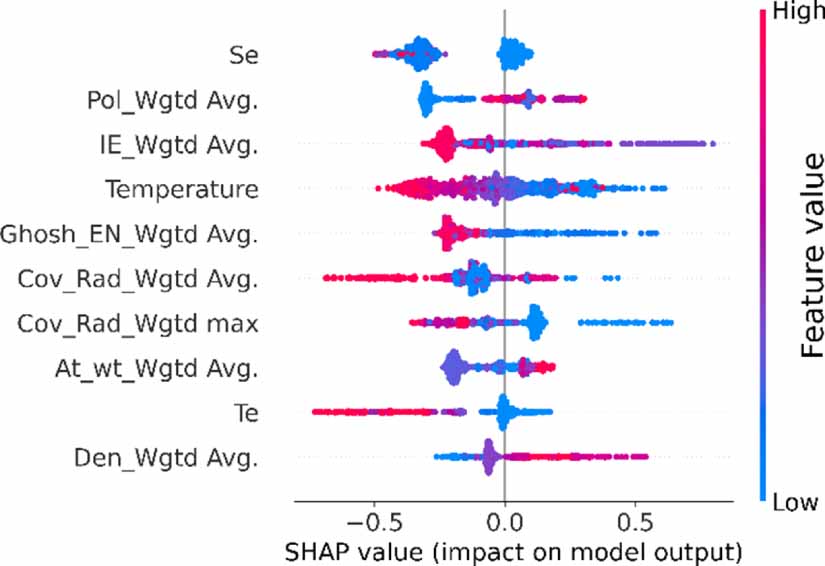
Developed interpretable methodology produces the prediction of thermal conductivity of a large variety of materials through the influence of chemical and physical property features. We looked at various experimental datasets and evaluate their fit to the model. Extracted chemical parameters from the model generate accessible knowledge behind the phenomenon
67. The Crystal and Electronic Structure of Re23co7in20 (Re = Gd–Tm, Lu): A New Structure Type Based on Intergrowth of Alb2- and Cscl-Type Related Slabs
Yuriy Tyvanchuk, Volodymyr Babizhetskyy, Stanisław Baran, Andrzej Szytula, Volodymyr Smetana, Sangjoon Lee, Anton Oliynyk, Anja-Verena Mudring
SSRN  ·  2023  ·  doi:10.2139/ssrn.4614555
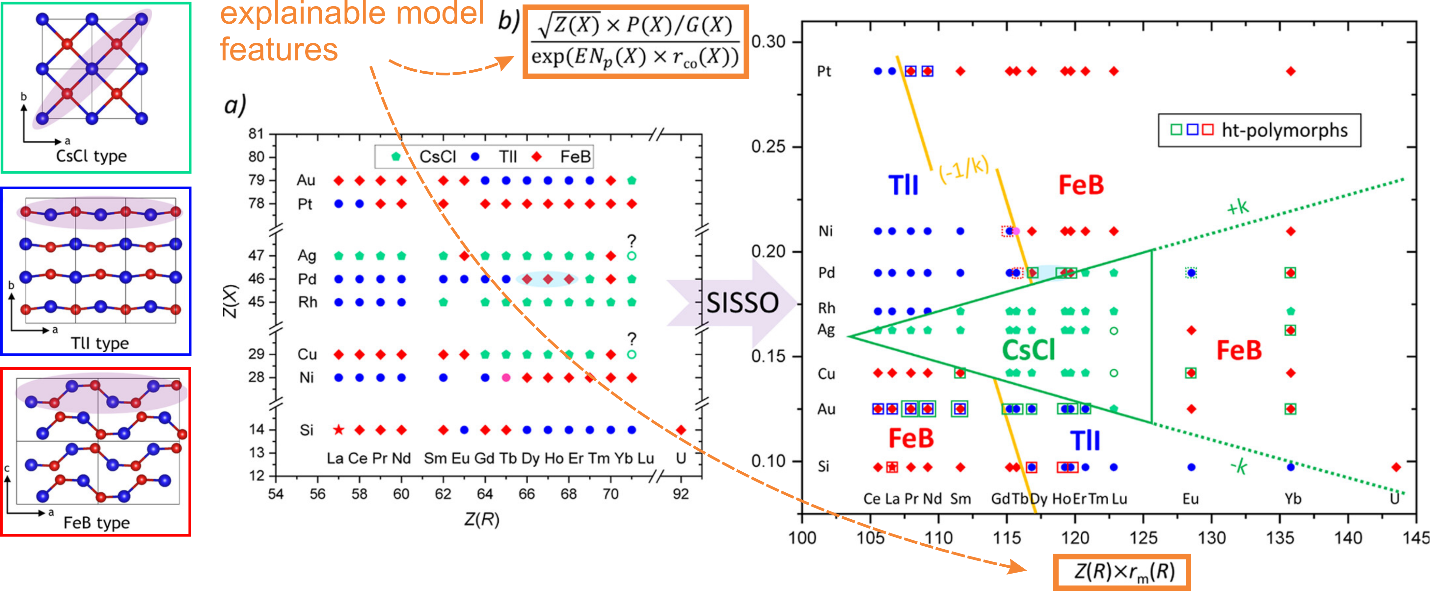
66. Revealing Hidden Patterns through Chemical Intuition and Interpretable Machine Learning: A Case Study of Binary Rare-Earth Intermetallics RX
Volodymyr Gvozdetskyi, Balaranjan Selvaratnam, Anton O. Oliynyk, Arthur Mar
CHEMISTRY OF MATERIALS  ·  2023  ·  doi:10.1021/ACS.CHEMMATER.2C02425

Solving very complex structural challenges with machine learning tools, followed by experimental validation. Application of Sure-Independence Screening and Sparsifying Operator to extract compact and informative features
65. Machine-learning prediction of thermal expansion coefficient for perovskite oxides with experimental validation
Kevin P. McGuinness, Anton O. Oliynyk, Sangjoon Lee, Beatriz Molero-Sanchez, Paul Kwesi Addo
PHYSICAL CHEMISTRY CHEMICAL PHYSICS  ·  2023  ·  doi:10.1039/D3CP04017H

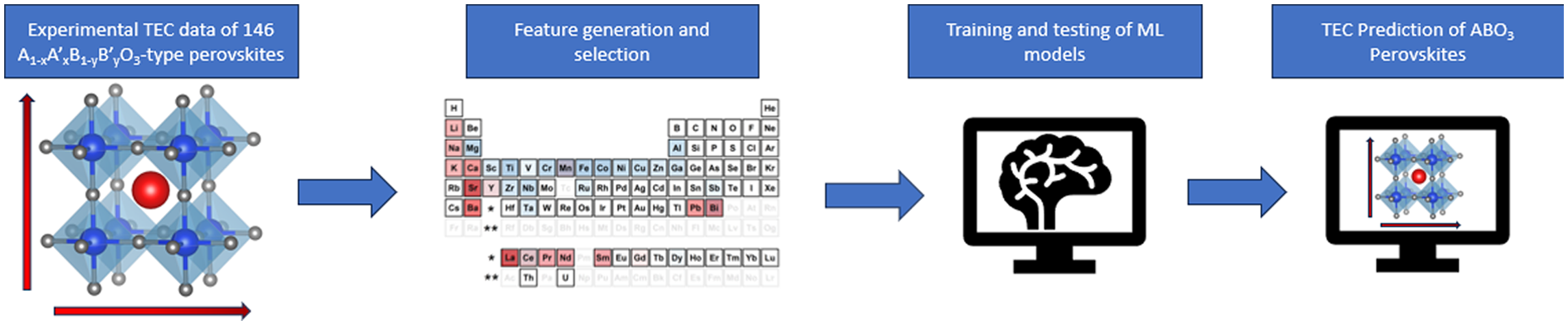
Machine learning model was built to thermal expansion coefficient for perovskite oxide materials
64. Machine learning descriptors in materials chemistry: prediction and experimental validation synthesis of novel intermetallic UCd3
Sangjoon Lee, Clio Chen, Griheydi Garcia, Anton Oliynyk
chemRxiv  ·  2023  ·  doi:10.26434/CHEMRXIV-2023-0NLZL

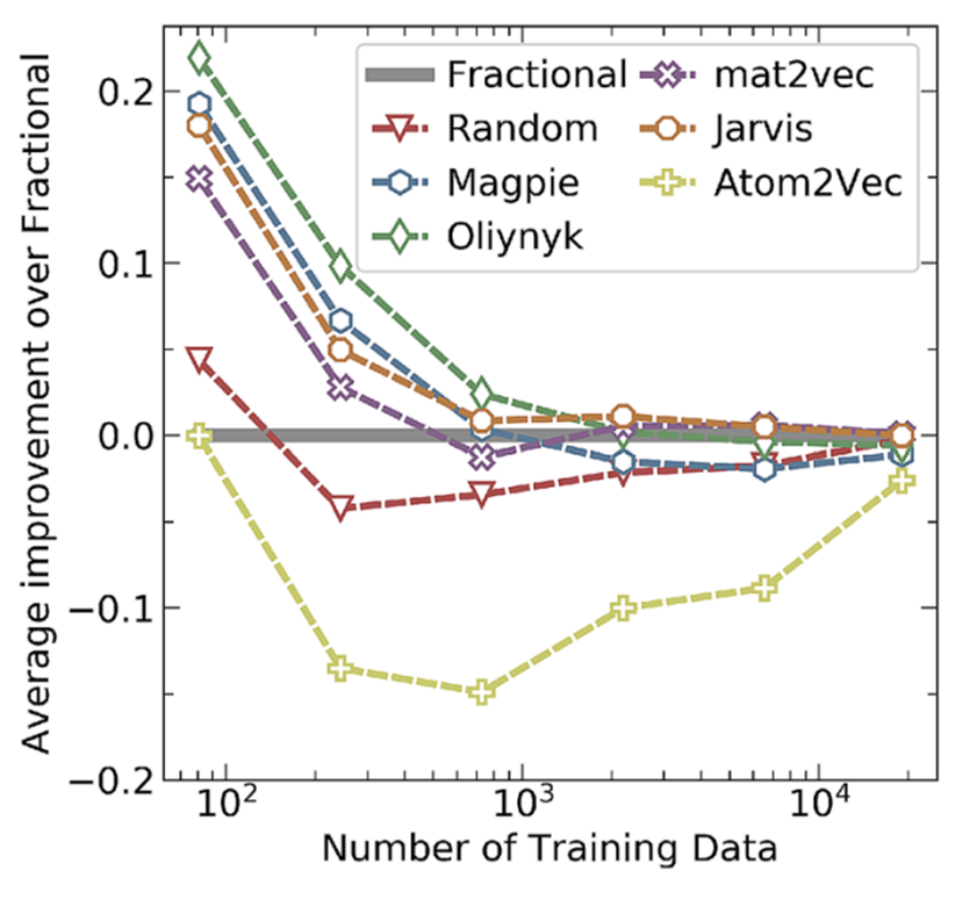
The property list that was features on numerous of our experimentally validated machine learning studies. For your convenience and accessibility, the list available as SI on this ChemRxiv submission
63. Interpretable Machine Learning in Solid-State Chemistry, with Applications to Perovskites, Spinels, and Rare-Earth Intermetallics: Finding Descriptors Using Decision Trees
Balaranjan Selvaratnam, Anton O. Oliynyk, Arthur Mar
INORGANIC CHEMISTRY  ·  2023  ·  doi:10.1021/ACS.INORGCHEM.3C01153

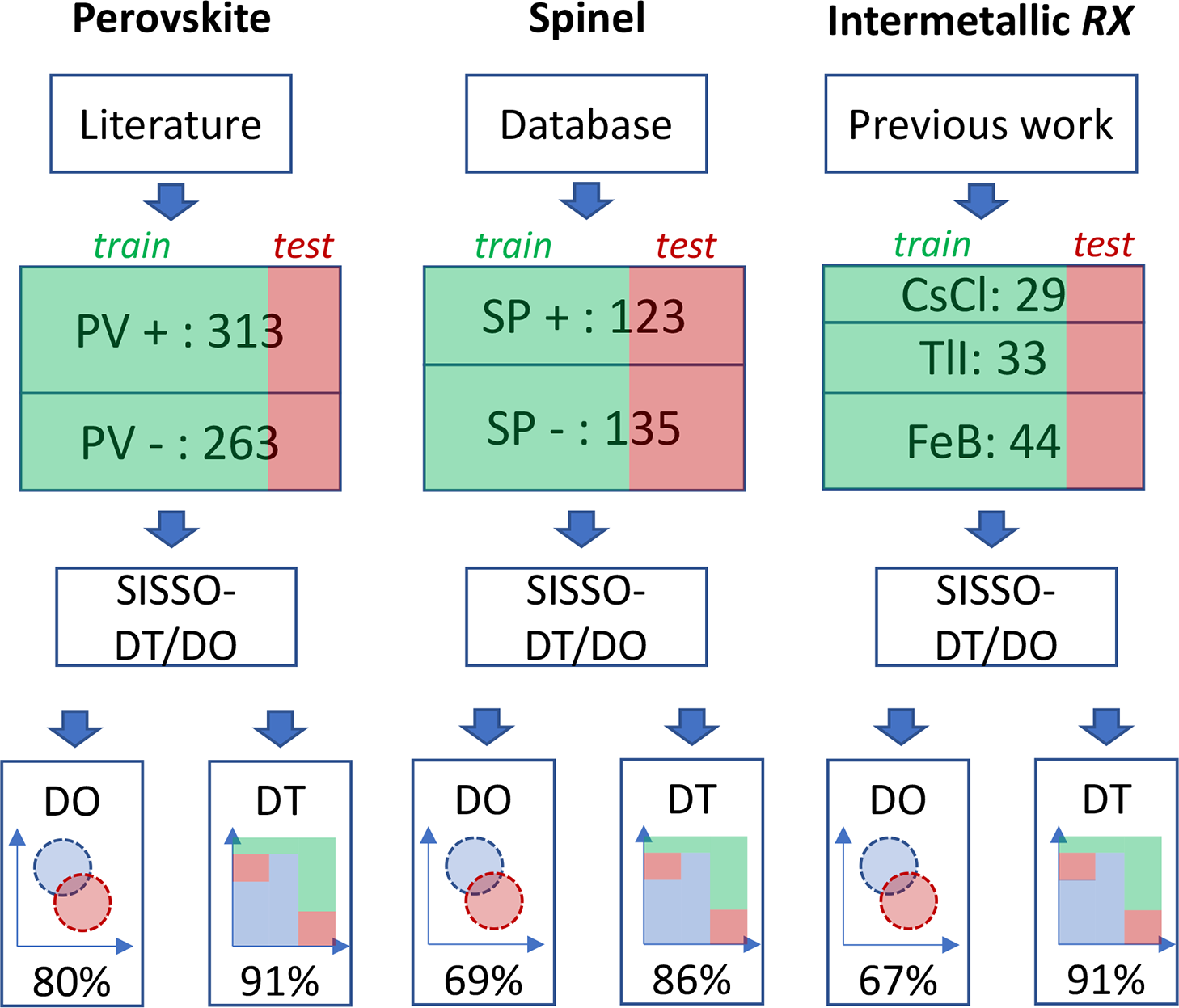
Comparison of the classification models evaluated through domain overlap and decision tree as scoring functions to select descriptors by SISSO
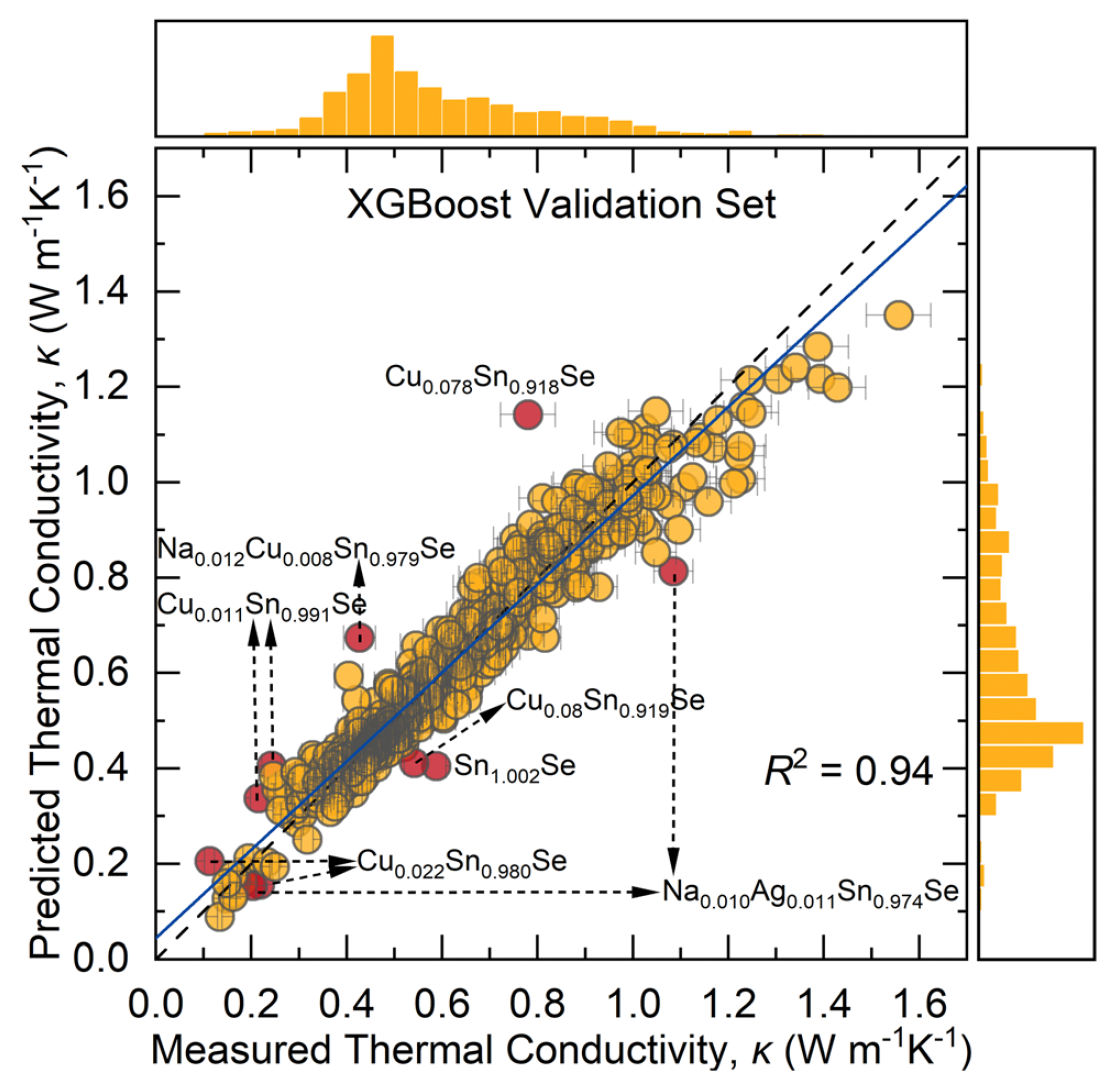
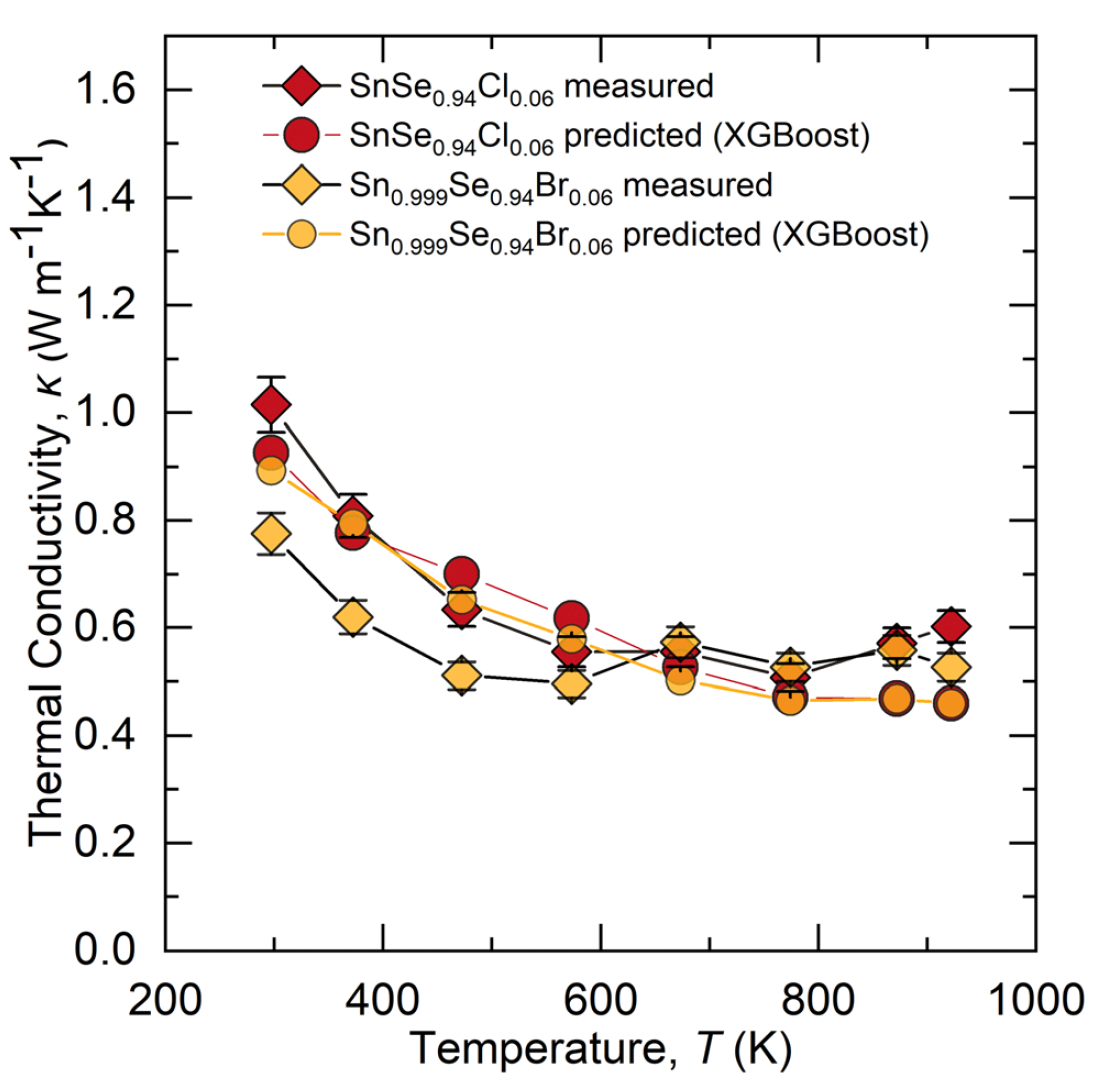
62. Experimentally validated machine learning predictions of ultralow thermal conductivity for SnSe materials
N. K. Barua, A. Golabek, A. O. Oliynyk, H. Kleinke
JOURNAL OF MATERIALS CHEMISTRY C  ·  2023  ·  doi:10.1039/D3TC01450A
Figure 1 for Experimentally validated machine learning predictions of ultralow thermal conductivity for SnSe materials Figure 2 for Experimentally validated machine learning predictions of ultralow thermal conductivity for SnSe materials

Machine learning prediction of materials with ultra-low thermal conductivity (essential for high-performance thermoelectric materials) and successful experimental validation with doped SnSe materials
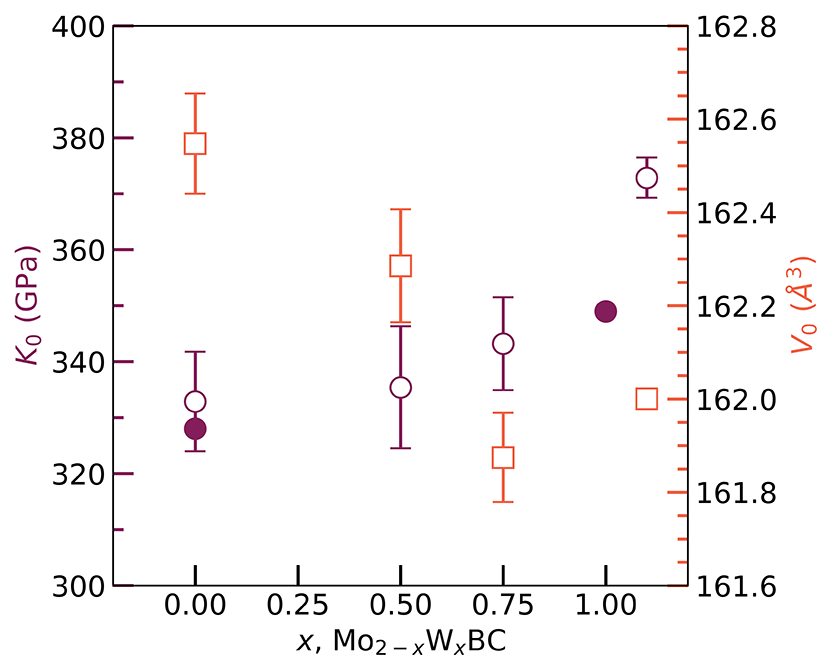
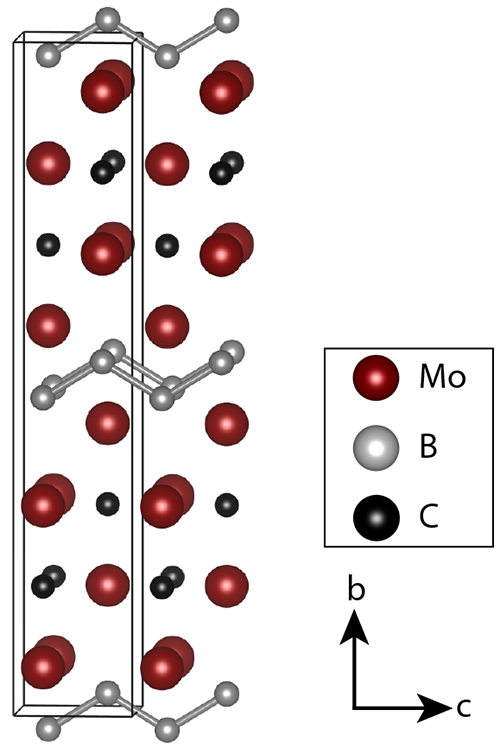
61. Trends in Bulk Compressibility of Mo2-x,WxBC Solid Solutions
Marcus E. Parry, Jackson Hendry, Samantha Couper, Aria Mansouri Tehrani, Anton O. Oliynyk, Jakoah Brgoch, Lowell Miyagi, Taylor D. Sparks
CHEMISTRY OF MATERIALS  ·  2022  ·  doi:10.1021/ACS.CHEMMATER.1C03501

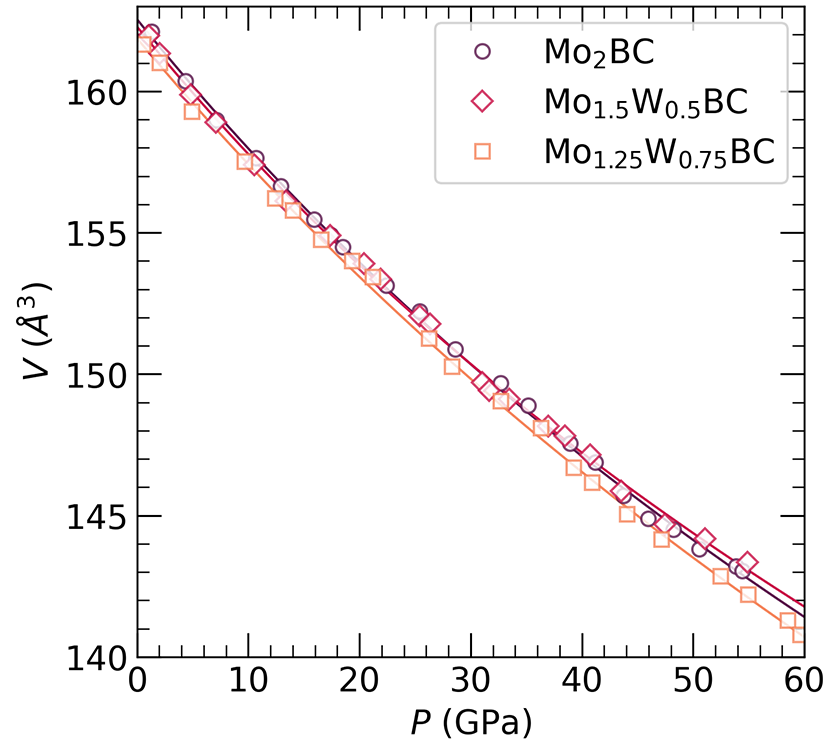
Synchrotron diffraction experiments are performed on Mo2–xWxBC solid solutions; observations align with previously reported computational results and will inform future efforts to design sustainable materials with exceptional mechanical properties
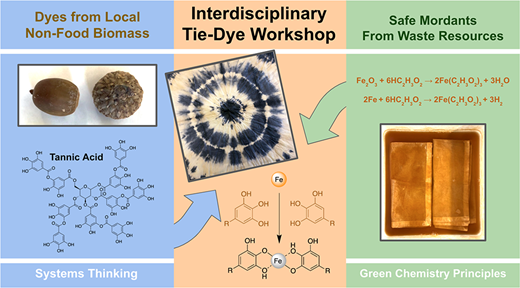
60. Tie-Dyeing with Foraged Acorns and Rust: A Workshop Connecting Green Chemistry and Environmental Science
Christian Machado, Anton O. Oliynyk, Julian R. Silverman
JOURNAL OF CHEMICAL EDUCATION  ·  2022  ·  doi:10.1021/ACS.JCHEMED.2C00086

Workshop connecting environmental science topics and green chemistry principles for undergraduate students
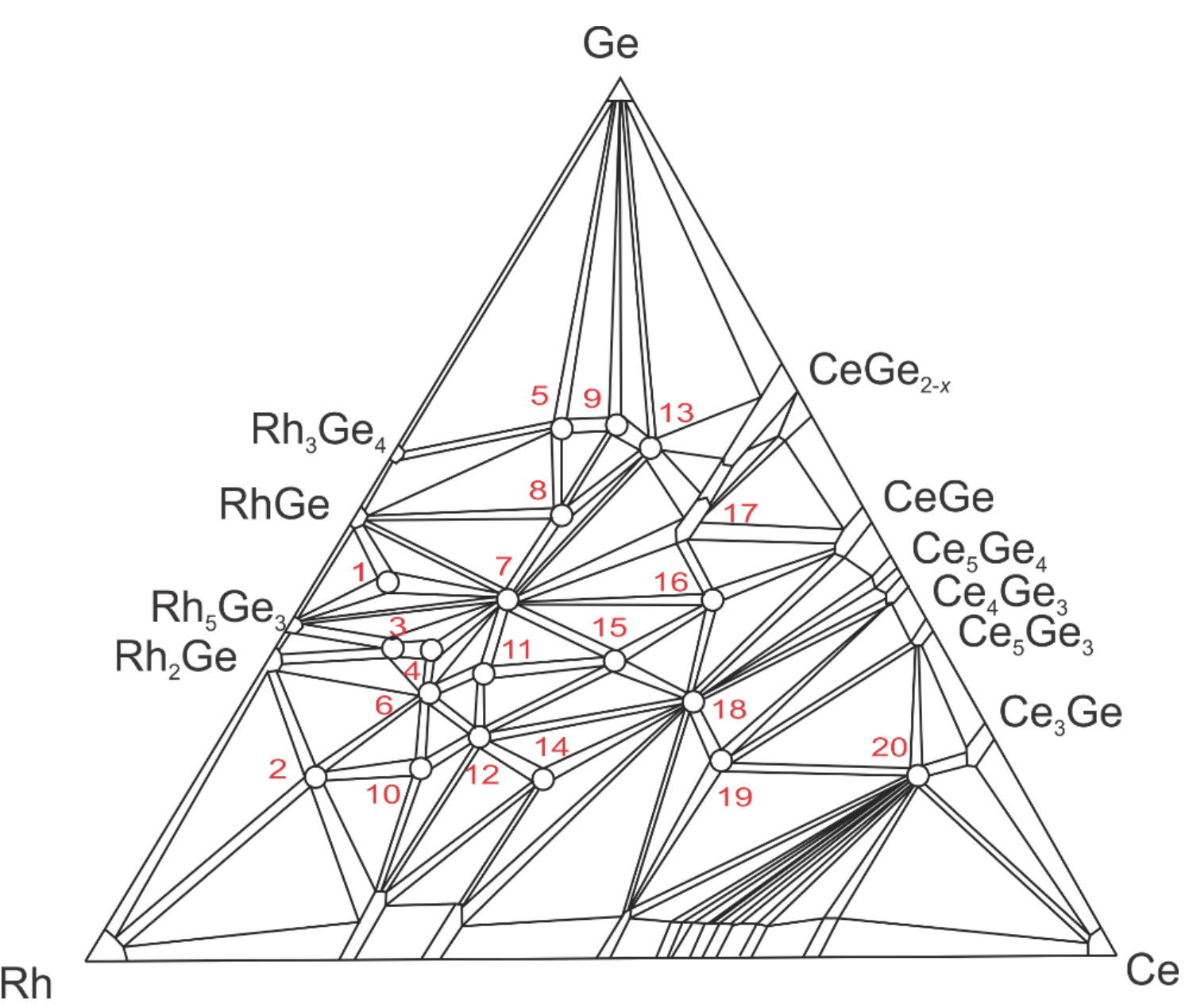
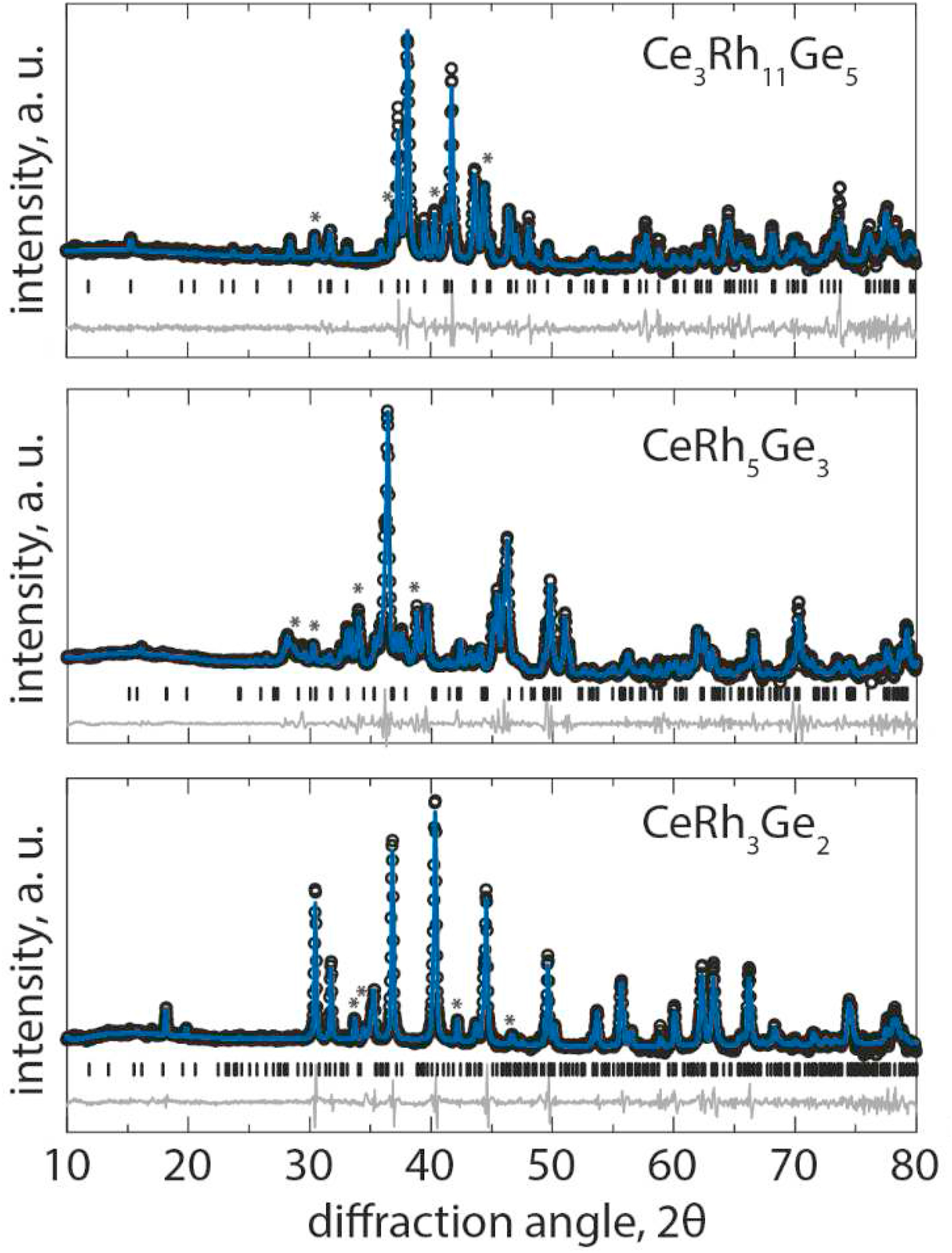
59. Three Rh-rich ternary germanides in the Ce-Rh-Ge system
Dong Zhang, Anton O. Oliynyk, Arthur Mar
JOURNAL OF SOLID STATE CHEMISTRY  ·  2021  ·  doi:10.1016/J.JSSC.2021.122585

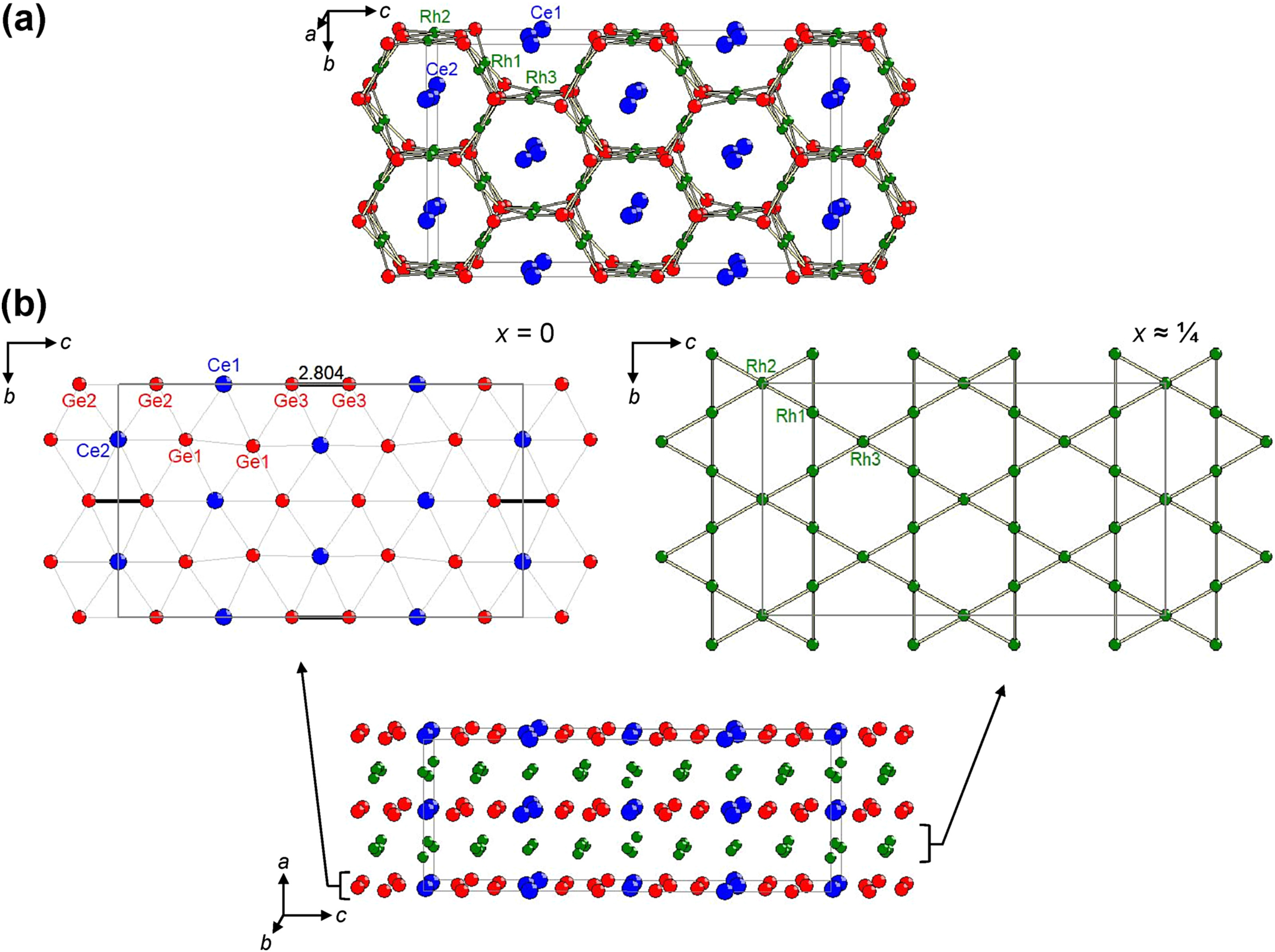
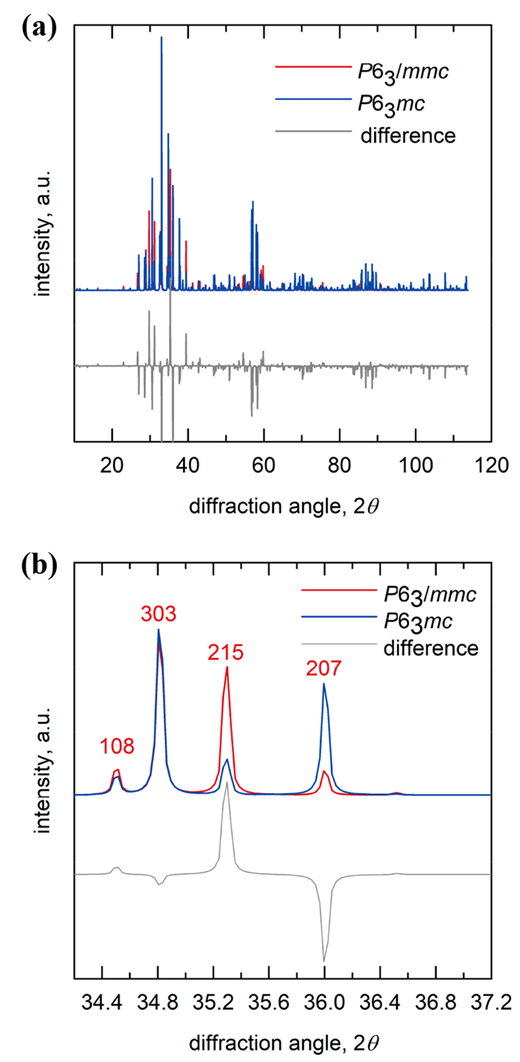
Complex phase equilibria in ternary Ce–Rh–Ge phase diagram and three novel phases with their structures discussed
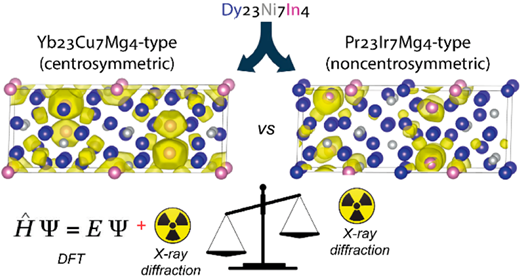
58. Ternary Rare-Earth-Metal Nickel Indides RE23Ni7In4 (RE = Gd, Tb, Dy) with Yb23Cu7Mg4-Type Structure
Yuriy B. Tyvanchuk, Matthew Fecica, Griheydi Garcia, Arthur Mar, Anton O. Oliynyk
INORGANIC CHEMISTRY  ·  2021  ·  doi:10.1021/ACS.INORGCHEM.1C02486

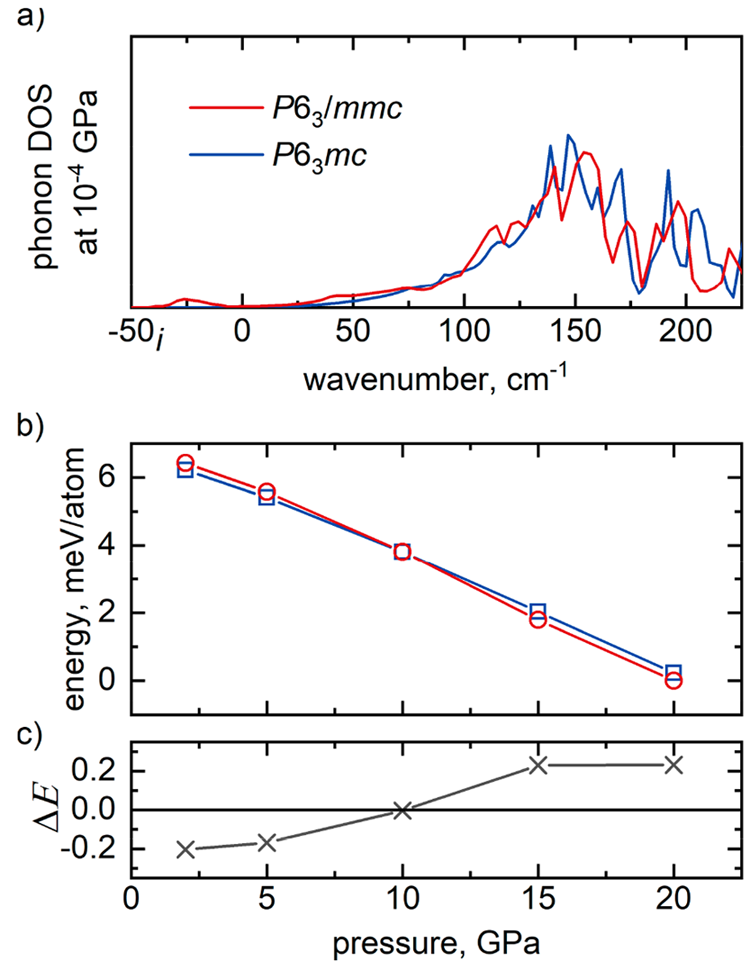
Experimental structure ambiguity could be resolved with the help from DFT approaches
57. Preface to the special issue on machine learning and data-driven design of materials issue in computational materials science
Taylor D. Sparks, Anton O. Oliynyk, Vitaliy Romaka
COMPUTATIONAL MATERIALS SCIENCE  ·  2021  ·  doi:10.1016/J.COMMATSCI.2021.110452

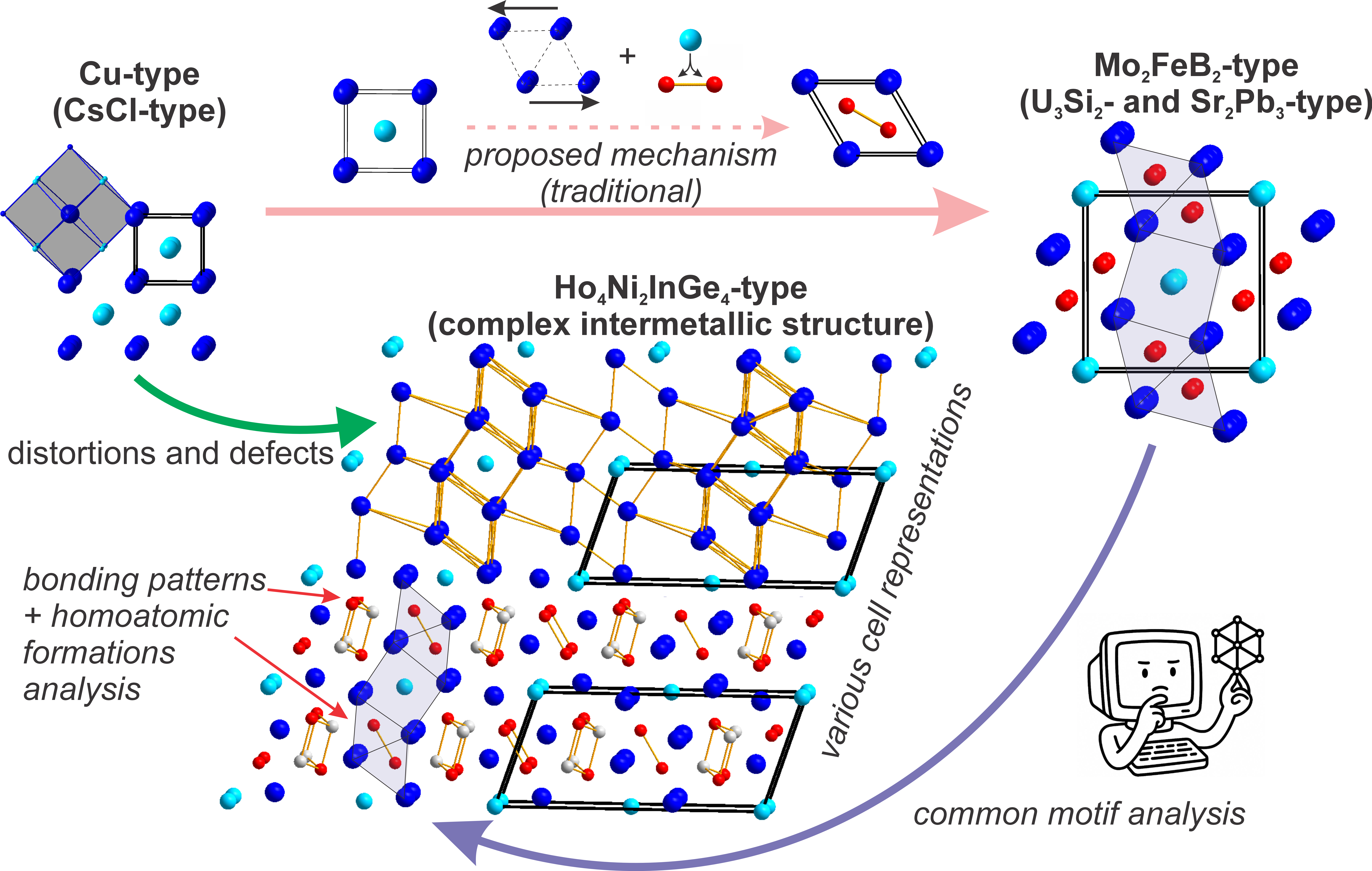
Special issue on machine learning and data-driven design of materials issue in computational materials science

56. Finding the Next Superhard Material through Ensemble Learning
Ziyan Zhang, Aria Mansouri Tehrani, Anton O. Oliynyk, Blake Day, Jakoah Brgoch
ADVANCED MATERIALS  ·  2021  ·  doi:10.1002/ADMA.202005112
Figure 1 for Finding the Next Superhard Material through Ensemble Learning Figure 2 for Finding the Next Superhard Material through Ensemble Learning

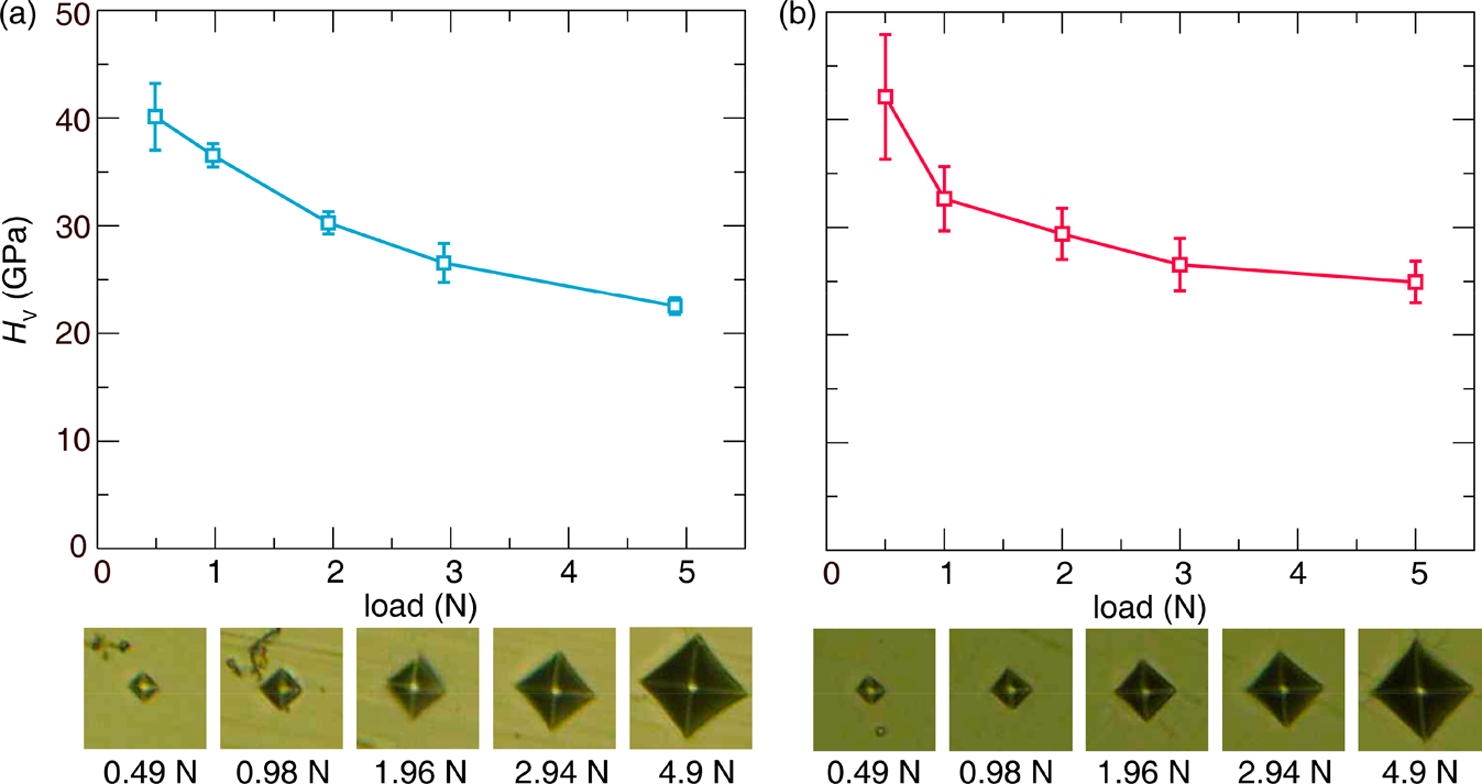
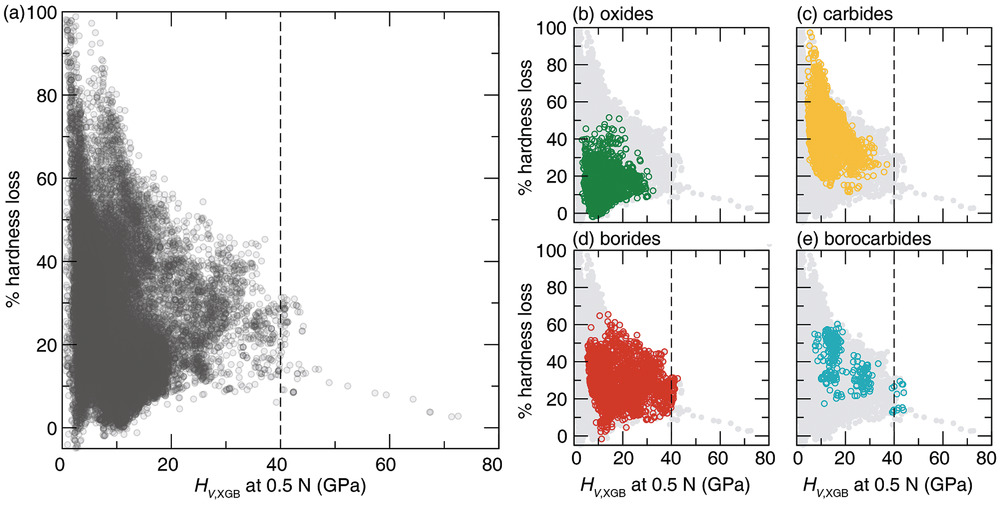
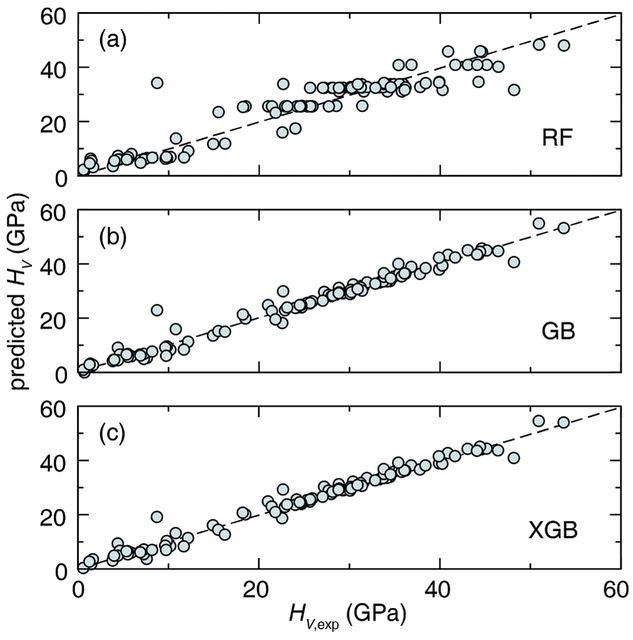
Ensemble learning creates an advantage in a high-throughput screening for a material with a specific property; in this case the next generation of superhard materials is taken as an example
55. Finding the Next Superhard Material through Ensemble Learning
Ziyan Zhang, Aria Mansouri Tehrani, Anton Oliynyk, Blake Day, Jakoah Brgoch
ChemRxiv  ·  July 2020  ·  ppr:PPR187651
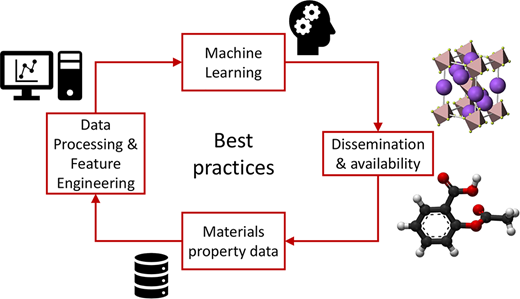
54. Machine Learning for Materials Scientists: An Introductory Guide Towards Best Practices
Anthony Wang, Ryan Murdock, Steven Kauwe, Anton Oliynyk, Aleksander Gurlo, Jakoah Brgoch, Kristin Persson, Taylor Sparks
ChemRxiv  ·  May 2020  ·  ppr:PPR159189

The key components of a successful machine learning study in the materials domain; helpful protocols and best practices
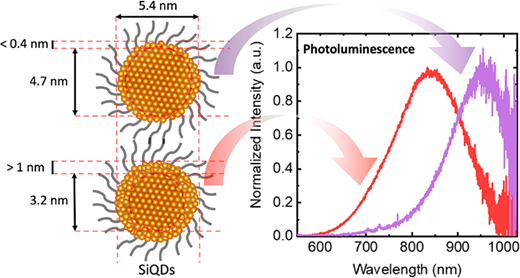
53. A Tale of Seemingly “Identical” Silicon Quantum Dot Families: Structural Insight into Silicon Quantum Dot Photoluminescence
Alyxandra Thiessen, Lijuan Zhang, Anton Oliynyk, Haoyang Yu, Kevin O’Connor, Alkiviathes Meldrum, Jonathan G.C. Veinot
ChemRxiv  ·  February 2020  ·  ppr:PPR113355

Essential structural insight into the correlation between the dimensions and PL maximum of SiQDs through a direct comparison of samples that exhibit statistically identical physical dimensions (dTEM) and chemical compositions but different crystallite size (dXRD) and PL maxima
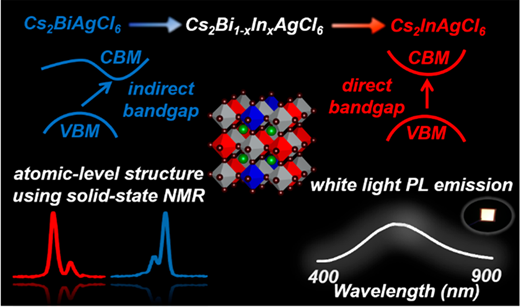
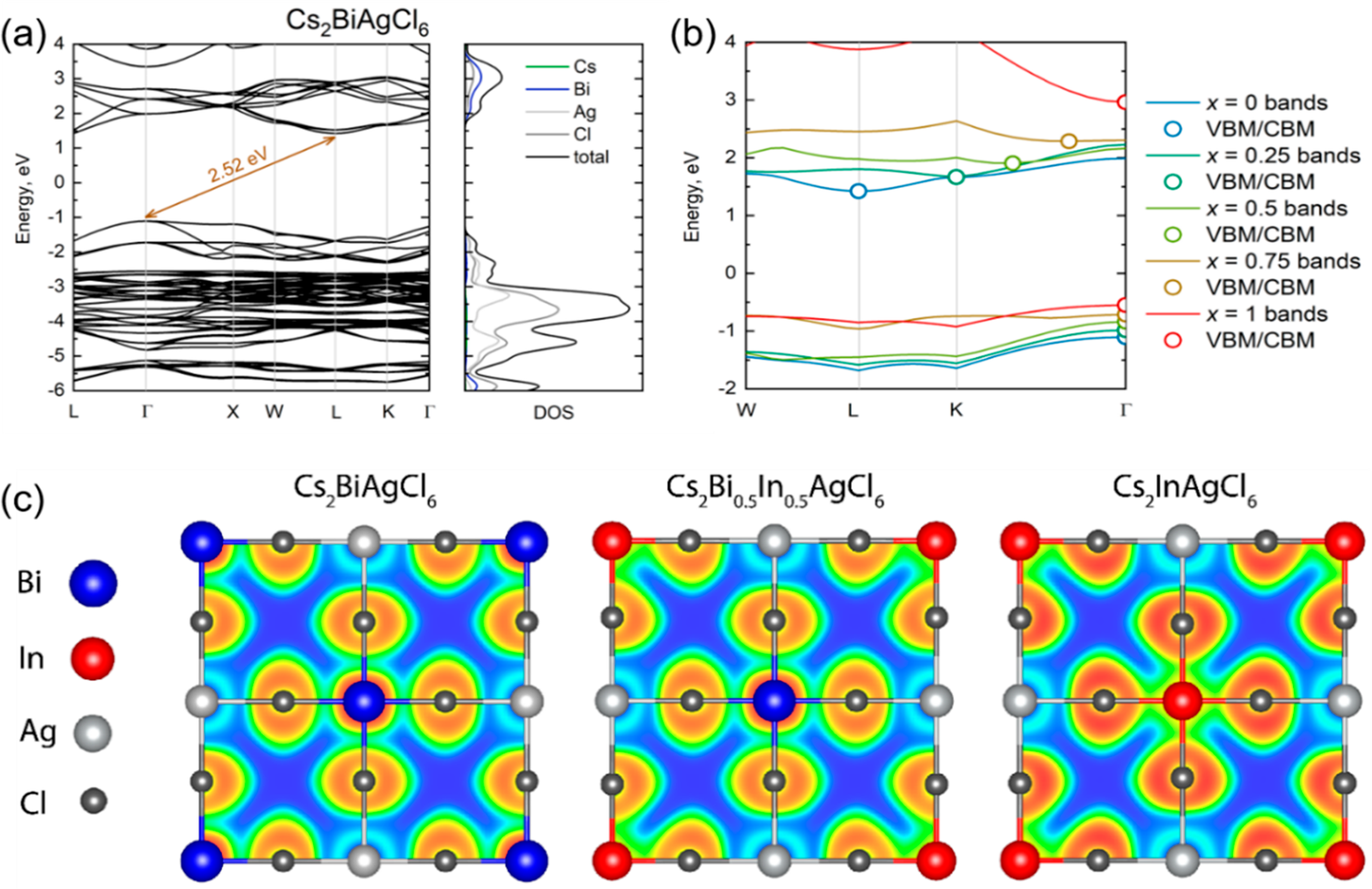
52. Tailorable Indirect to Direct Band-Gap Double Perovskites with Bright White-Light Emission: Decoding Chemical Structure Using Solid-State NMR
Abhoy Karmakar, Guy M. Bernard, Alkiviathes Meldrum, Anton O. Oliynyk, Vladimir K. Michaelis
JOURNAL OF THE AMERICAN CHEMICAL SOCIETY  ·  2020  ·  doi:10.1021/JACS.0C02198
Figure 1 for Tailorable Indirect to Direct Band-Gap Double Perovskites with Bright White-Light Emission: Decoding Chemical Structure Using Solid-State NMR Figure 2 for Tailorable Indirect to Direct Band-Gap Double Perovskites with Bright White-Light Emission: Decoding Chemical Structure Using Solid-State NMR

This work provides an advance in understanding the photophysical properties that correlate long- to short-range structural elucidation of these newly developed solid-state white-light emitting materials
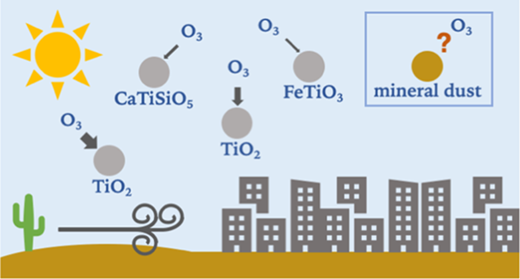
51. Significant Variability in the Photocatalytic Activity of Natural Titanium-Containing Minerals: Implications for Understanding and Predicting Atmospheric Mineral Dust Photochemistry
Maya Abou-Ghanem, Anton O. Oliynyk, Zhihao Chen, Laura C. Matchett, Devon T. McGrath, Michael J. Katz, Andrew J. Locock, Sarah A. Styler
ENVIRONMENTAL SCIENCE & TECHNOLOGY  ·  2020  ·  doi:10.1021/ACS.EST.0C05861

Photochemistry of atmospheric dust is both richer and more complex than previously considered
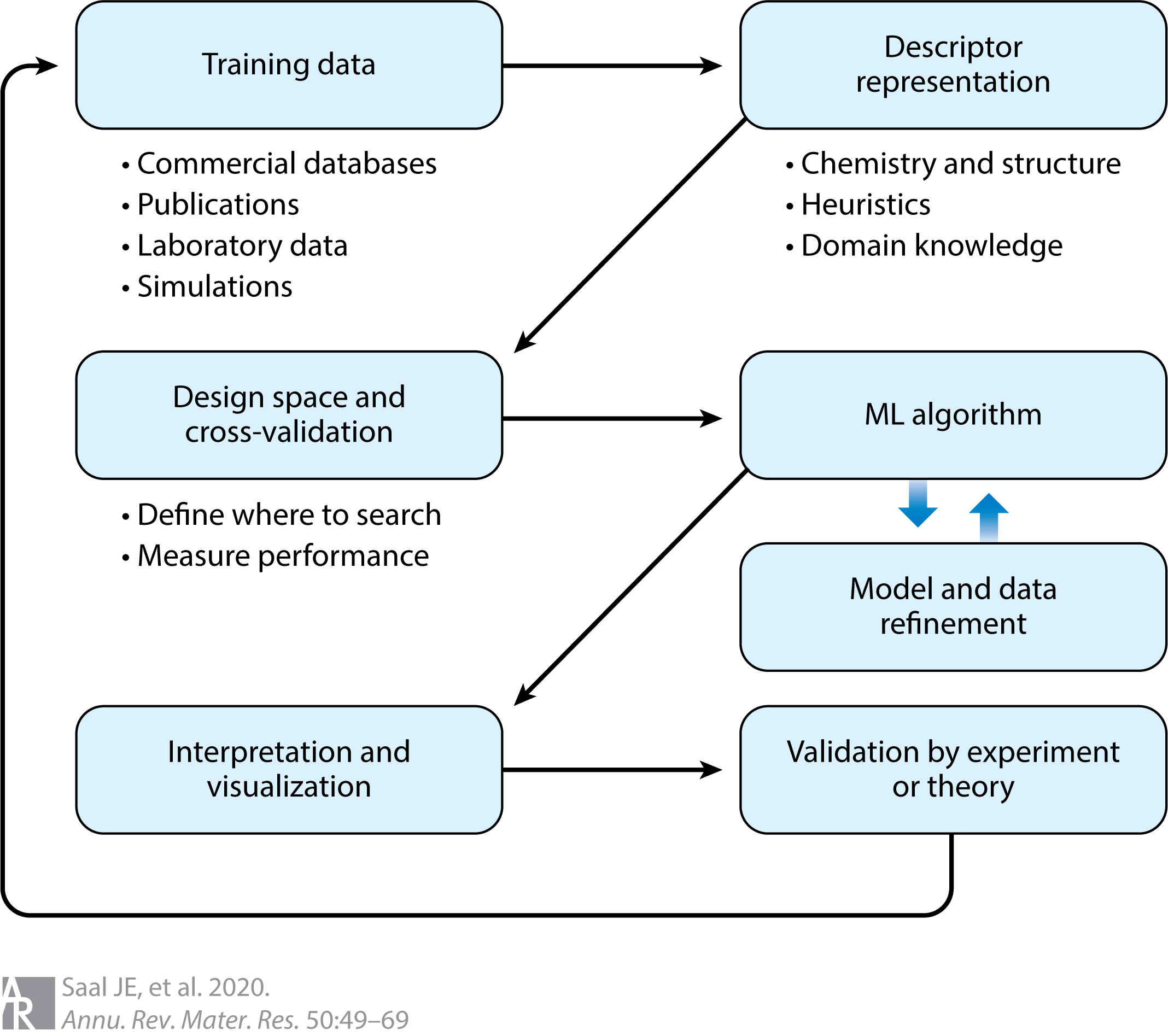
50. Machine Learning in Materials Discovery: Confirmed Predictions and Their Underlying Approaches
James E. Saal, Anton O. Oliynyk, Bryce Meredig
ANNUAL REVIEW OF MATERIALS RESEARCH, VOL 50, 2020  ·  2020  ·  doi:10.1146/ANNUREV-MATSCI-090319-010954

An important review on the experimentally validated ML works in the domain of materials chemistry (up to year 2020); discussion on augmenting expertise and the problems with extrapolation in ML method
49. Machine Learning for Materials Scientists: An Introductory Guide toward Best Practices
Anthony Yu-Tung Wang, Ryan J. Murdock, Steven K. Kauwe, Anton O. Oliynyk, Aleksander Gurlo, Jakoah Brgoch, Kristin A. Persson, Taylor D. Sparks
CHEMISTRY OF MATERIALS  ·  2020  ·  doi:10.1021/ACS.CHEMMATER.0C01907
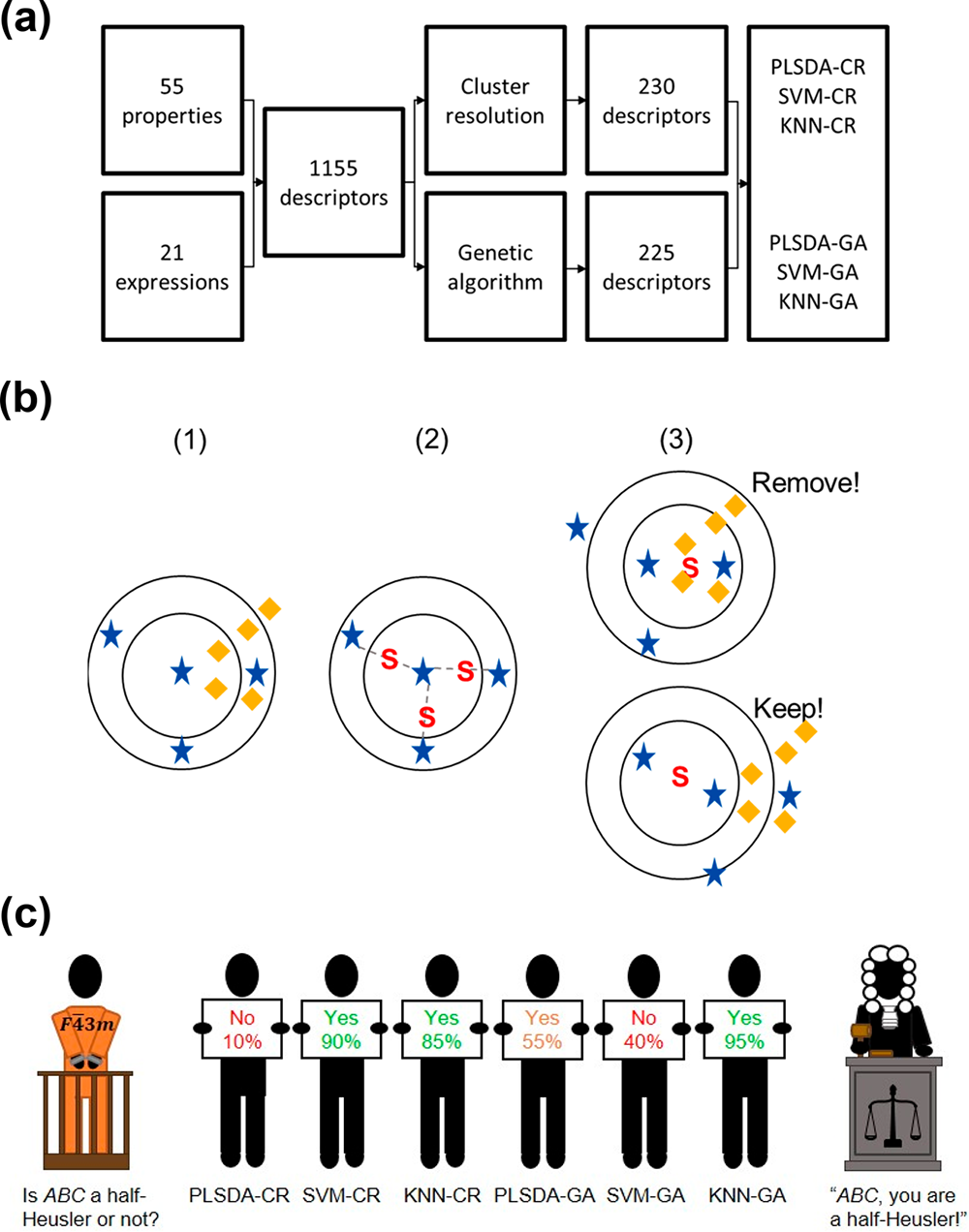
48. Half-Heusler Structures with Full-Heusler Counterparts: Machine-Learning Predictions and Experimental Validation
Alexander S. Gzyl, Anton O. Oliynyk, Arthur Mar
CRYSTAL GROWTH & DESIGN  ·  2020  ·  doi:10.1021/ACS.CGD.0C00646

The importance of the balanced datasets (and the ways to improve it) for machine learning models to predict and synthesize novel intermetallics from the Heusler family
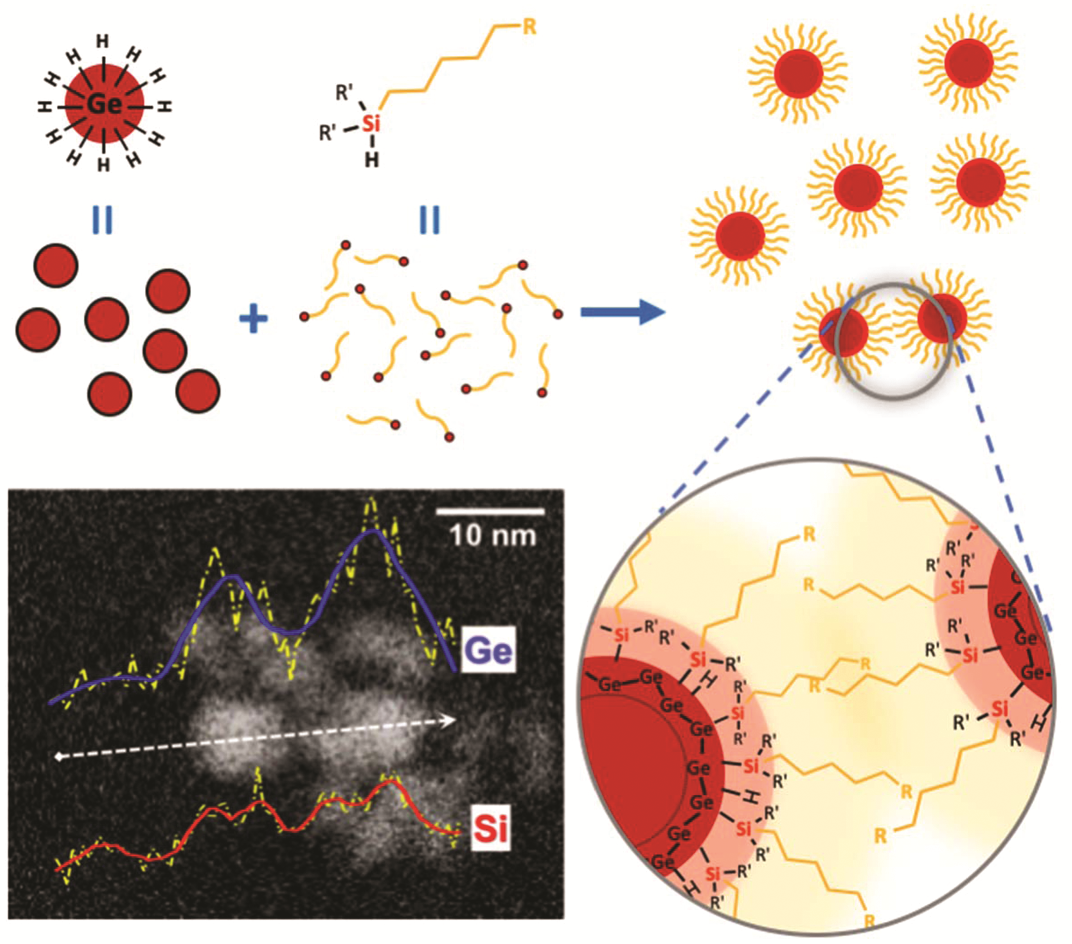
47. Dehydrocoupling - an alternative approach to functionalizing germanium nanoparticle surfaces
Md Asjad Hossain, Morteza Javadi, Haoyang Yu, Alyxandra N. Thiessen, Nduka Ikpo, Anton O. Oliynyk, Jonathan G. C. Veinot
NANOSCALE  ·  2020  ·  doi:10.1039/C9NR10837H

Surface functionalization is an essential aspect of nanoparticle design and preparation; it can impart stability, processability, functionality, as well as tailor optoelectronic properties that facilitate future applications
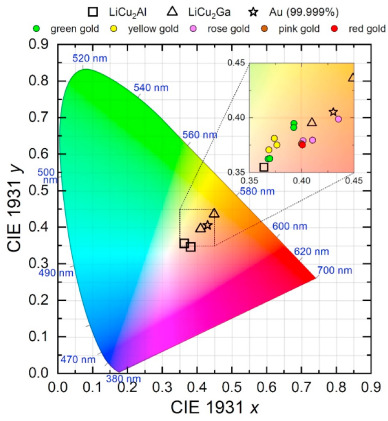
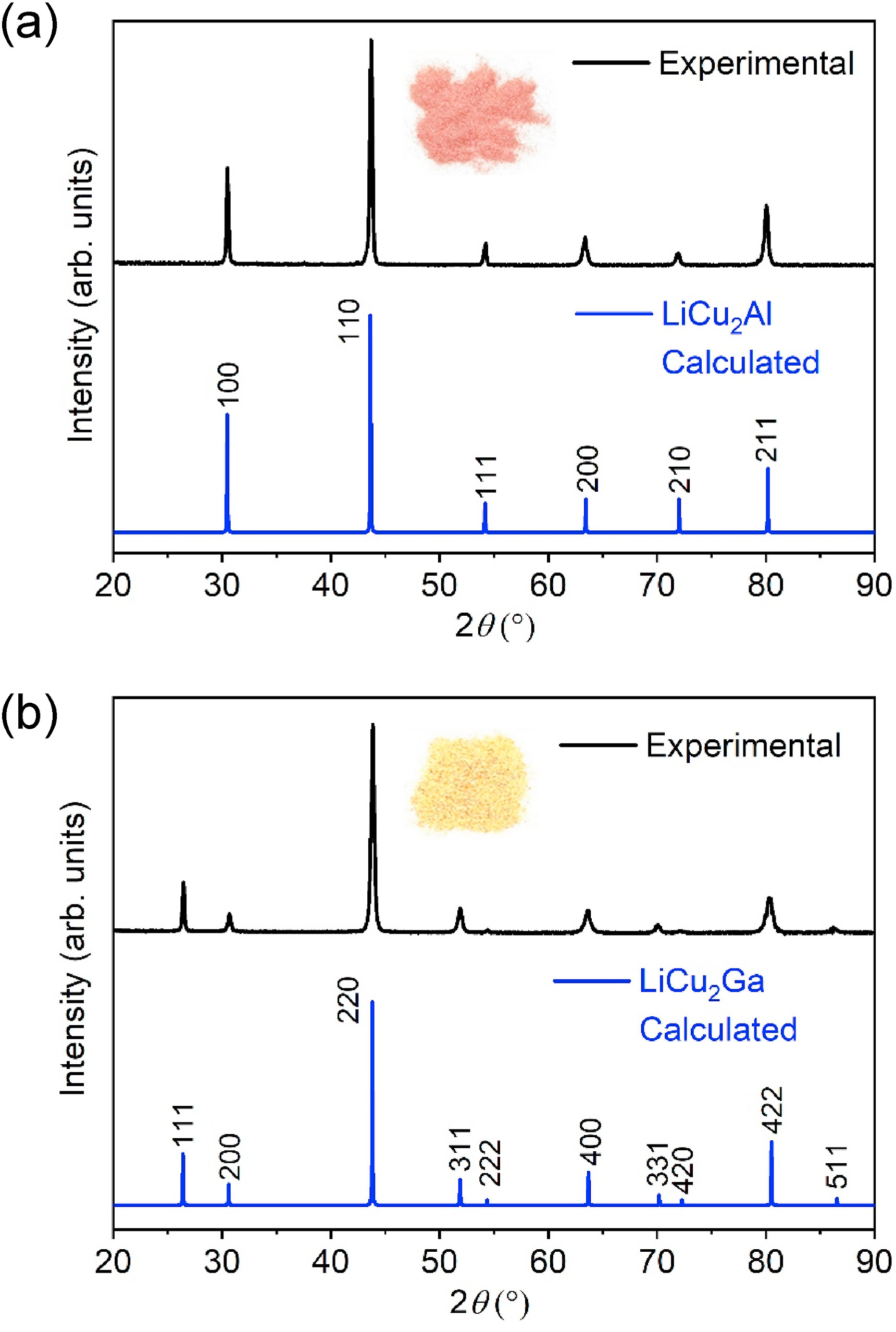
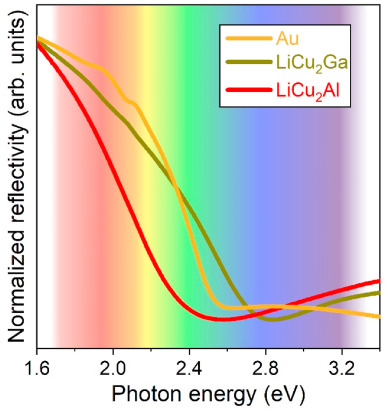
46. Coloured intermetallic compounds LiCu2Al and LiCu2Ga
Vidyanshu Mishra, Abishek K. Iyer, Dundappa Mumbaraddi, Anton O. Oliynyk, Guillaume Zuber, Aurélien Boucheron, Grygoriy Dmytriv, Guy M. Bernard, Vladimir K. Michaelis, Arthur Mar
JOURNAL OF SOLID STATE CHEMISTRY  ·  2020  ·  doi:10.1016/J.JSSC.2020.121703

Study of the chemistry behind colored intermetallics and how to shift the color with structural changes
45. A Tale of Seemingly "Identical" Silicon Quantum Dot Families: Structural Insight into Silicon Quantum Dot Photoluminescence
Alyxandra N. Thiessen, Lijuan Zhang, Anton O. Oliynyk, Haoyang Yu, Kevin M. O’Connor, Alkiviathes Meldrum, Jonathan G. C. Veinot
CHEMISTRY OF MATERIALS  ·  2020  ·  doi:10.1021/ACS.CHEMMATER.0C00650
44. Solving the Colouring Problem in Half-Heusler Structures: Machine-Learning Predictions and Experimental Validation
Alexander Gzyl, Anton Oliynyk, Lawrence Adutwum, Arthur Mar
ChemRxiv  ·  March 2019  ·  ppr:PPR74557
43. Virtual Issue on Machine-Learning Discoveries in Materials Science
Anton O. Oliynyk, Jillian M. Buriak
CHEMISTRY OF MATERIALS  ·  2019  ·  doi:10.1021/ACS.CHEMMATER.9B03854

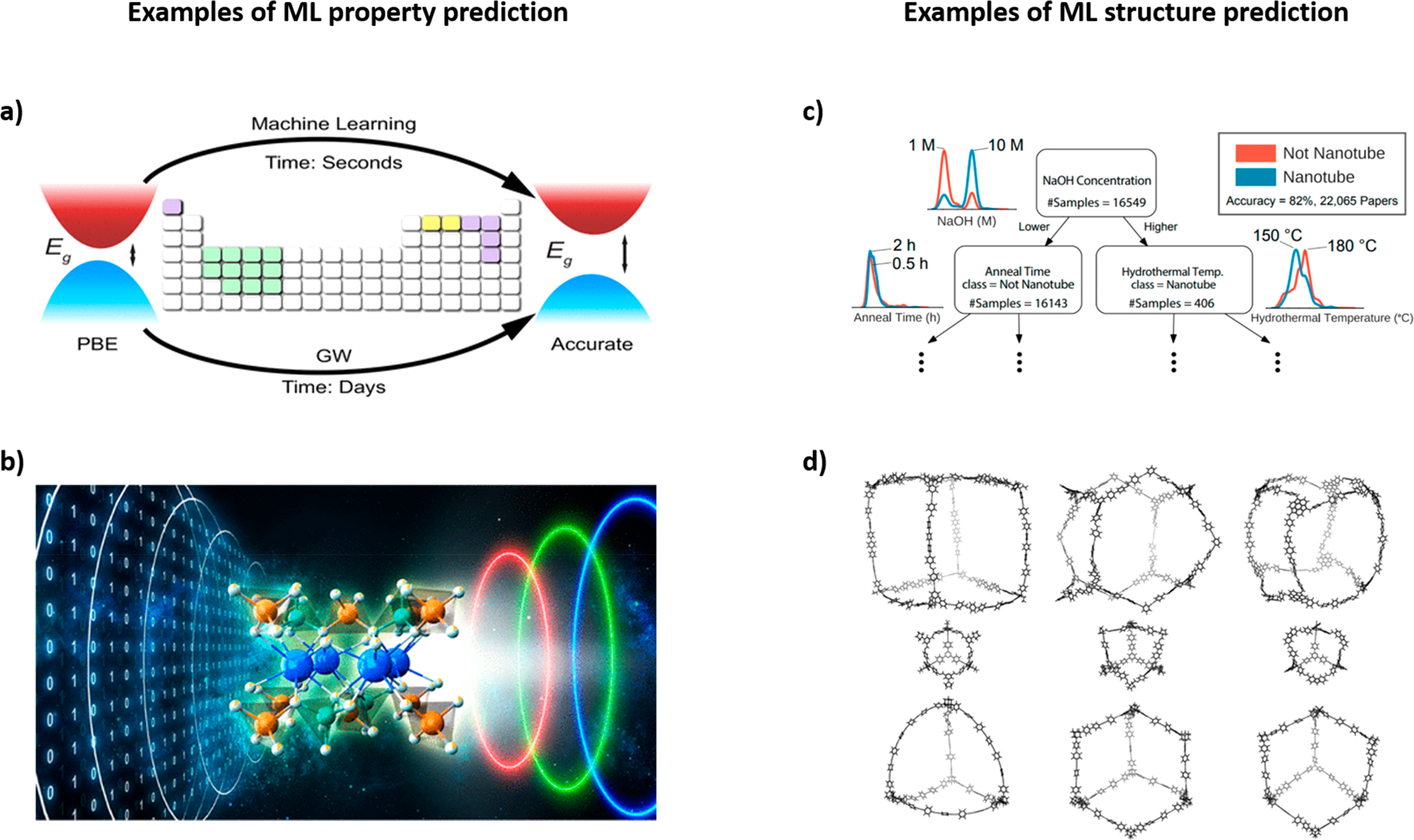
While scientists tend to shy away from using the expression “paradigm shift” due to overuse, data-driven science could actually be the real deal; data-driven science has been termed the fourth paradigm shift after empirical science (the first), model-based theoretical science (the second), and computational science (the third)
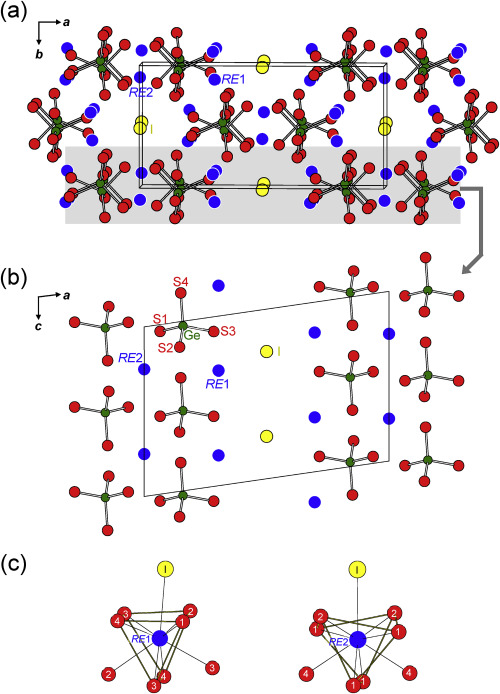
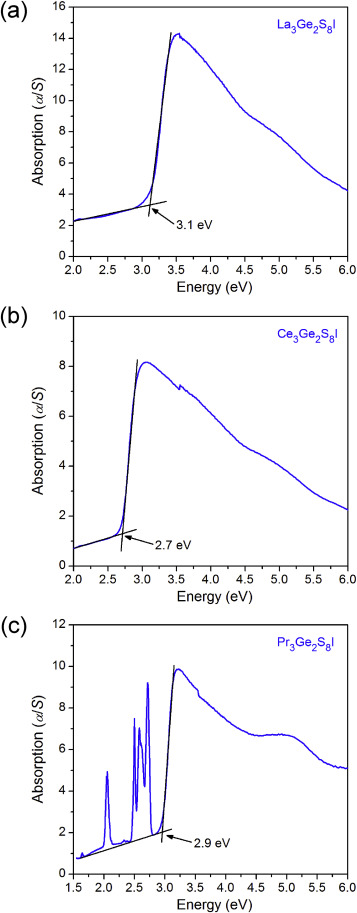
42. Synthesis, structure, and properties of rare-earth germanium sulfide iodides RE3Ge2S8I (RE = La, Ce, Pr)
Dundappa Mumbaraddi, Abishek K. Iyer, Ebru Üzer, Vidyanshu Mishra, Anton O. Oliynyk, Tom Nilges, Arthur Mar
JOURNAL OF SOLID STATE CHEMISTRY  ·  2019  ·  doi:10.1016/J.JSSC.2019.03.034
Figure 1 for Synthesis, structure, and properties of rare-earth germanium sulfide iodides i RE i sub 3 sub Ge sub 2 sub S sub 8 sub I i RE i La, Ce, Pr Figure 2 for Synthesis, structure, and properties of rare-earth germanium sulfide iodides i RE i sub 3 sub Ge sub 2 sub S sub 8 sub I i RE i La, Ce, Pr

Synthesis, structure, and properties of novel rare-earth germanium sulfide iodides RE3Ge2S8I
41. Solving the Coloring Problem in Half-Heusler Structures: Machine Learning Predictions and Experimental Validation
Alexander S. Gzyl, Anton O. Oliynyk, Lawrence A. Adutwum, Arthur Mar
INORGANIC CHEMISTRY  ·  2019  ·  doi:10.1021/ACS.INORGCHEM.9B00987
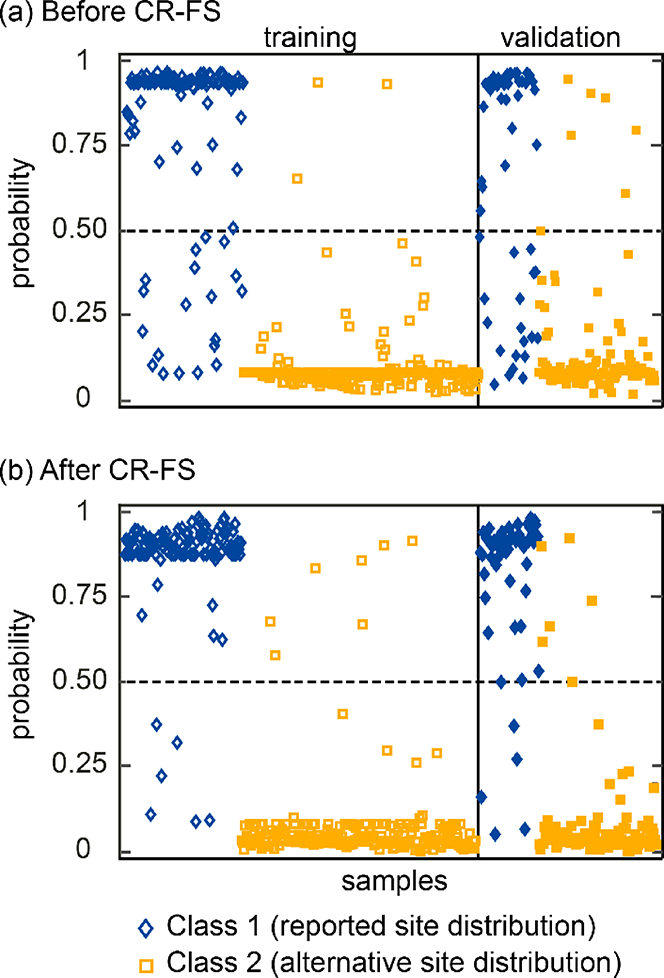
Figure 1 for Solving the Coloring Problem in Half-Heusler Structures: Machine Learning Predictions and Experimental Validation Figure 2 for Solving the Coloring Problem in Half-Heusler Structures: Machine Learning Predictions and Experimental Validation

Machine learning helps to identify incorrect literature structure reports and correct them. Subsequent DFT and experimental validation emphasizes the importance of ML for lab discoveries
40. Single-Crystal Automated Refinement (SCAR): A Data-Driven Method for Determining Inorganic Structures
Gayatri Viswanathan, Anton O. Oliynyk, Erin Antono, Julia Ling, Bryce Meredig, Jakoah Brgoch
INORGANIC CHEMISTRY  ·  2019  ·  doi:10.1021/ACS.INORGCHEM.9B00344
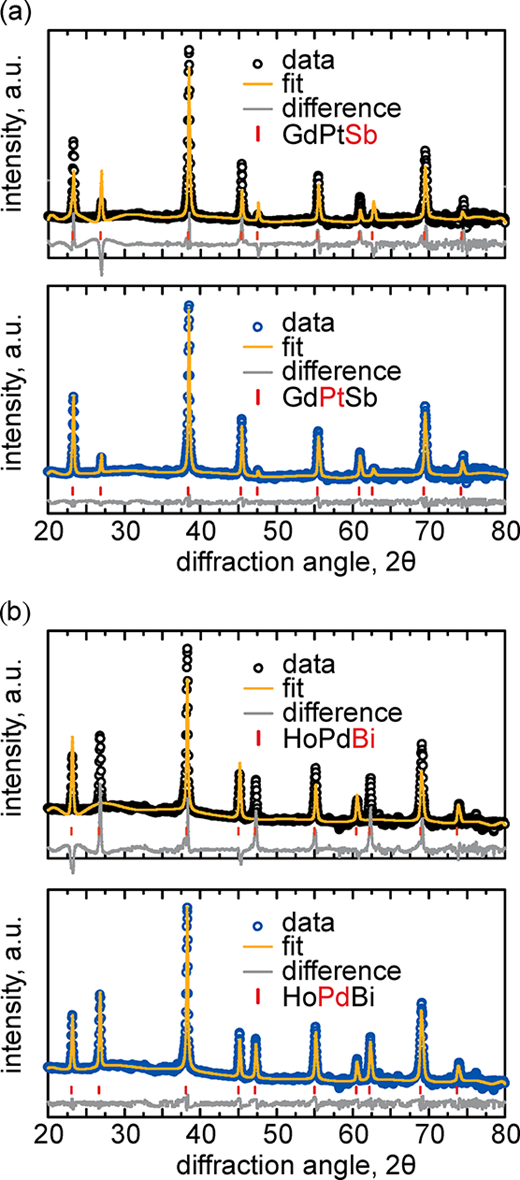
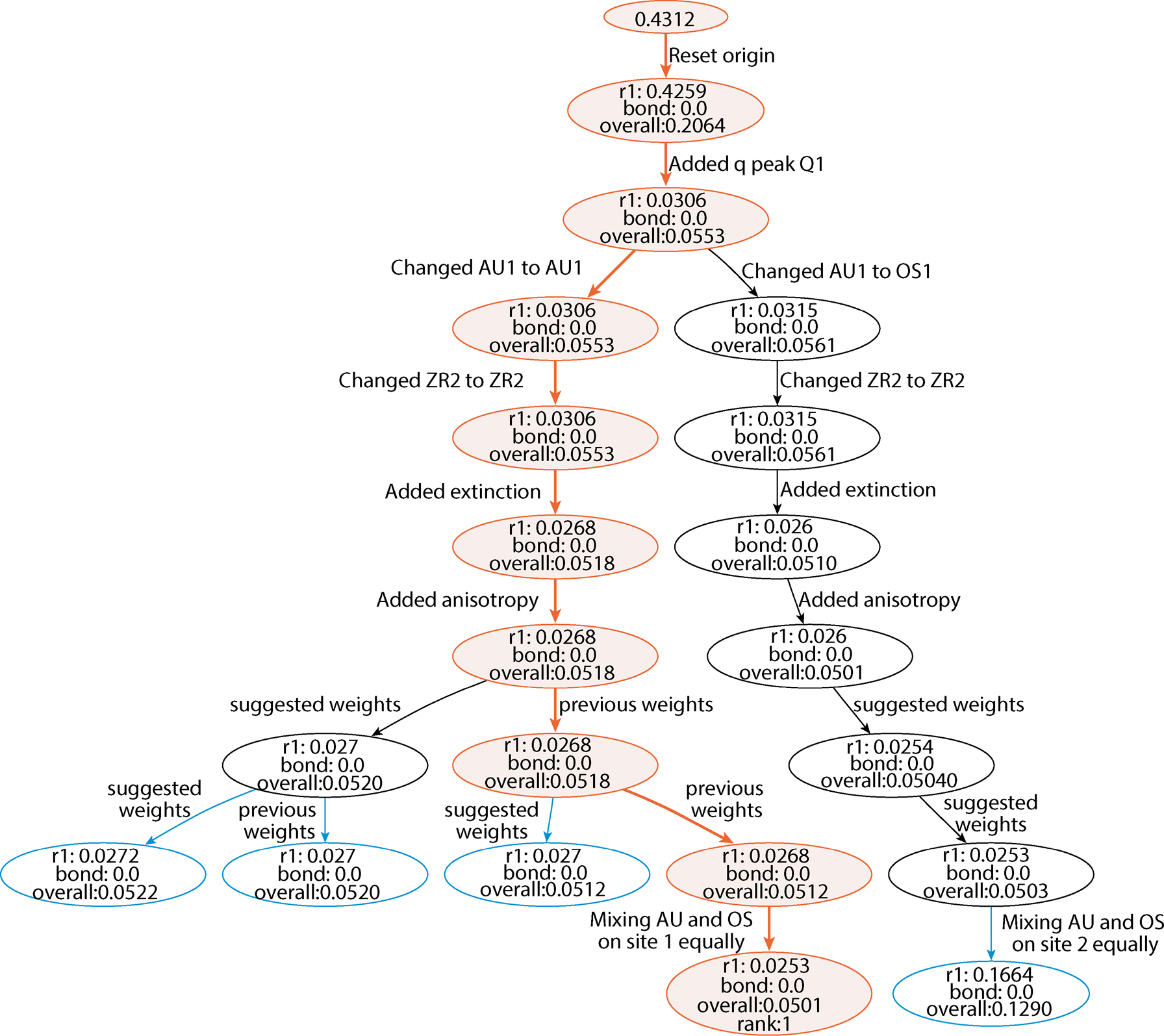
Figure 1 for Single-Crystal Automated Refinement SCAR : A Data-Driven Method for Determining Inorganic Structures Figure 2 for Single-Crystal Automated Refinement SCAR : A Data-Driven Method for Determining Inorganic Structures

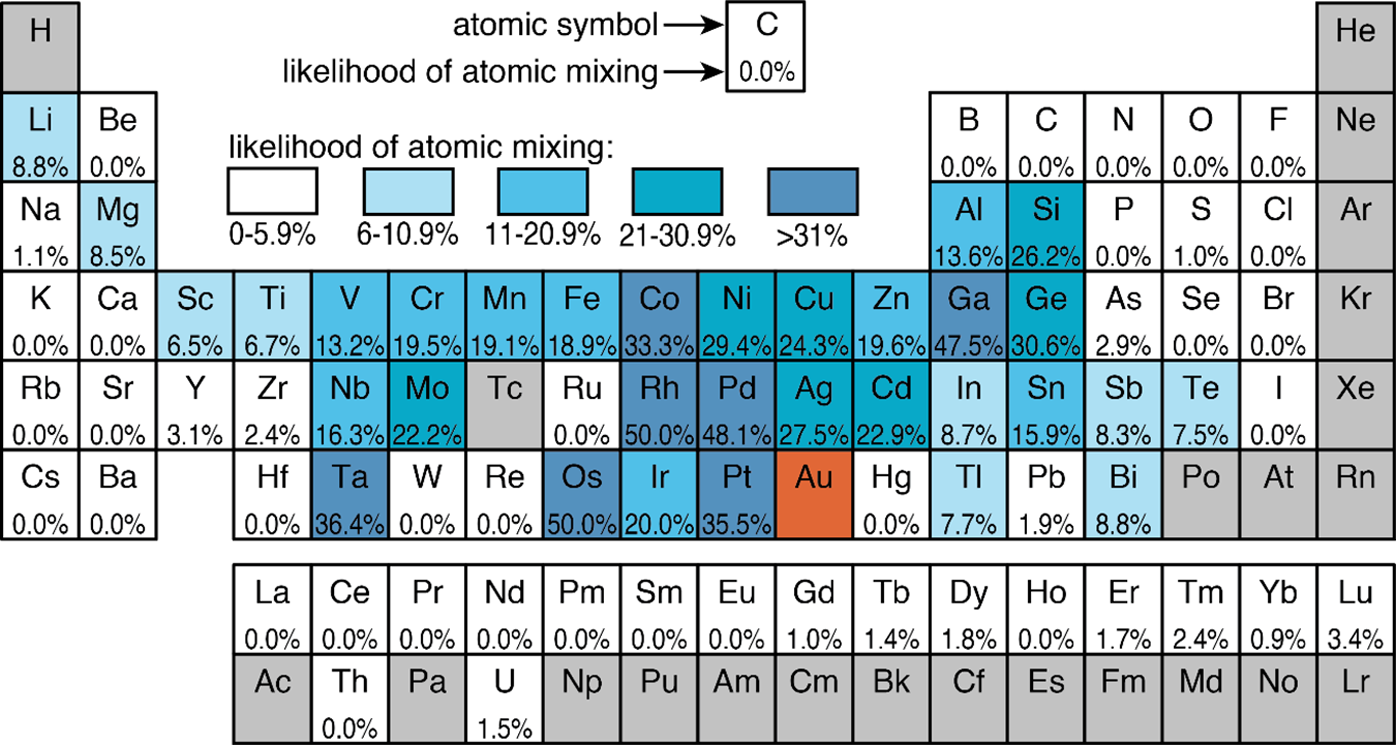
Automated single crystal diffraction data refinement approach was tested on two novel intermetallic structures. The refinement routine take into account site deficiency and atomic mixing and helps to screen all other possible structural models
39. Silicon Nanoparticles: Are They Crystalline from the Core to the Surface?
Alyxandra N. Thiessen, Michelle Ha, Riley W. Hooper, Haoyang Yu, Anton O. Oliynyk, Jonathan G. C. Veinot, Vladimir K. Michaelis
CHEMISTRY OF MATERIALS  ·  2019  ·  doi:10.1021/ACS.CHEMMATER.8B03074
Figure 1 for Silicon Nanoparticles: Are They Crystalline from the Core to the Surface Figure 2 for Silicon Nanoparticles: Are They Crystalline from the Core to the Surface

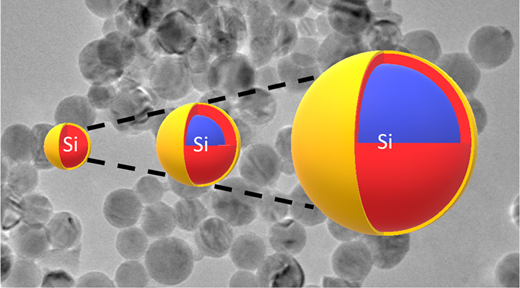
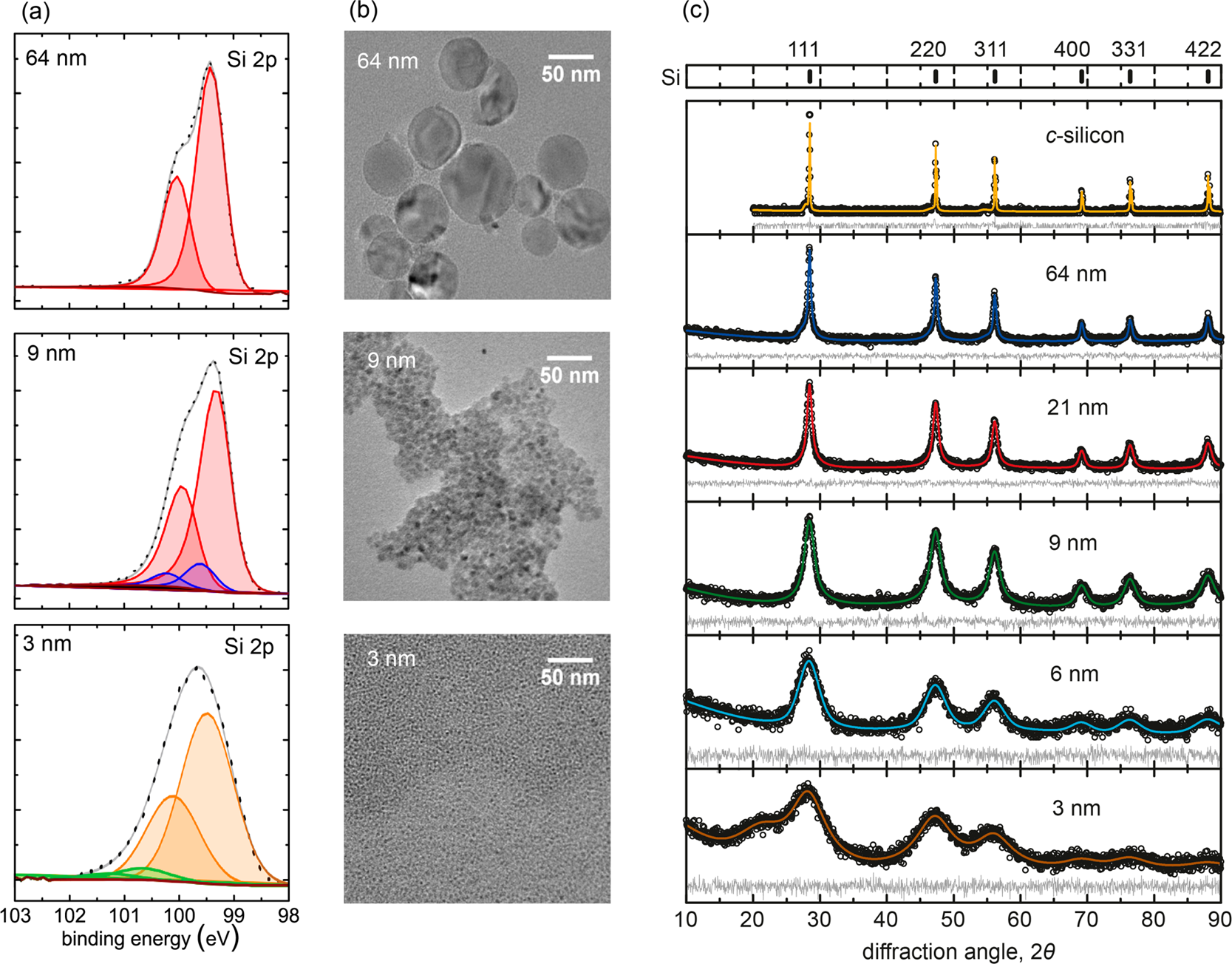
Crystallinity of Si nanoparticles evaluated with various techniques; Si nanoparticles consist of crystalline core and surface with the relative proportions changing based on the nanoparticle size
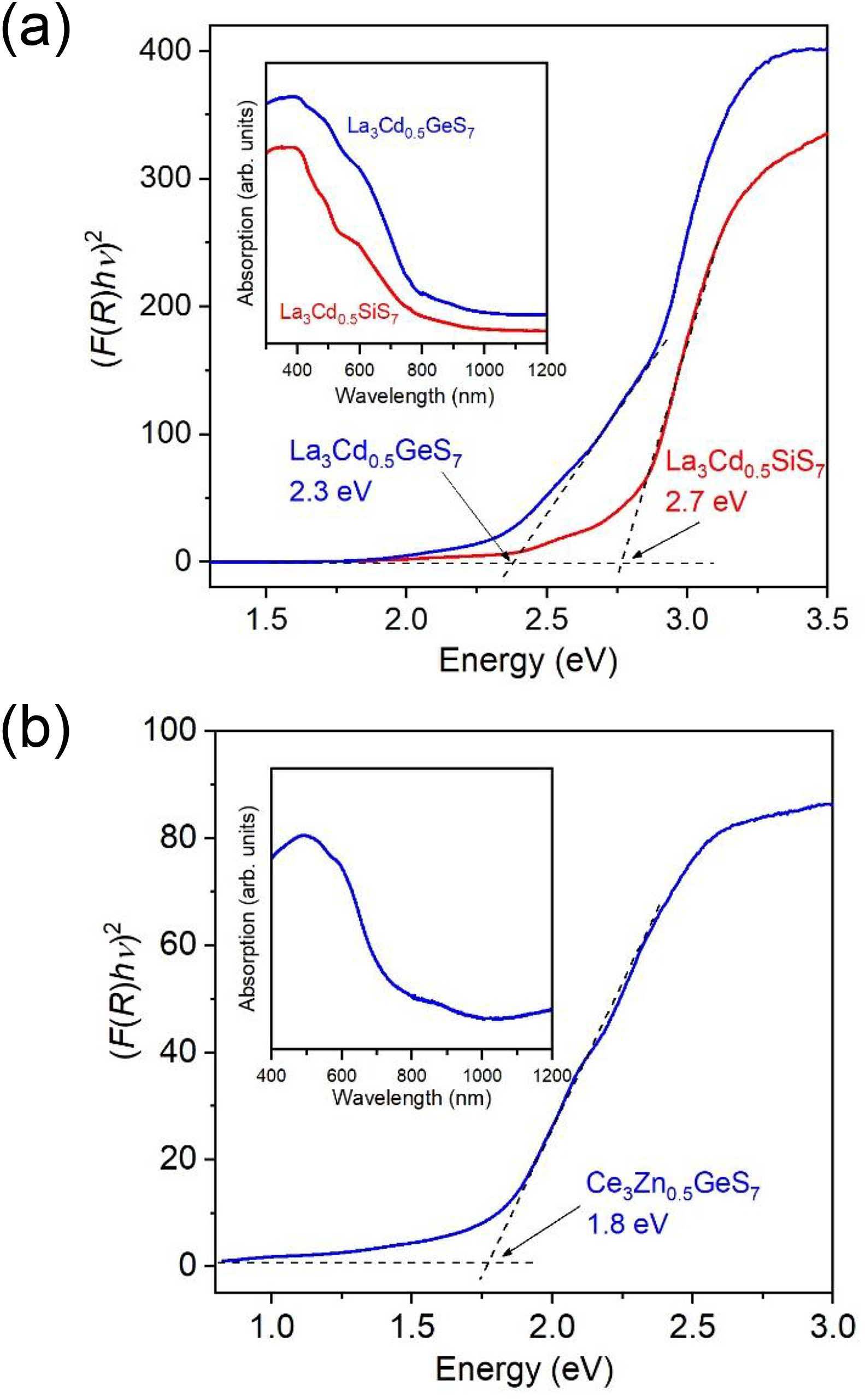
38. Quaternary rare-earth sulfides RE3M0.5M′S7 (M = Zn, Cd; M′ = Si, Ge)
Yuqiao Zhou, Abishek K. Iyer, Anton O. Oliynyk, Manon Heyberger, Yixuan Lin, Yu Qiu, Arthur Mar
JOURNAL OF SOLID STATE CHEMISTRY  ·  2019  ·  doi:10.1016/J.JSSC.2019.120914
Figure 1 for Quaternary rare-earth sulfides i RE i sub 3 sub i M i sub 0.5 sub i M i S sub 7 sub i M i Zn, Cd; i M i Si, Ge Figure 2 for Quaternary rare-earth sulfides i RE i sub 3 sub i M i sub 0.5 sub i M i S sub 7 sub i M i Zn, Cd; i M i Si, Ge

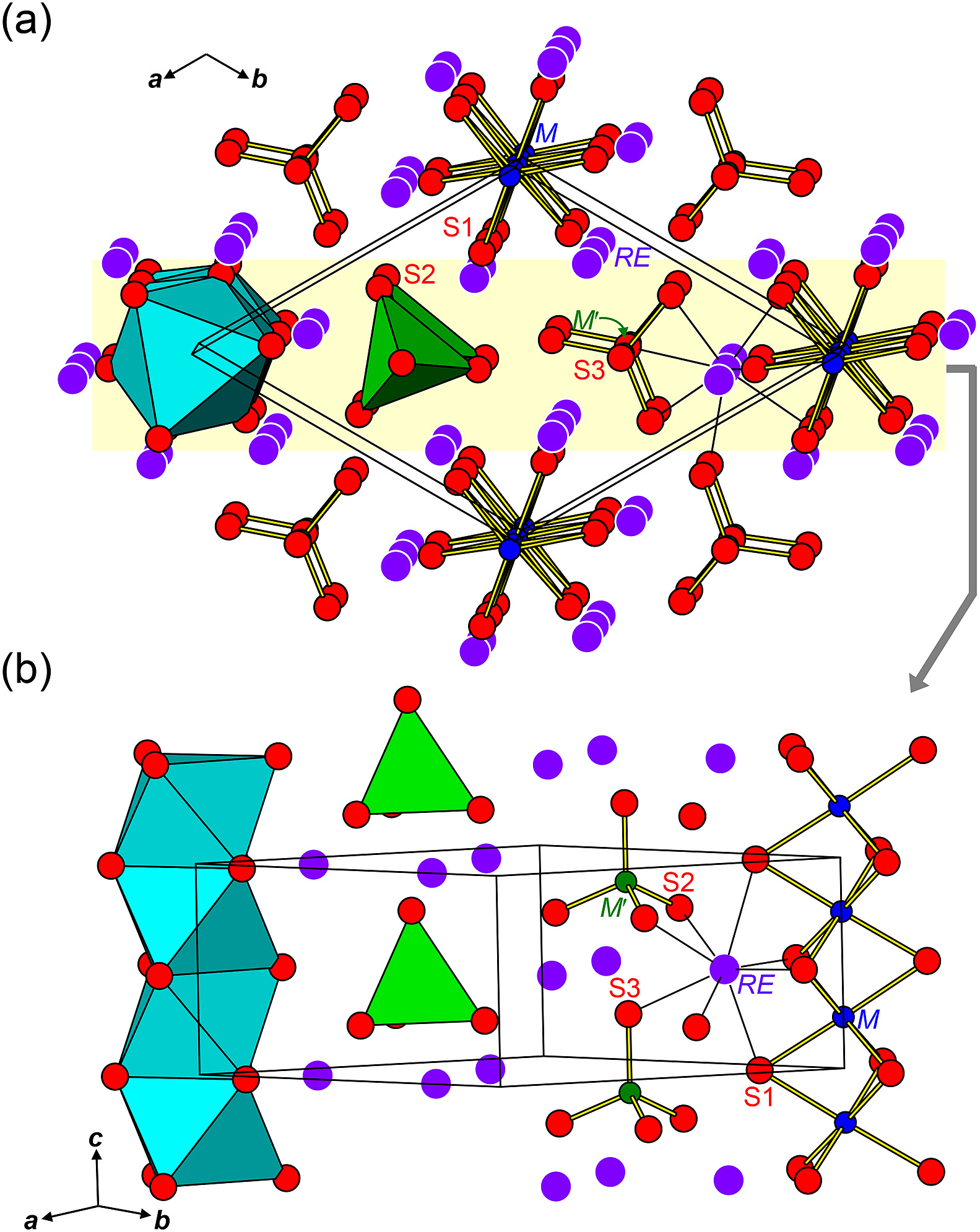
Four novel quaternary rare-earth sulfides, their structure and properties
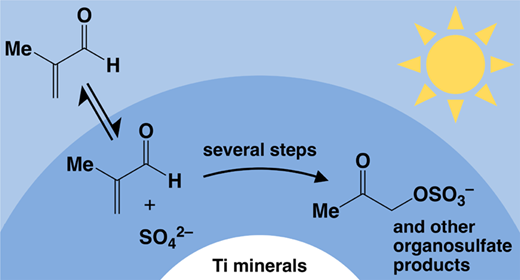
37. Production of Atmospheric Organosulfates via Mineral-Mediated Photochemistry
Mario Schmidt, Shawn M. Jansen van Beek, Maya Abou-Ghanem, Anton O. Oliynyk, Andrew J. Locock, Sarah A. Styler
ACS EARTH AND SPACE CHEMISTRY  ·  2019  ·  doi:10.1021/ACSEARTHSPACECHEM.8B00178

Study of the role of mineral–organic interactions in atmospheric organosulfate formation
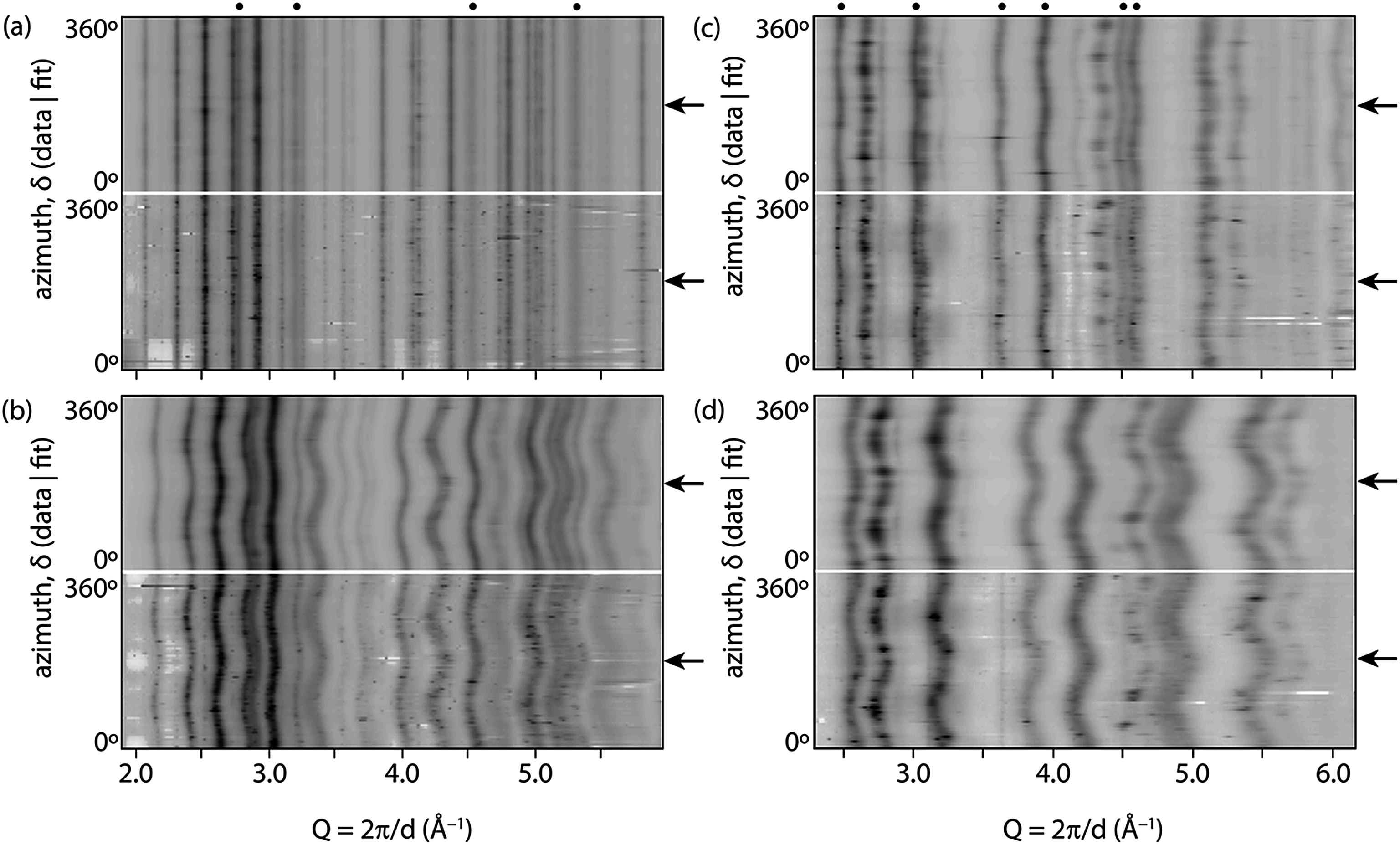
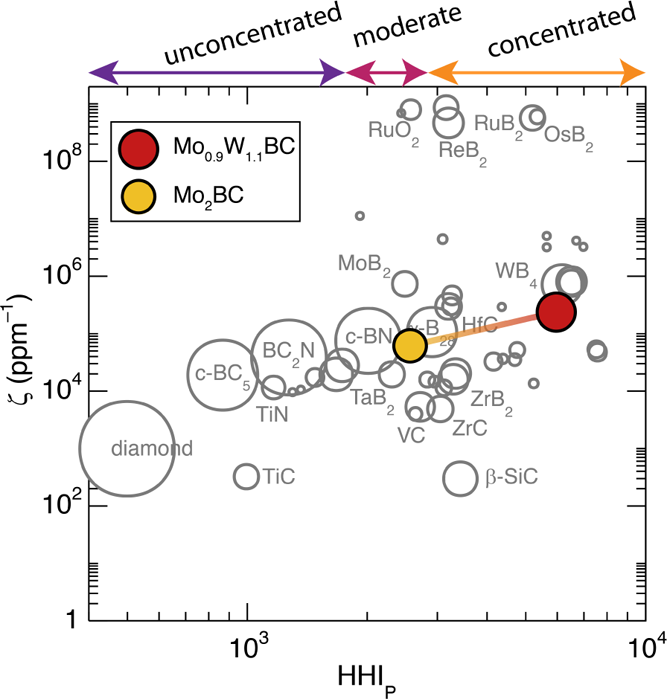
36. Lattice strain and texture analysis of superhard Mo0.9W1.1BC and ReWC0.8 via diamond anvil cell deformation
Marcus Parry, Samantha Couper, Aria Mansouri Tehrani, Anton O. Oliynyk, Jakoah Brgoch, Lowell Miyagi, Taylor D. Sparks
JOURNAL OF MATERIALS CHEMISTRY A  ·  2019  ·  doi:10.1039/C9TA06431A

Mo0.9W1.1BC and ReWC0.8 are compressed nonhydrostatically to explore anisotropic deformation behavior and better comprehend hard materials
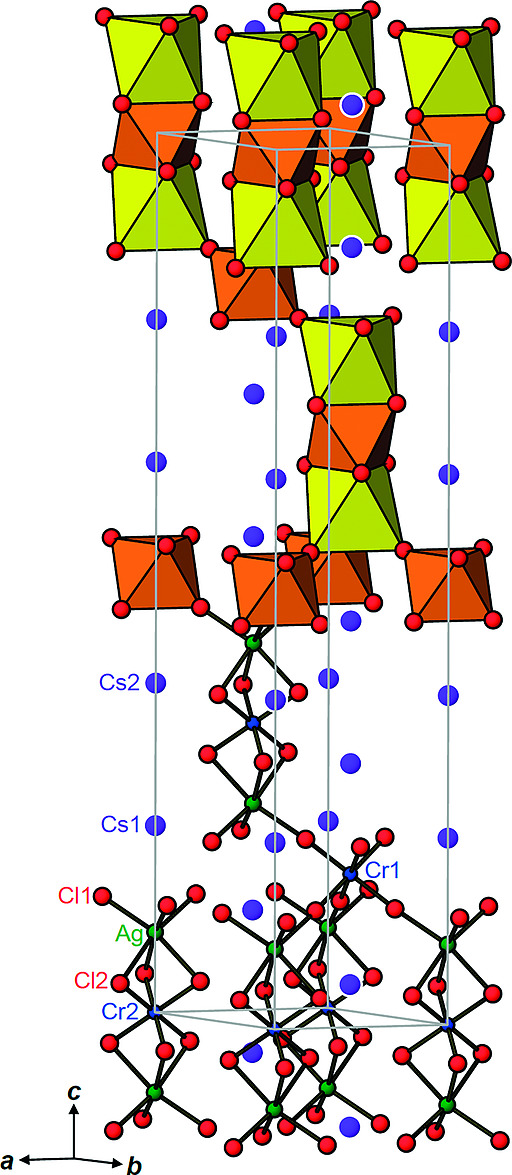
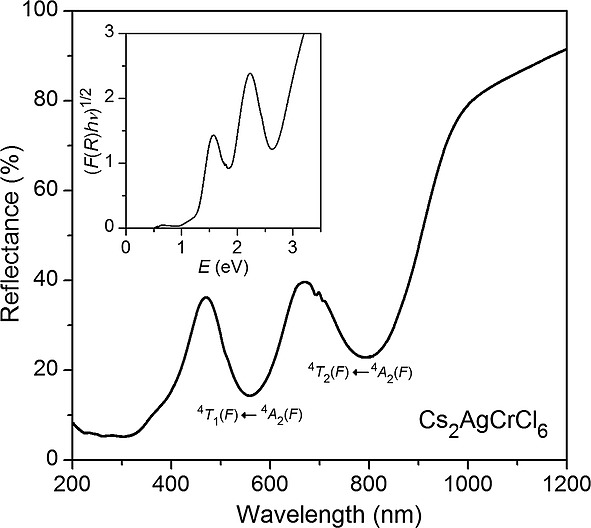
35. Hexagonal Double Perovskite Cs2AgCrCl6
Yuqiao Zhou, Abdelrahman M. Askar, Jan‐Hendrik Pöhls, Abishek K. Iyer, Anton O. Oliynyk, Karthik Shankar, Arthur Mar
ZEITSCHRIFT FUR ANORGANISCHE UND ALLGEMEINE CHEMIE  ·  2019  ·  doi:10.1002/ZAAC.201800351
Figure 1 for Hexagonal Double Perovskite Cs sub 2 sub AgCrCl sub 6 sub Figure 2 for Hexagonal Double Perovskite Cs sub 2 sub AgCrCl sub 6 sub

Synthesis and properties of a novel double perovskite material
34. Dust-catalyzed oxidant production and organic transformations in the atmospheric aqueous phase
ABSTRACTS OF PAPERS OF THE AMERICAN CHEMICAL SOCIETY  ·  2019  ·  wosuid:WOS:000525061500679
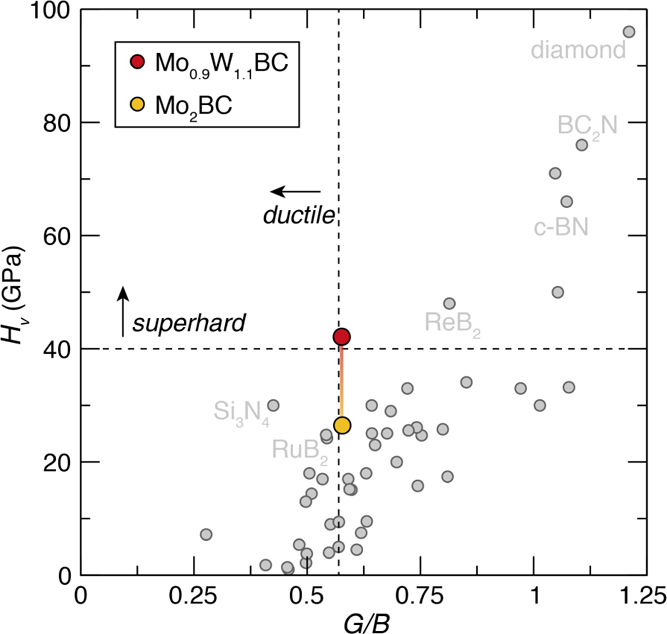
33. Atomic Substitution to Balance Hardness, Ductility, and Sustainability in Molybdenum Tungsten Borocarbide
Aria Mansouri Tehrani, Anton O. Oliynyk, Zeshan Rizvi, Sogol Lotfi, Marcus Parry, Taylor D. Sparks, Jakoah Brgoch
CHEMISTRY OF MATERIALS  ·  2019  ·  doi:10.1021/ACS.CHEMMATER.9B02596
Figure 1 for Atomic Substitution to Balance Hardness, Ductility, and Sustainability in Molybdenum Tungsten Borocarbide Figure 2 for Atomic Substitution to Balance Hardness, Ductility, and Sustainability in Molybdenum Tungsten Borocarbide

Atomic substitutions to balance structural material performance with taking into consideration sustainability and economic factors
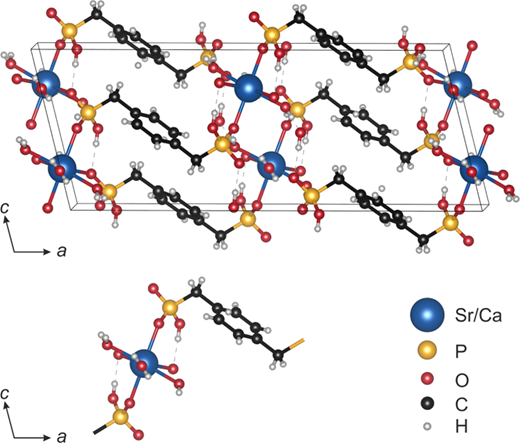
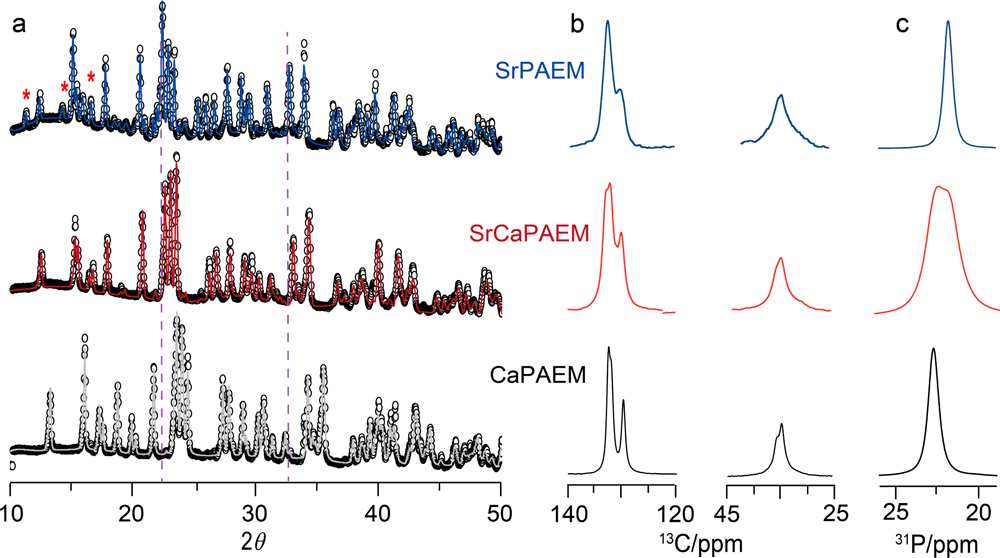
32. Alkaline Earth Metal-Organic Frameworks with Tailorable Ion Release: A Path for Supporting Biomineralization
Maria A. Matlinska, Michelle Ha, Bryden Hughton, Anton O. Oliynyk, Abishek K. Iyer, …, Gareth Lambkin, Mason C. Lawrence, Michael J. Katz, Arthur Mar, Vladimir K. Michaelis
ACS APPLIED MATERIALS & INTERFACES  ·  2019  ·  doi:10.1021/ACSAMI.9B11004
Figure 1 for Alkaline Earth Metal-Organic Frameworks with Tailorable Ion Release: A Path for Supporting Biomineralization Figure 2 for Alkaline Earth Metal-Organic Frameworks with Tailorable Ion Release: A Path for Supporting Biomineralization

An innovative application of metal–organic frameworks (MOFs) is in biomedical materials
31. Solving gold-containing intermetallic compounds using an automated inorganic crystal structure refinement tool
ABSTRACTS OF PAPERS OF THE AMERICAN CHEMICAL SOCIETY  ·  2018  ·  wosuid:WOS:000435539902440
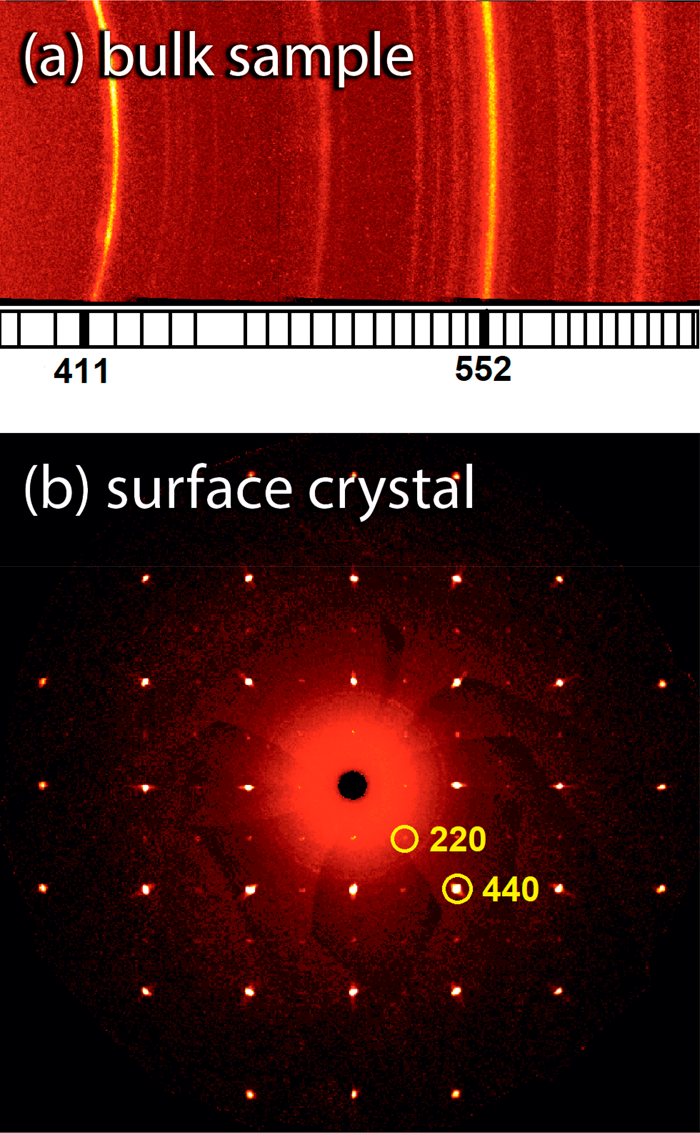
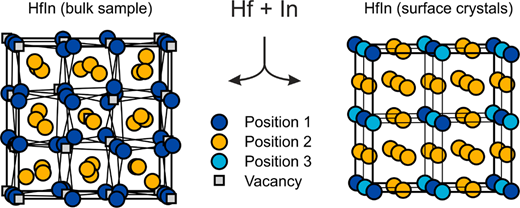
30. Searching for Missing Binary Equiatomic Phases: Complex Crystal Chemistry in the Hf-In System
Anton O. Oliynyk, Michael W. Gaultois, Martin Hermus, Andrew J. Morris, Arthur Mar, Jakoah Brgoch
INORGANIC CHEMISTRY  ·  2018  ·  doi:10.1021/ACS.INORGCHEM.8B01122
Figure 1 for Searching for Missing Binary Equiatomic Phases: Complex Crystal Chemistry in the Hf-In System Figure 2 for Searching for Missing Binary Equiatomic Phases: Complex Crystal Chemistry in the Hf-In System

Careful structural study of the Hf–In system reveals the formation of a different crystal structure on the surface of the sample, then in the bulk. Interestingly, the novel HfIn intermetallic phase produces H2 gas on the contact with water.
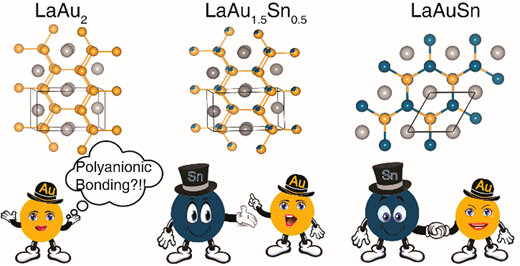
29. Polyanionic Gold-Tin Bonding and Crystal Structure Preference in REAu1.5Sn0.5 (RE = La, Ce, Pr, Nd)
Sogol Lotfi, Anton O. Oliynyk, Jakoah Brgoch
INORGANIC CHEMISTRY  ·  2018  ·  doi:10.1021/ACS.INORGCHEM.8B01356

Complex polyanionic bonding in four novel REAu1.5Sn0.5 phases
28. Optimization of organic solar cells through experimental design and machine learning
ABSTRACTS OF PAPERS OF THE AMERICAN CHEMICAL SOCIETY  ·  2018  ·  wosuid:WOS:000447609104499
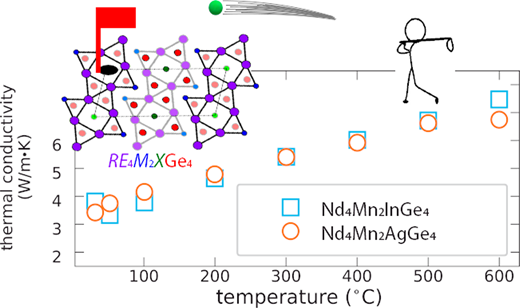
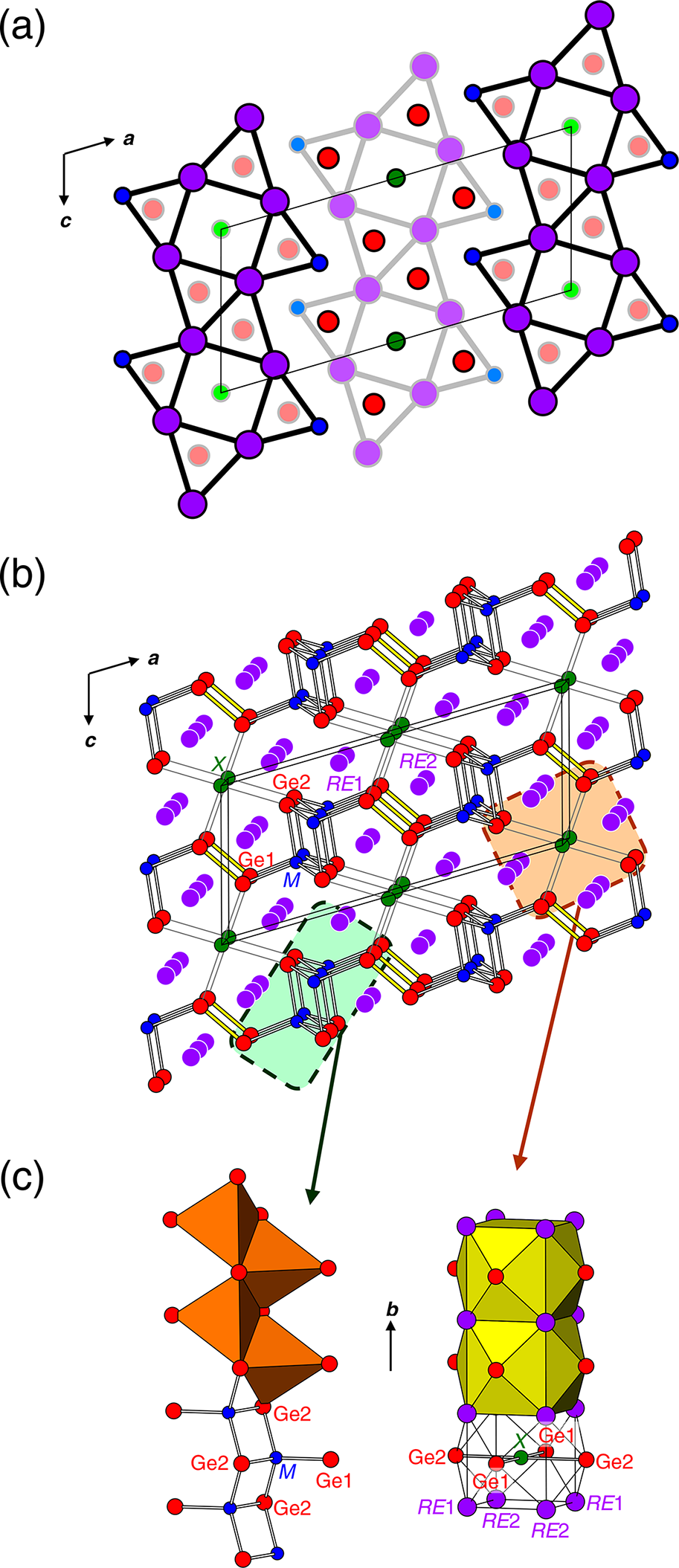
27. Not Just Par for the Course: 73 Quaternary Germanides RE4M2XGe4 (RE = La-Nd, Sm, Gd-Tm, Lu; M = Mn-Ni; X = Ag, Cd) and the Search for Intermetallics with Low Thermal Conductivity
Dong Zhang, Anton O. Oliynyk, Gabriel M. Duarte, Abishek K. Iyer, Leila Ghadbeigi, Steven K. Kauwe, Taylor D. Sparks, Arthur Mar
INORGANIC CHEMISTRY  ·  2018  ·  doi:10.1021/ACS.INORGCHEM.8B02279
Figure 1 for Not Just Par for the Course: 73 Quaternary Germanides i RE i sub 4 sub i M i sub 2 sub i X i Ge sub 4 sub i RE i La-Nd, Sm, Gd-Tm, Lu; i M i Mn-Ni; i X i Ag, Cd and the Search for Intermetallics with Low Thermal Conductivity Figure 2 for Not Just Par for the Course: 73 Quaternary Germanides i RE i sub 4 sub i M i sub 2 sub i X i Ge sub 4 sub i RE i La-Nd, Sm, Gd-Tm, Lu; i M i Mn-Ni; i X i Ag, Cd and the Search for Intermetallics with Low Thermal Conductivity

A large number of novel quaternary intermetallic phases exhibit low thermal conductivity
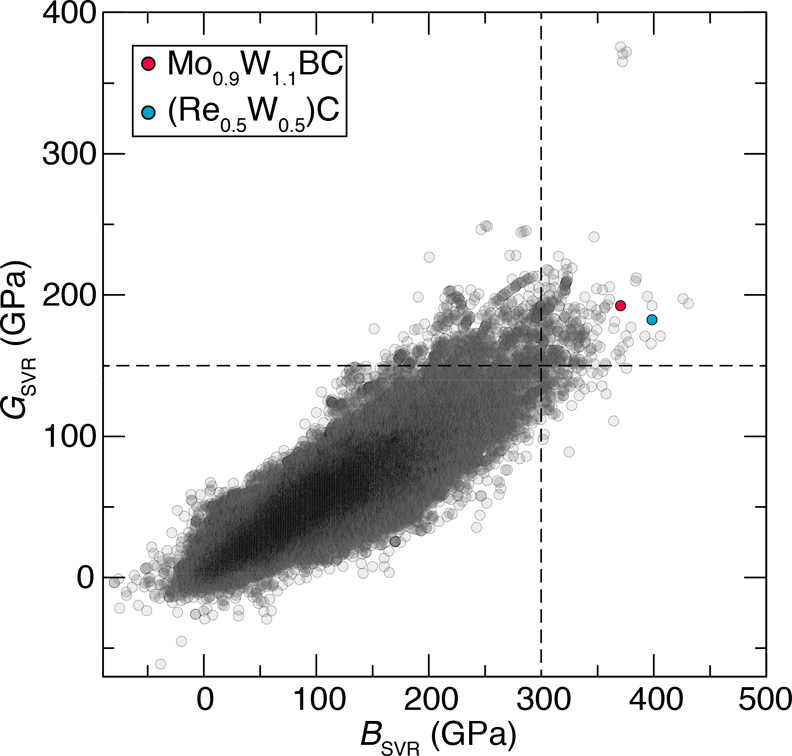
26. Machine Learning Directed Search for Ultraincompressible, Superhard Materials
Aria Mansouri Tehrani, Anton O. Oliynyk, Marcus Parry, Zeshan Rizvi, Samantha Couper, Feng Lin, Lowell Miyagi, Taylor D. Sparks, Jakoah Brgoch
JOURNAL OF THE AMERICAN CHEMICAL SOCIETY  ·  2018  ·  doi:10.1021/JACS.8B02717

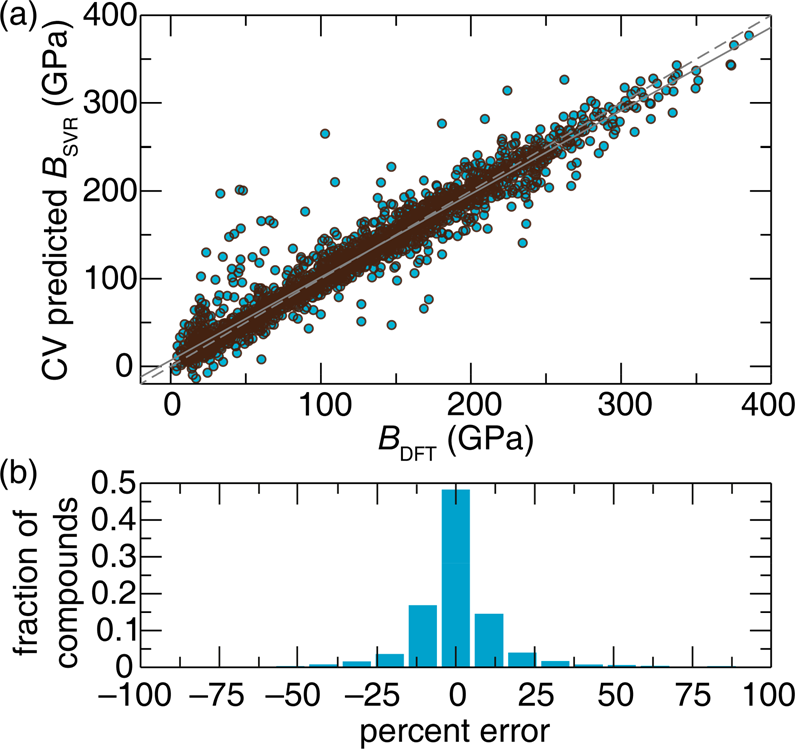
Machine learning model predicts bulk and shear moduli, leading us towards two new ultraincompressible and superhard material, which were made in the lab as an experimental validation
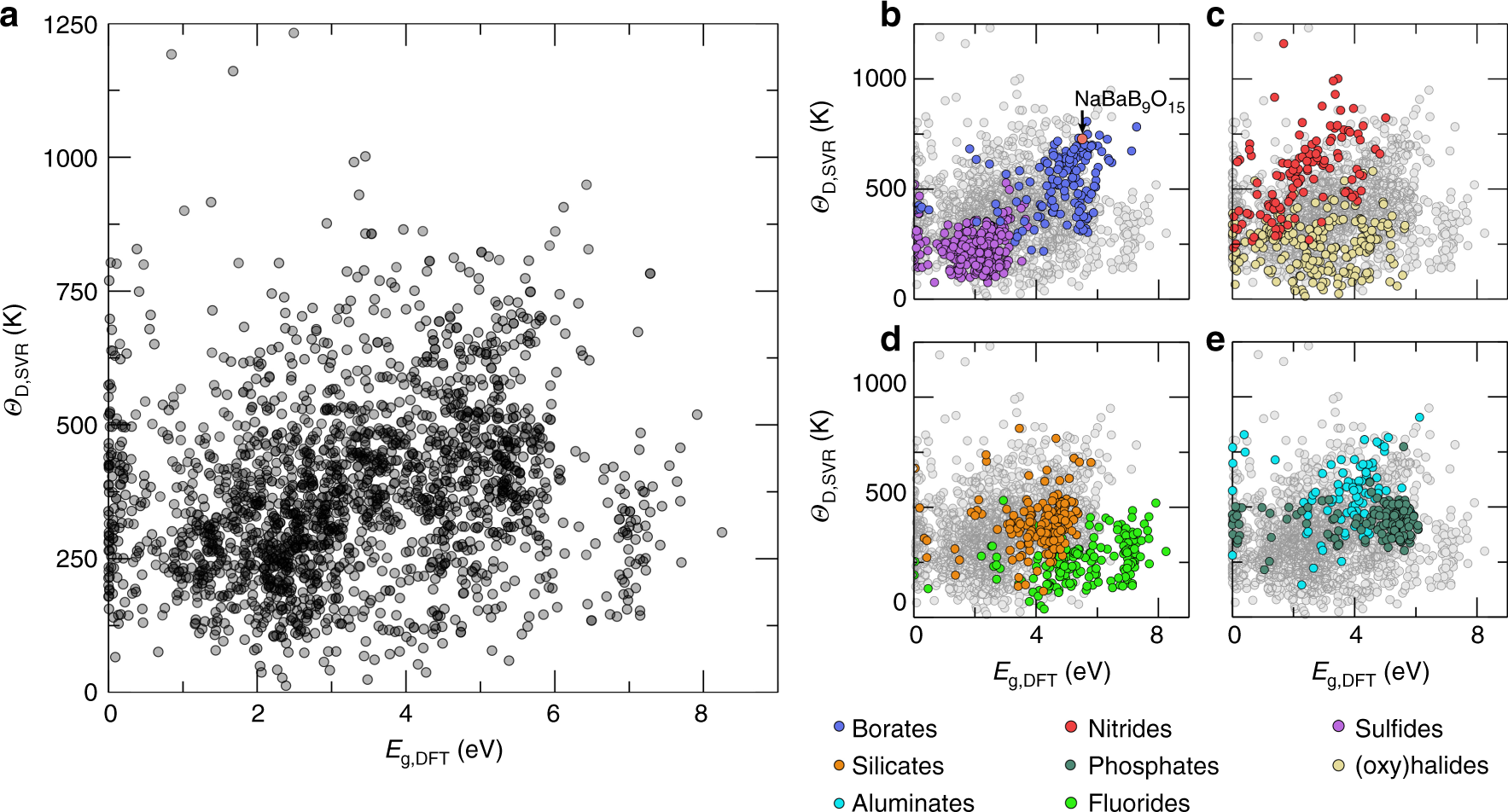
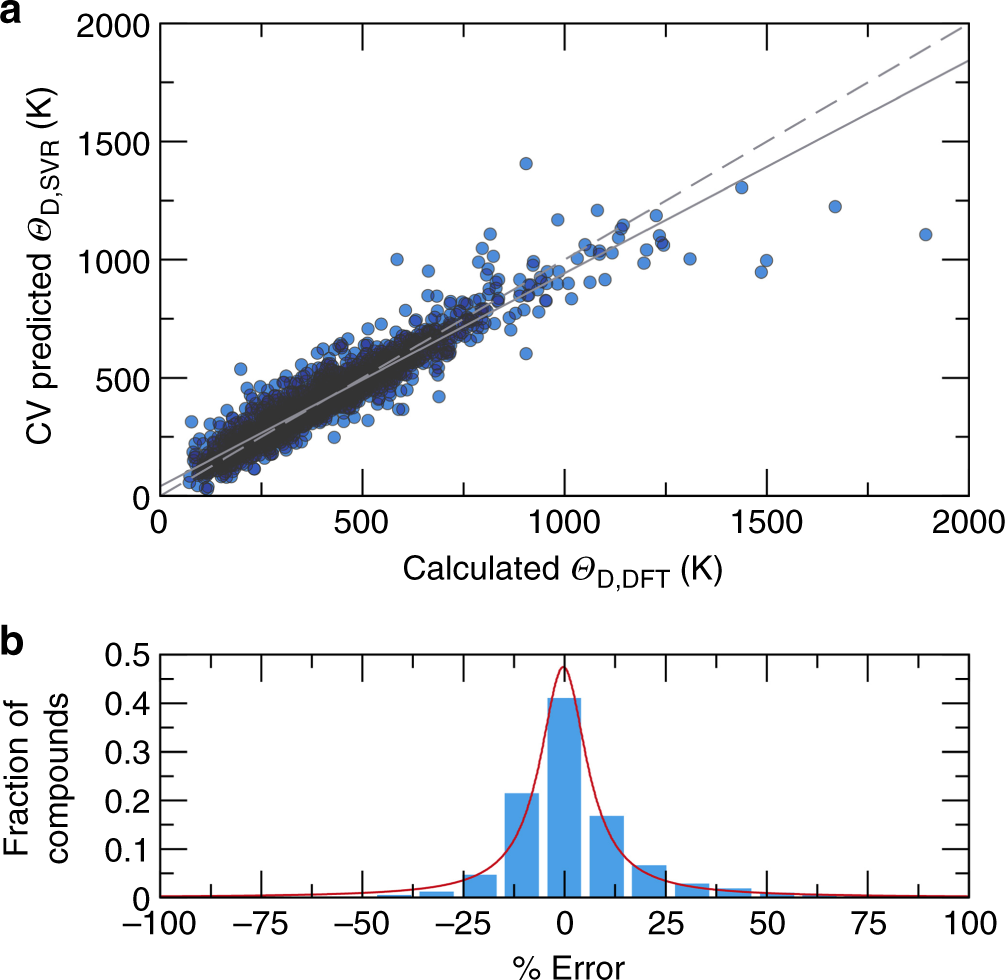
25. Identifying an efficient, thermally robust inorganic phosphor host via machine learning
Ya Zhuo, Aria Mansouri Tehrani, Anton O. Oliynyk, Anna C. Duke, Jakoah Brgoch
NATURE COMMUNICATIONS  ·  2018  ·  doi:10.1038/S41467-018-06625-Z
Figure 1 for Identifying an efficient, thermally robust inorganic phosphor host via machine learning Figure 2 for Identifying an efficient, thermally robust inorganic phosphor host via machine learning

Debye temperature prediction with machine learning model helps to direct the search for next generation of rare-earth substituted inorganic phosphors. One borate compound was made to validate the predictions experimentally.
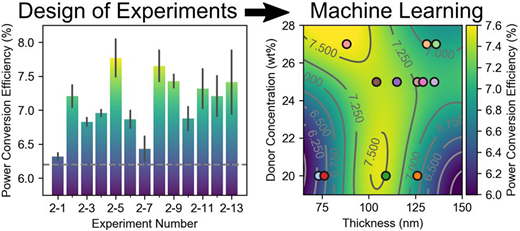
24. How To Optimize Materials and Devices via Design of Experiments and Machine Learning: Demonstration Using Organic Photovoltaics
Bing Cao, Lawrence A. Adutwum, Anton O. Oliynyk, Erik J. Luber, Brian C. Olsen, Arthur Mar, Jillian M. Buriak
ACS NANO  ·  2018  ·  doi:10.1021/ACSNANO.8B04726

Design of Experiments followed by machine learning modeling helps to significantly improve the efficiency of organic photovoltaic materials made in the lab
23. Honeycomb network of Au-Au bonding in intermetallic, RE-Au-Sn (RE = La, Ce, Pr, Nd) ternary phase space
ABSTRACTS OF PAPERS OF THE AMERICAN CHEMICAL SOCIETY  ·  2018  ·  wosuid:WOS:000435539903052
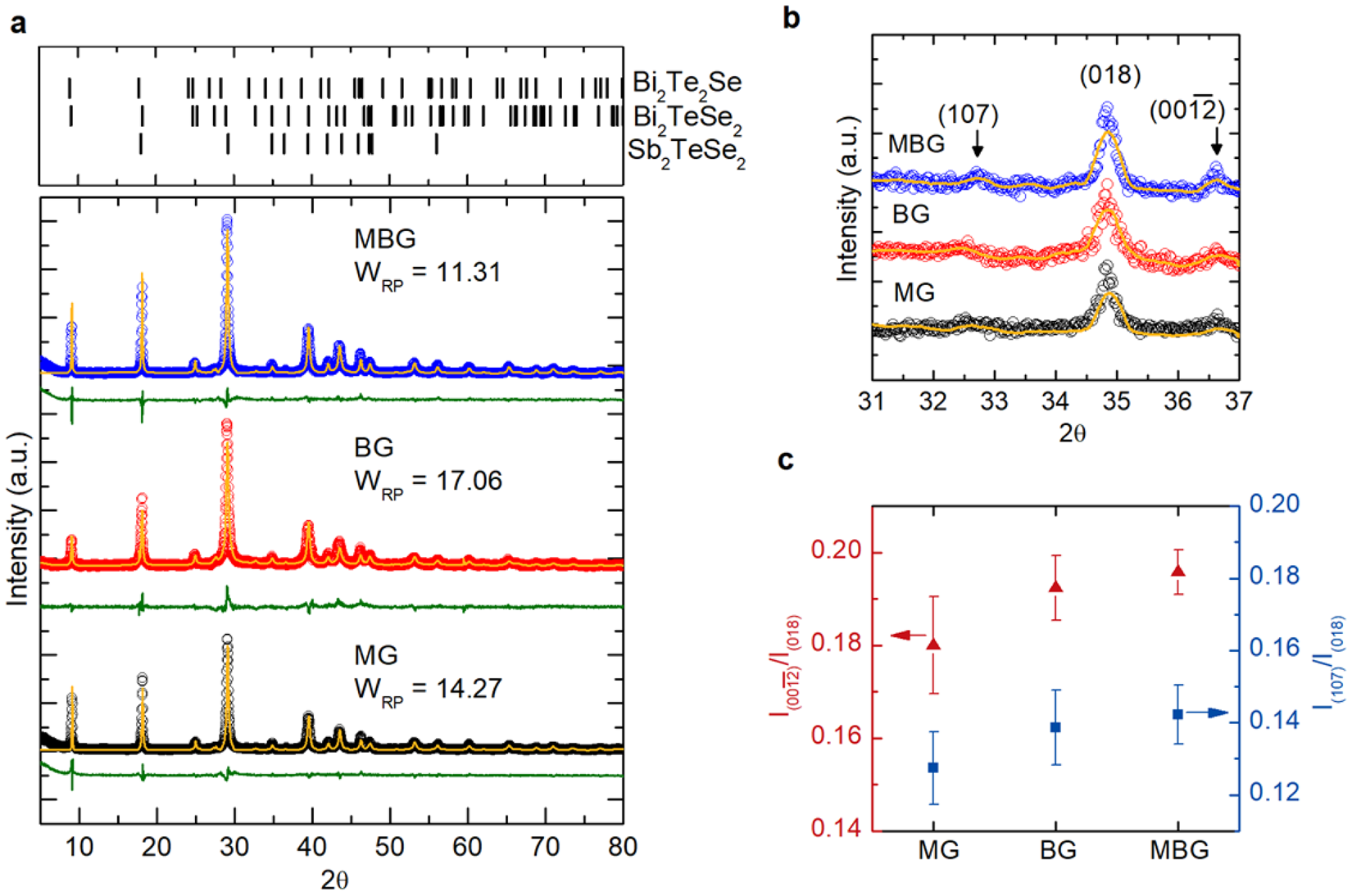
22. Enhancement in surface mobility and quantum transport of Bi2-xSbxTe3-ySey topological insulator by controlling the crystal growth conditions
Kyu-Bum Han, Su Kong Chong, Anton O. Oliynyk, Akira Nagaoka, Suzanne Petryk, Michael A. Scarpulla, Vikram V. Deshpande, Taylor D. Sparks
SCIENTIFIC REPORTS  ·  2018  ·  doi:10.1038/S41598-018-35674-Z

Evaluation of crystal quality and electrical transport properties reveals quantum Hall effect at low magnetic field for Bi2−xSbxTe3−ySey topological insulator
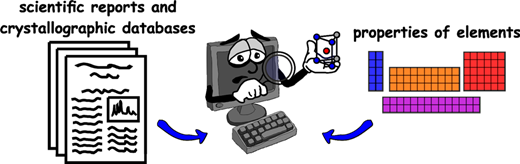
21. Discovery of Intermetallic Compounds from Traditional to Machine-Learning Approaches
Anton O. Oliynyk, Arthur Mar
ACCOUNTS OF CHEMICAL RESEARCH  ·  2018  ·  doi:10.1021/ACS.ACCOUNTS.7B00490

This review talks about how discovery of intermetallic compounds changed from traditional to machine-learning-guided approaches
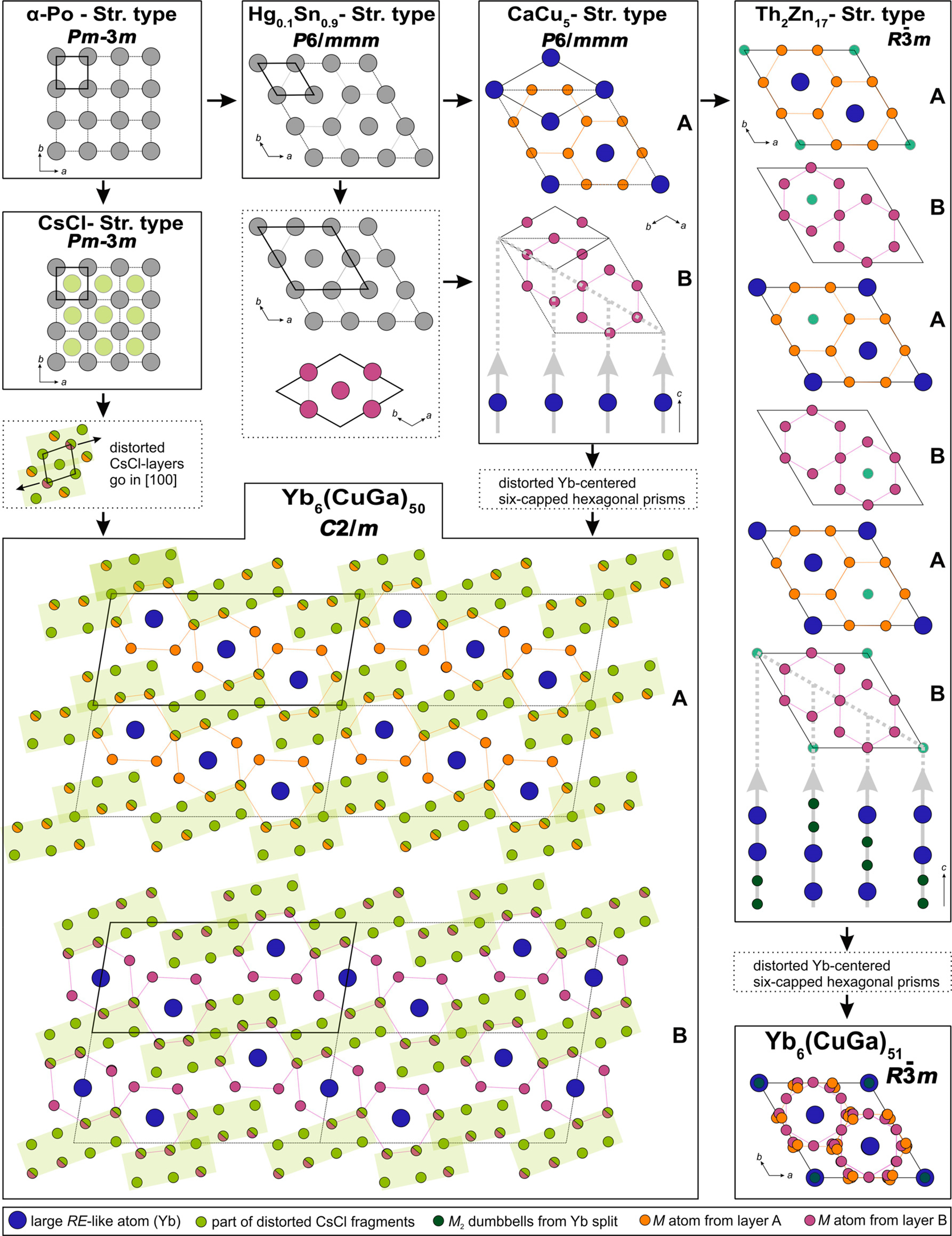
20. Complex Crystal Chemistry of Yb6(CuGa)50 and Yb6(CuGa)51 Grown at Different Synthetic Conditions
Vidyanshu Mishra, Anton O. Oliynyk, Udumula Subbarao, Saurav Ch. Sarma, Dundappa Mumbaraddi, Soumyabrata Roy, Sebastian C. Peter
CRYSTAL GROWTH & DESIGN  ·  2018  ·  doi:10.1021/ACS.CGD.8B00958

Structural evolution study of the complex ternary intermetallics reveals distortions in the building blocks resulting into novel structures
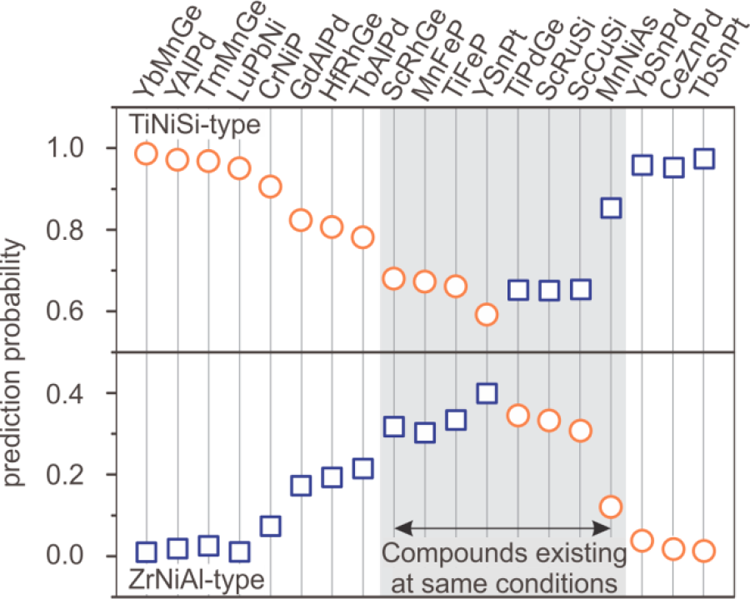
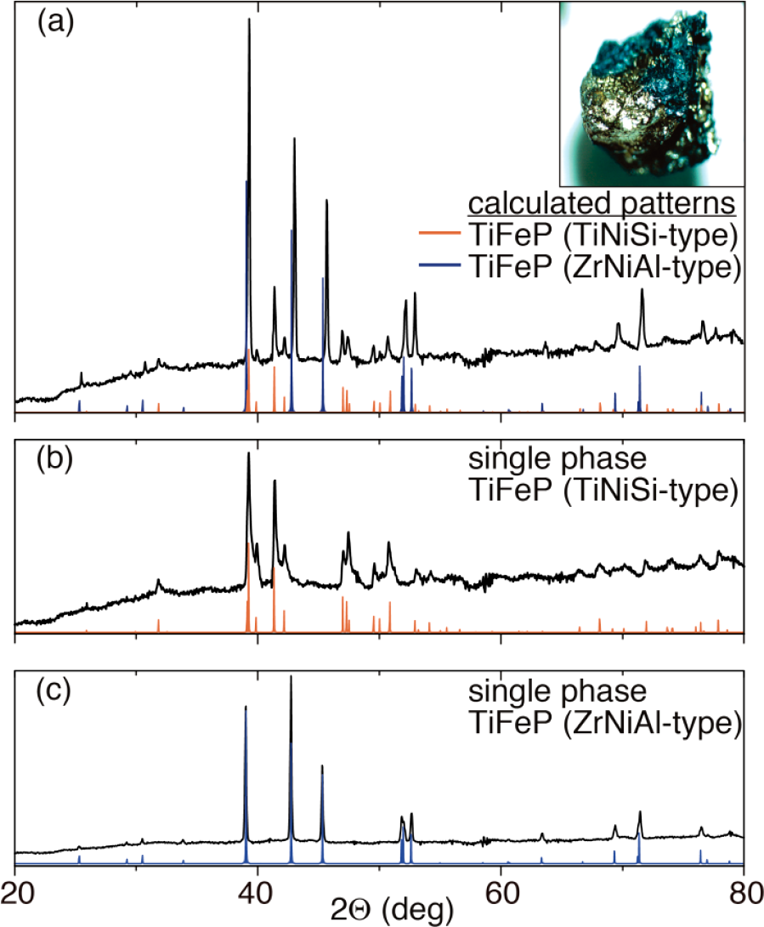
19. Disentangling Structural Confusion through Machine Learning: Structure Prediction and Polymorphism of Equiatomic Ternary Phases ABC
Anton O. Oliynyk, Lawrence A. Adutwum, Brent W. Rudyk, Harshil Pisavadia, Sogol Lotfi, Viktor Hlukhyy, James J. Harynuk, Arthur Mar, Jakoah Brgoch
JOURNAL OF THE AMERICAN CHEMICAL SOCIETY  ·  2017  ·  doi:10.1021/JACS.7B08460
Figure 1 for Disentangling Structural Confusion through Machine Learning: Structure Prediction and Polymorphism of Equiatomic Ternary Phases i ABC i Figure 2 for Disentangling Structural Confusion through Machine Learning: Structure Prediction and Polymorphism of Equiatomic Ternary Phases i ABC i

Prediction probability statistics often are used to evaluate the quality of the model. We propose an important alternative meaning of the prediction probability in the context of experimental work – ambiguous predictions can point us towards co-existing phases. The latter was demonstrated with experiments.
18. Perspective: Web-based machine learning models for real-time screening of thermoelectric materials properties
Michael W. Gaultois, Anton O. Oliynyk, Arthur Mar, Taylor D. Sparks, Gregory J. Mulholland, Bryce Meredig
APL MATERIALS  ·  2016  ·  doi:10.1063/1.4952607

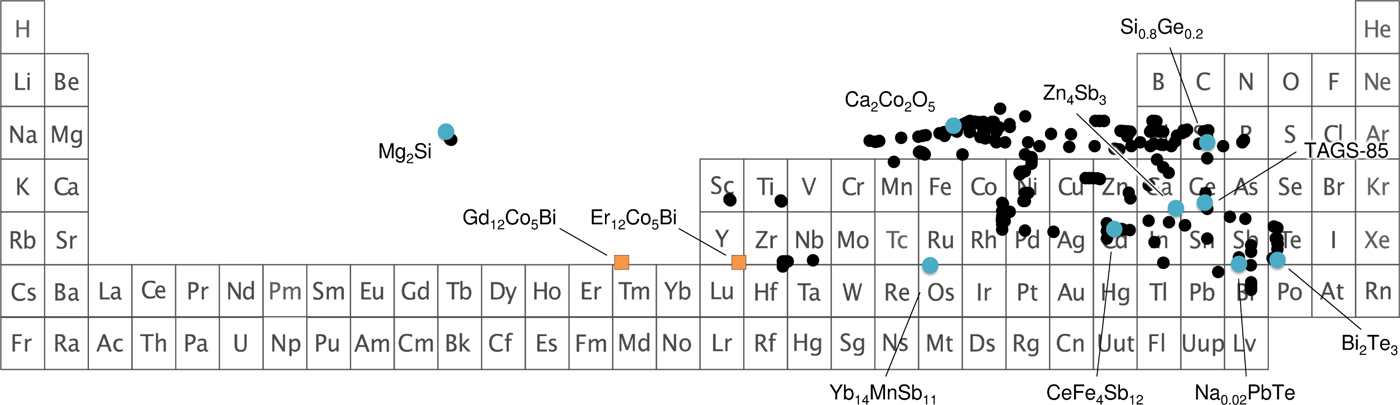
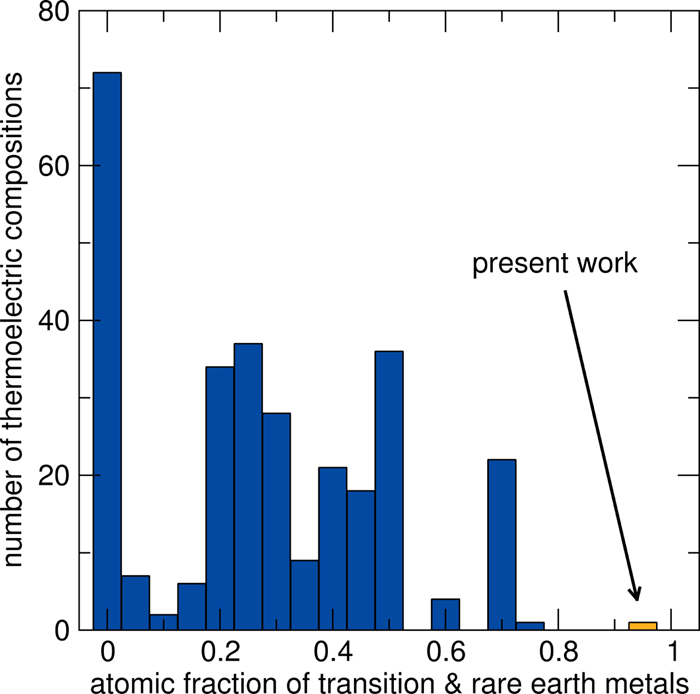
Recommendation engine proposes chemistries contradicting chemical intuition, leading us towards novel material classes Predicted properties were validated experimentally, revealing unusual thermal conductivity trend for the novel thermoelectric material
17. Interaction of tantalum, chromium, and phosphorus at 1070 K: Phase diagram and structural chemistry
Ya. Lomnytska, V. Babizhetskyy, A. Oliynyk, O. Toma, M. Dzevenko, A. Mar
JOURNAL OF SOLID STATE CHEMISTRY  ·  2016  ·  doi:10.1016/J.JSSC.2015.12.010

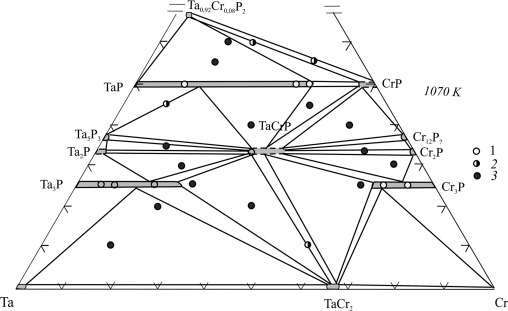
Ternary Ta–Cr–P phase diagram with binary compounds revealing homogeneity ranges by Ta/Cr and Cr/Ta substitutions
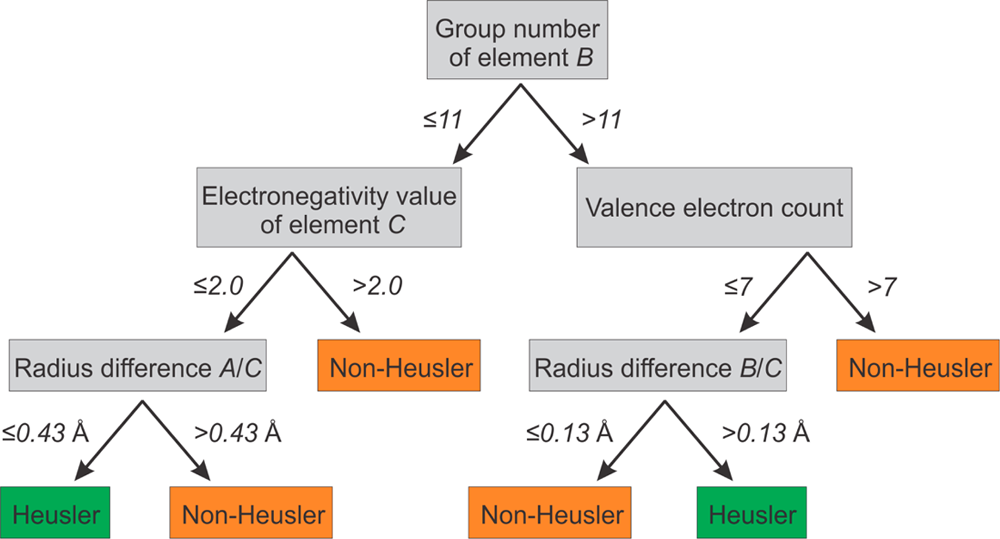
16. High-Throughput Machine-Learning-Driven Synthesis of Full-Heusler Compounds
Anton O. Oliynyk, Erin Antono, Taylor D. Sparks, Leila Ghadbeigi, Michael W. Gaultois, Bryce Meredig, Arthur Mar
CHEMISTRY OF MATERIALS  ·  2016  ·  doi:10.1021/ACS.CHEMMATER.6B02724
Figure 1 for High-Throughput Machine-Learning-Driven Synthesis of Full-Heusler Compounds Figure 2 for High-Throughput Machine-Learning-Driven Synthesis of Full-Heusler Compounds

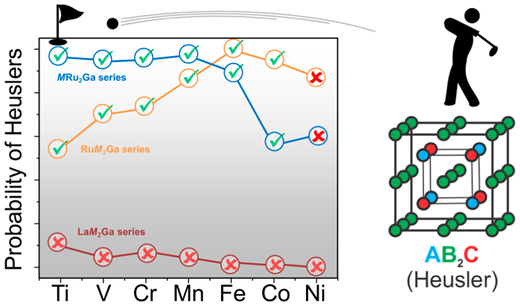
Machine learning model based on decision trees was trained to predict the existence of 12 novel Heusler compounds, which were later made in the lab. Structural ambiguity between Heuslers, non-Heuslers, and inverse Heuslers was resolved.
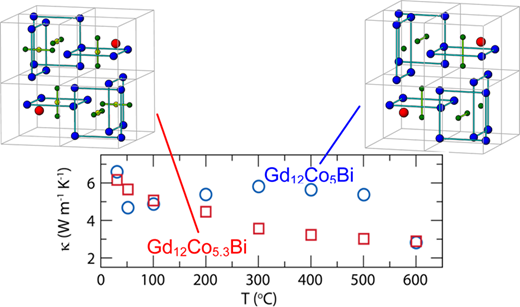
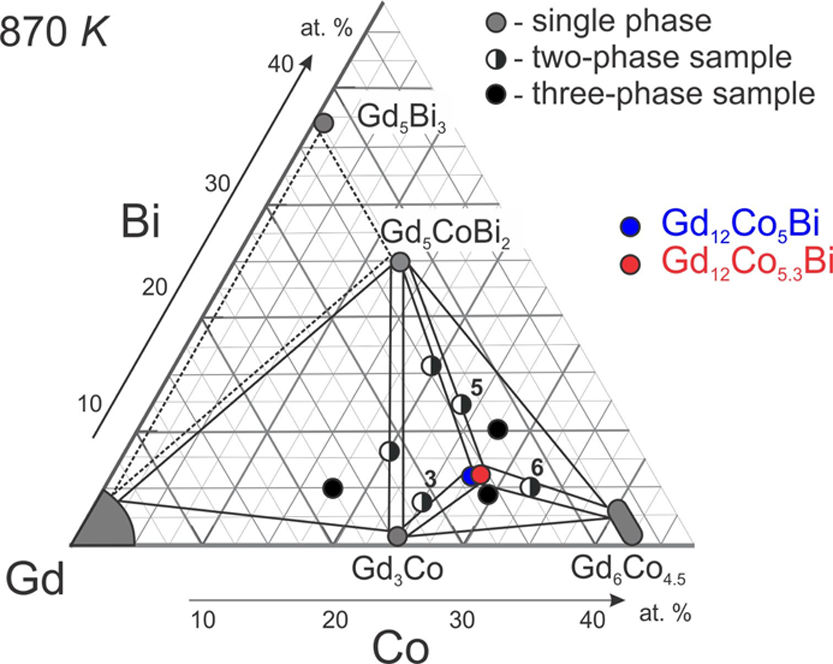
15. Gd12Co5.3Bi and Gd12Co5Bi, Crystalline Doppelganger with Low Thermal Conductivities
Anton O. Oliynyk, Taylor D. Sparks, Michael W. Gaultois, Leila Ghadbeigi, Arthur Mar
INORGANIC CHEMISTRY  ·  2016  ·  doi:10.1021/ACS.INORGCHEM.6B00826
Figure 1 for Gd sub 12 sub Co sub 5.3 sub Bi and Gd sub 12 sub Co sub 5 sub Bi, Crystalline Doppelganger with Low Thermal Conductivities Figure 2 for Gd sub 12 sub Co sub 5.3 sub Bi and Gd sub 12 sub Co sub 5 sub Bi, Crystalline Doppelganger with Low Thermal Conductivities

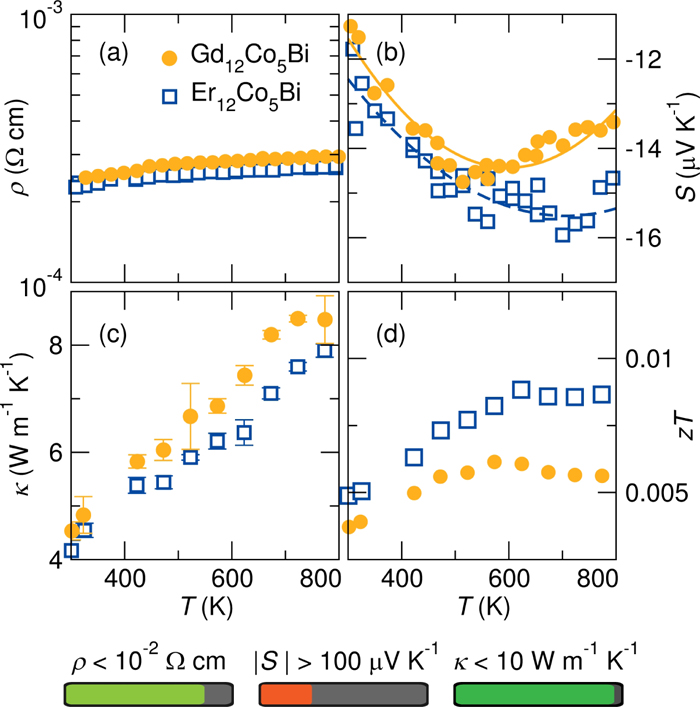
Seemingly identical intermetallics exhibit structural complexity which plays an important role in low thermal conductivity of these thermoelectric materials
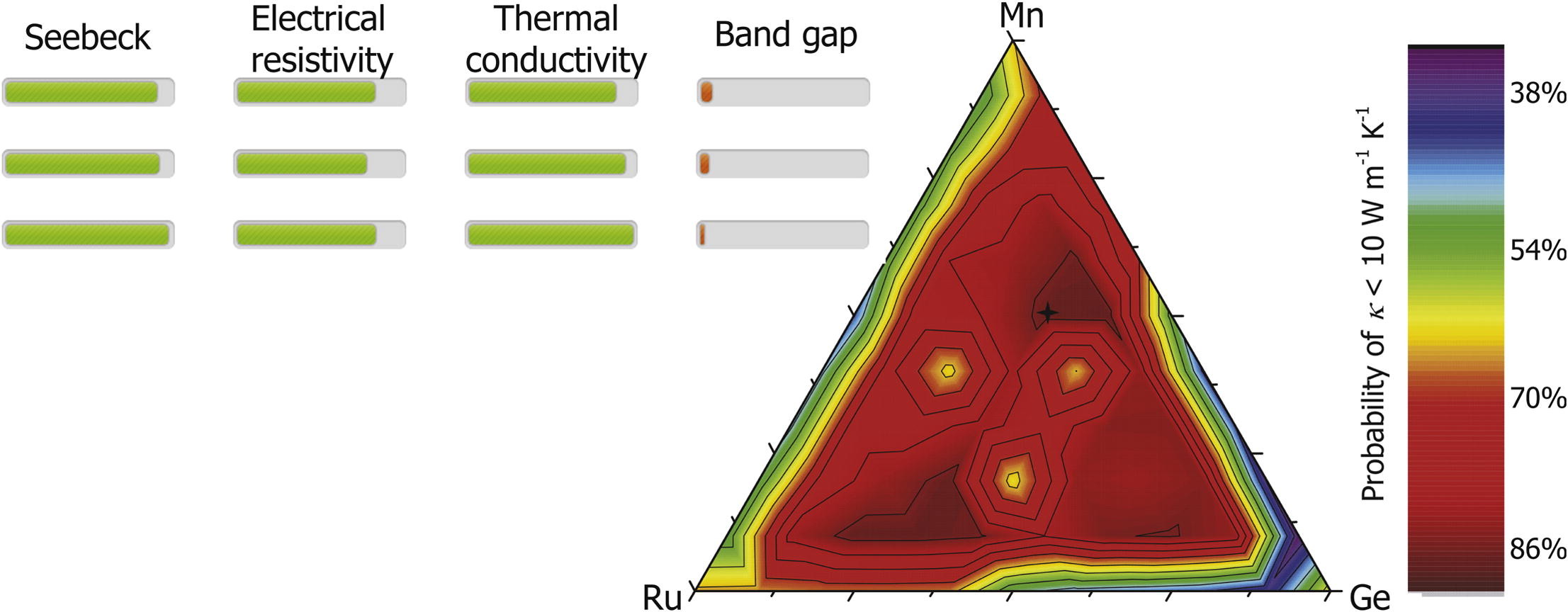
14. Data mining our way to the next generation of thermoelectrics
Taylor D. Sparks, Michael W. Gaultois, Anton Oliynyk, Jakoah Brgoch, Bryce Meredig
SCRIPTA MATERIALIA  ·  2016  ·  doi:10.1016/J.SCRIPTAMAT.2015.04.026

demonstration of the data mining approach is set forth in a ternary intermetallic system, where we report new materials
13. Classifying Crystal Structures of Binary Compounds AB through Cluster Resolution Feature Selection and Support Vector Machine Analysis
Anton O. Oliynyk, Lawrence A. Adutwum, James J. Harynuk, Arthur Mar
CHEMISTRY OF MATERIALS  ·  2016  ·  doi:10.1021/ACS.CHEMMATER.6B02905
Figure 1 for Classifying Crystal Structures of Binary Compounds AB through Cluster Resolution Feature Selection and Support Vector Machine Analysis Figure 2 for Classifying Crystal Structures of Binary Compounds AB through Cluster Resolution Feature Selection and Support Vector Machine Analysis

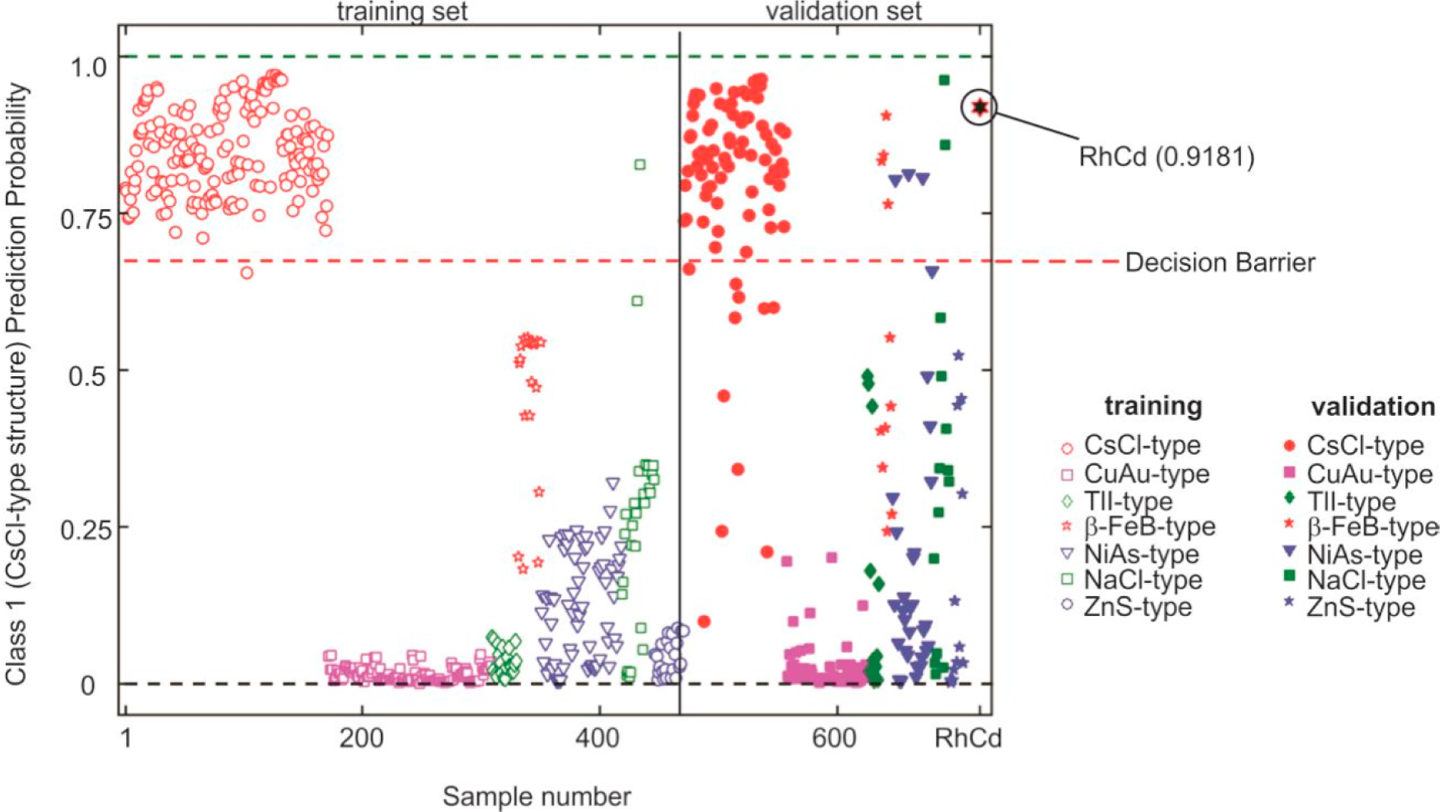
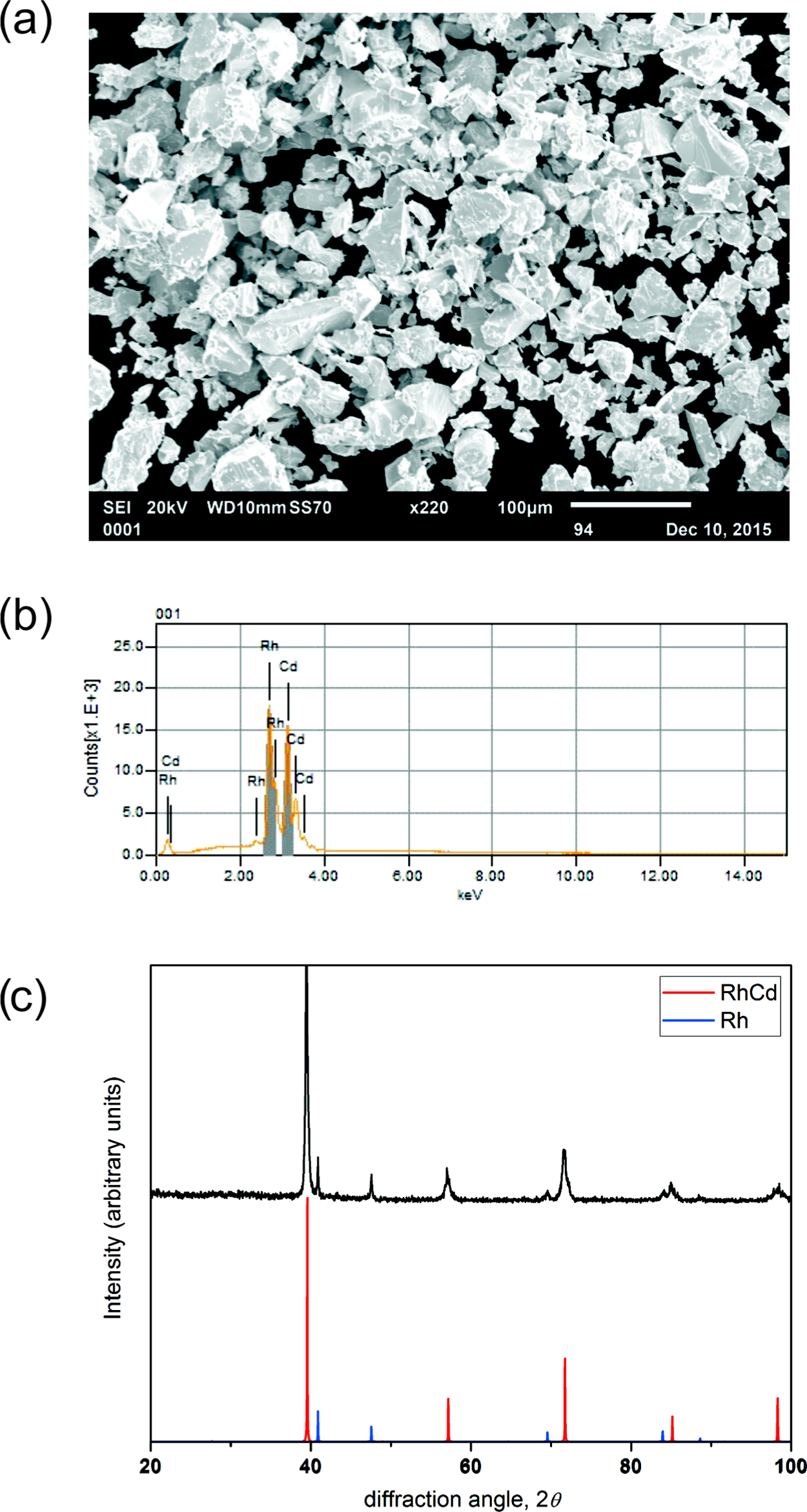
It was believed that all binary equiatomic phases (AB) were already found. With the help of machine learning tools and careful feature selection, we predict and make in the lab a novel RhCd intermetallic. This is the first experimentally validated machine learning success in crystallography.
12. The phase equilibria and crystal structure of the phases in the Hf-Ti-P system
Yaroslava Lomnytska, Mariya Dzevenko, Anton Oliynyk, Ivanna Kushnir, Oksana Toma
JOURNAL OF ALLOYS AND COMPOUNDS  ·  2015  ·  doi:10.1016/J.JALLCOM.2015.01.253

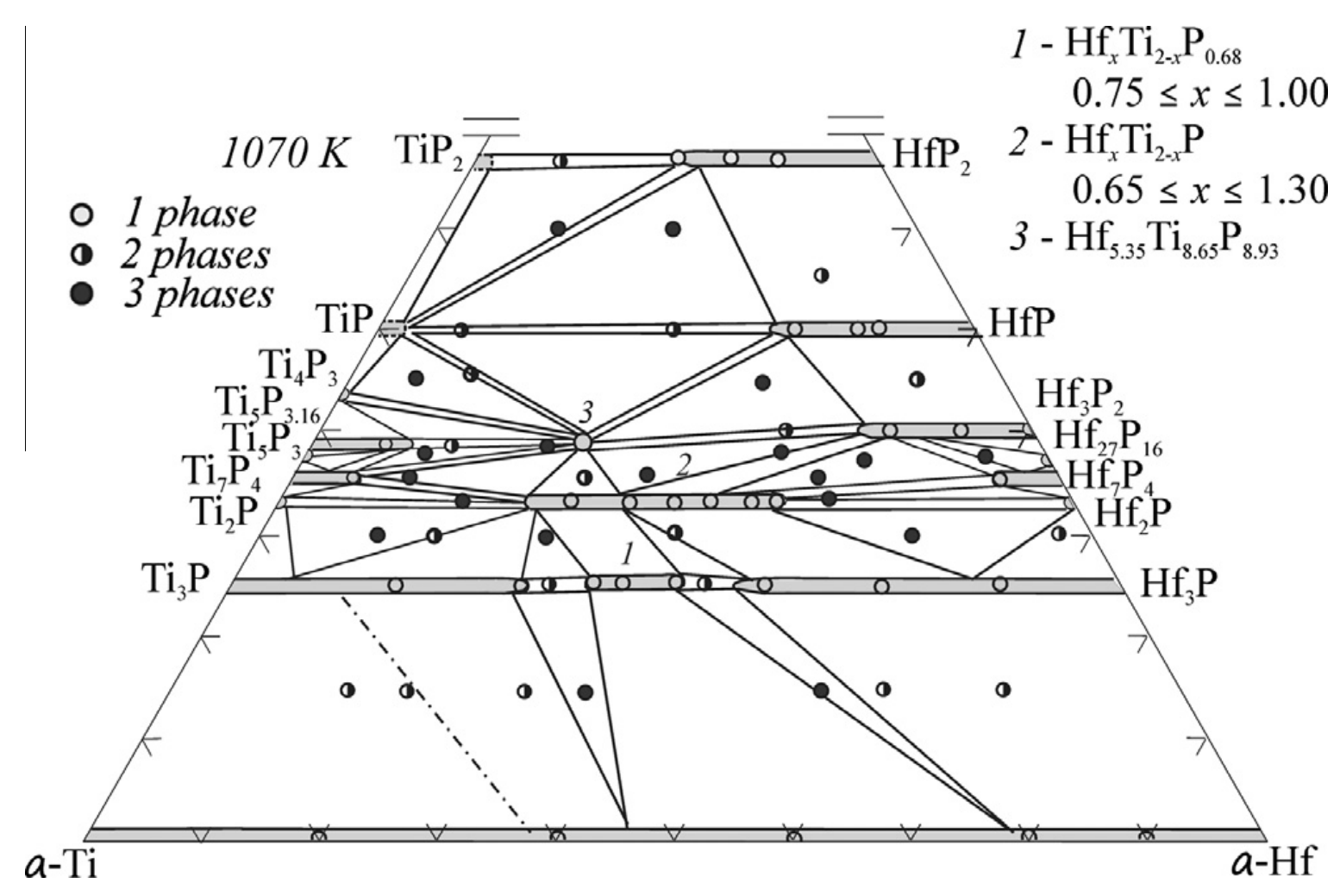
Complex phase diagram (Hf–Ti–P) study with wide rage of solid solutions
11. Many Metals Make the Cut: Quaternary Rare-Earth Germanides RE4M2InGe4 (M = Fe, Co, Ni, Ru, Rh, Ir) and RE4RhInGe4 Derived from Excision of Slabs in RE2InGe2
Anton O. Oliynyk, Stanislav S. Stoyko, Arthur Mar
INORGANIC CHEMISTRY  ·  2015  ·  doi:10.1021/IC502955H

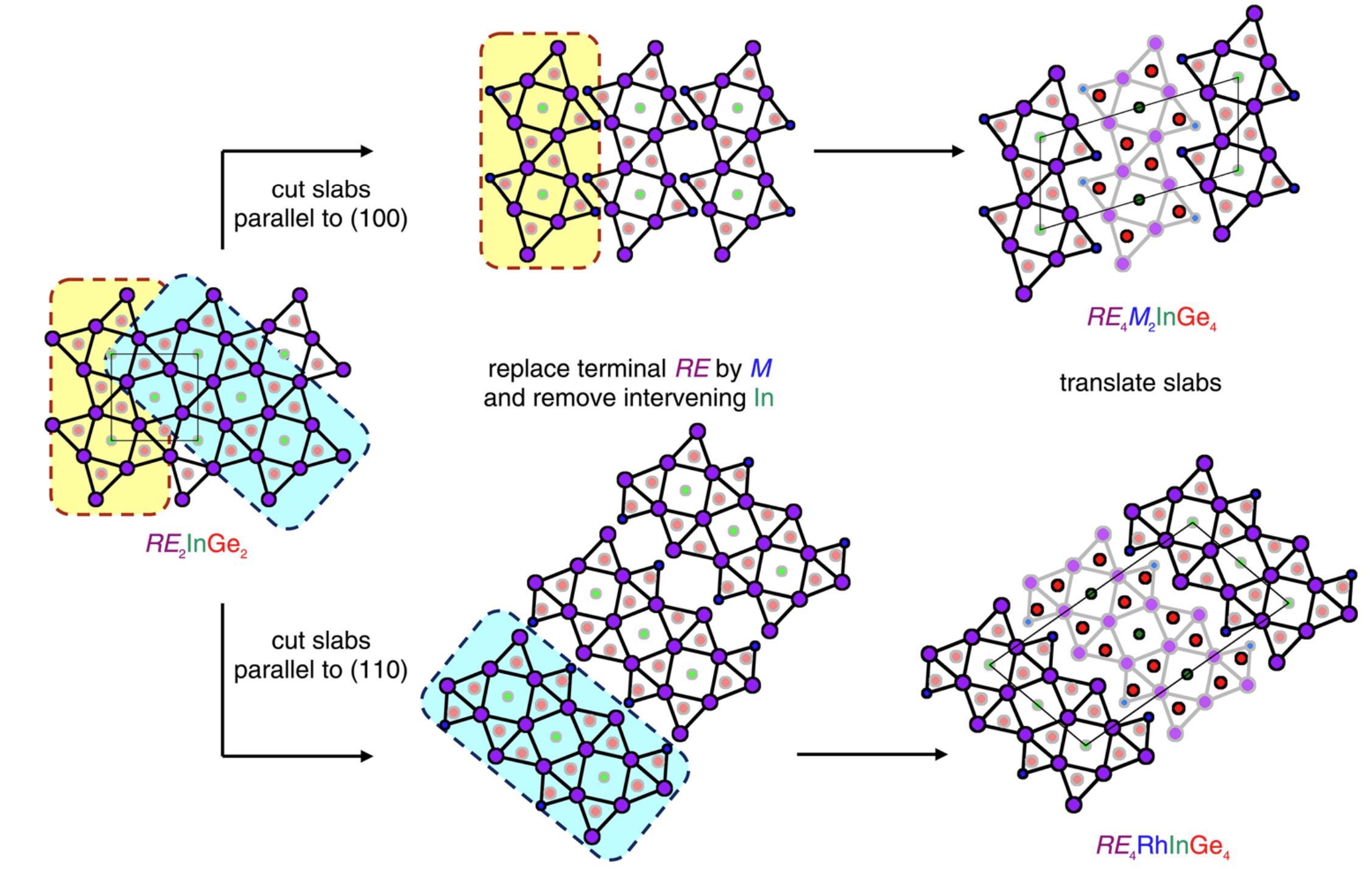
Novel quaternary germanides rationalized with slab cuts
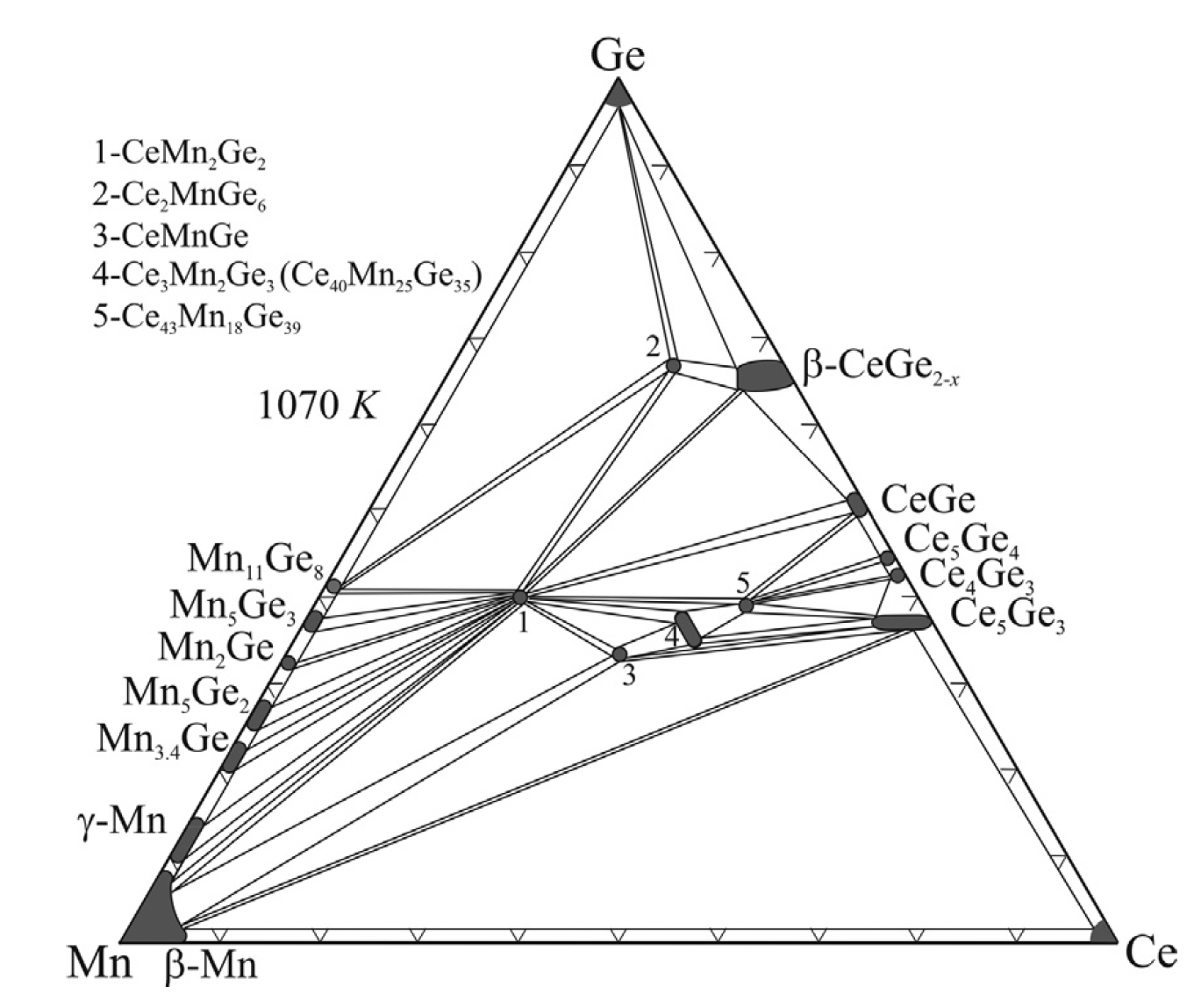
10. Investigation of phase equilibria in the quaternary Ce-Mn-In-Ge system and isothermal sections of the boundary ternary systems at 800 °C
Anton O. Oliynyk, Kadar Djama-Kayad, Arthur Mar
JOURNAL OF ALLOYS AND COMPOUNDS  ·  2015  ·  doi:10.1016/J.JALLCOM.2014.10.170

Quaternary (Ce–Mn–In–Ge) phase diagram study, which includes four corresponding phase diagram
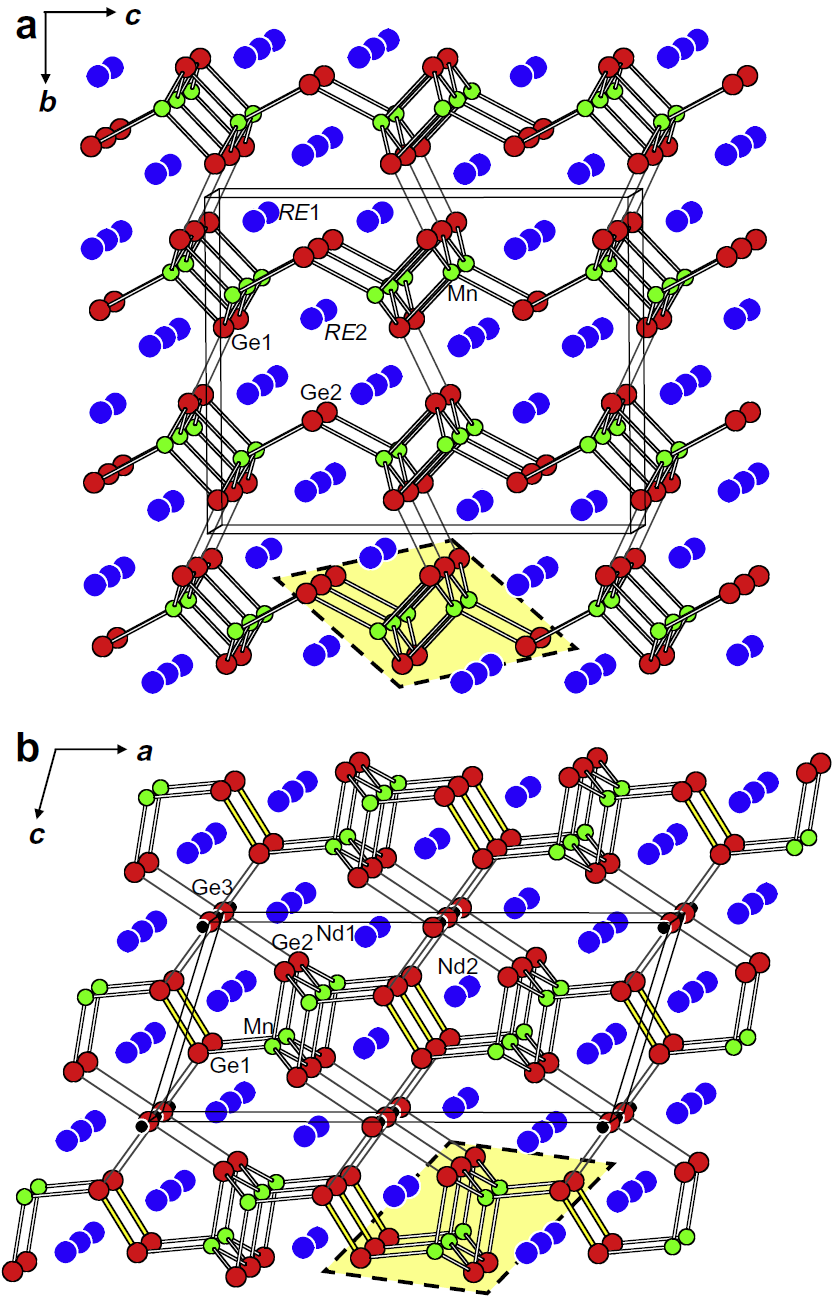
9. Ternary rare-earth manganese germanides RE3Mn2Ge3 (RE = Ce-Nd) and a possible oxygen-interstitial derivative Nd4Mn2Ge5O0.6
Anton O. Oliynyk, Kadar Djama-Kayad, Arthur Mar
JOURNAL OF ALLOYS AND COMPOUNDS  ·  2014  ·  doi:10.1016/J.JALLCOM.2014.03.004

Studies with a focus on how oxygen inclusion in Nd4Mn2Ge5O0.6 changes the structure.
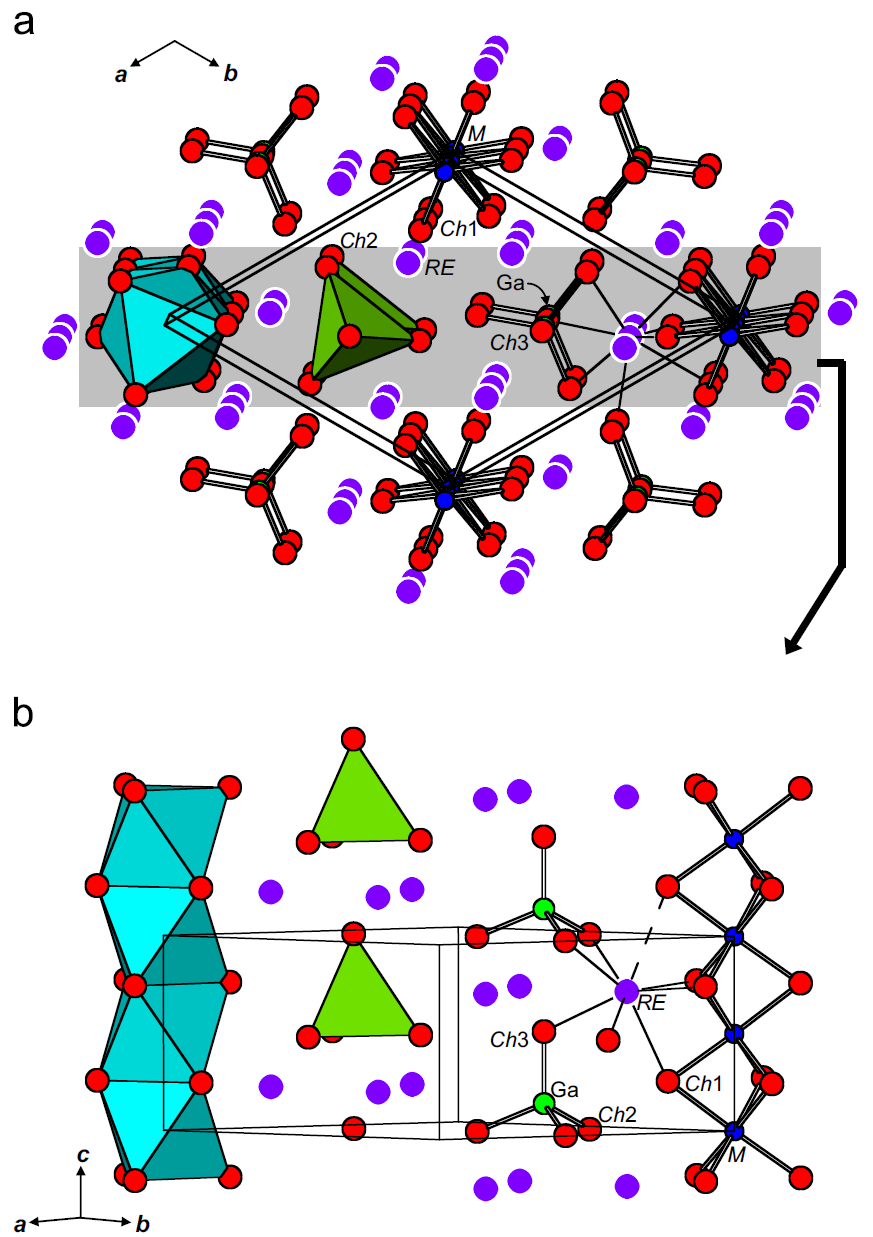
8. Rare-earth transition-metal gallium chalcogenides RE3MGaCh 7 (M=Fe, Co, Ni; Ch=S, Se)
Journal of Solid State Chemistry  ·  2014  ·  doi:10.1016/j.jssc.2013.11.00

Novel chalcogenides and their structure

7. Rare-earth transition-metal gallium chalcogenides RE3MGaCh7 (M= Fe, Co, Ni, Ch=S, Se)
Brent W. Rudyk, Stanislav S. Stoyko, Anton O. Oliynyk, Arthur Mar
JOURNAL OF SOLID STATE CHEMISTRY  ·  2014  ·  doi:10.1016/J.JSSC.2013.11.003
6. The Ti-Fe-P system: phase equilibria and crystal structure of phases
Oksana Toma, Mariya Dzevenko, Anton Oliynyk, Yaroslava Lomnytska
CENTRAL EUROPEAN JOURNAL OF CHEMISTRY  ·  2013  ·  doi:10.2478/S11532-013-0282-8

The phase diagram (Ti–Fe–P) study with a focus on the M2P cross section and the structure changes there
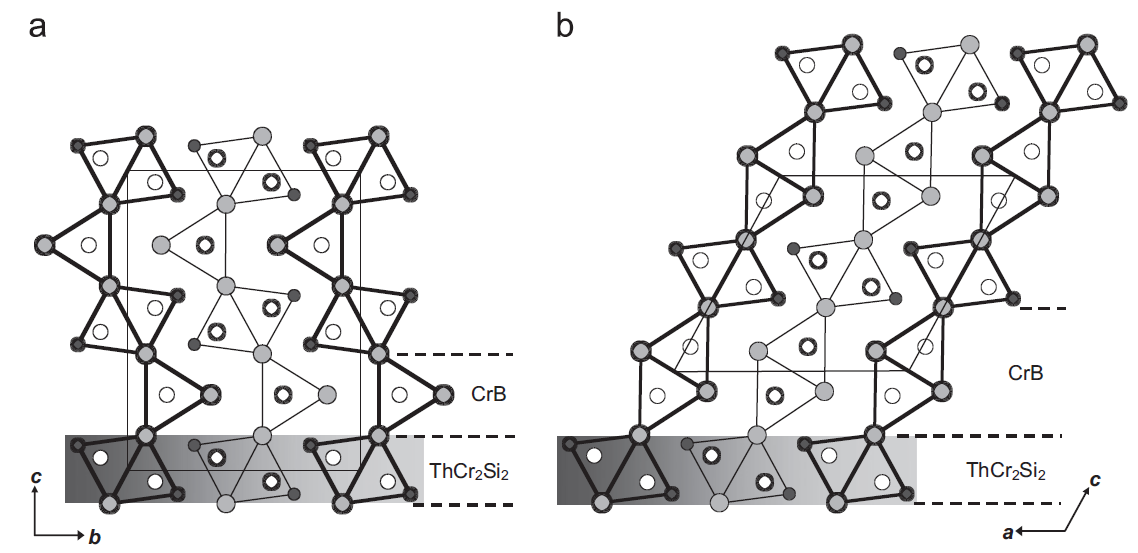
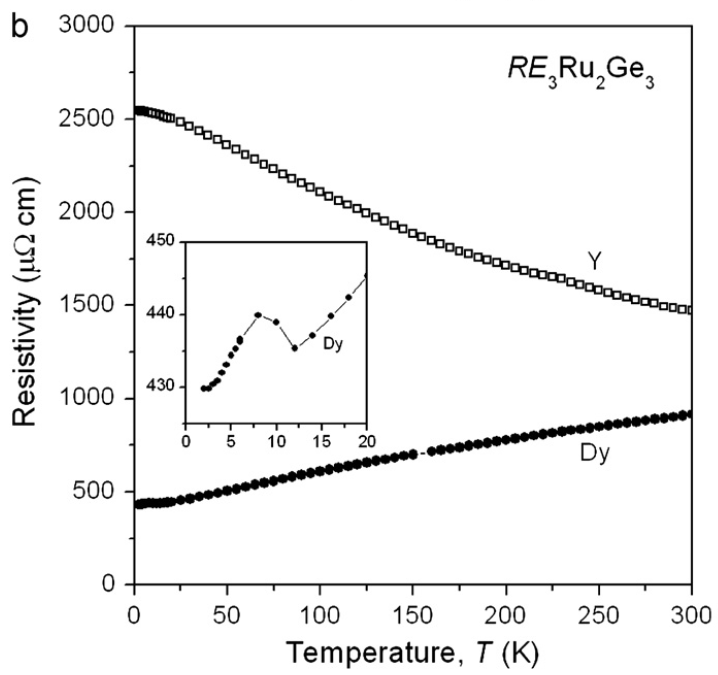
5. Ternary rare-earth ruthenium and iridium germanides RE3M2Ge3 (RE=Y, Gd-Tm, Lu; M=Ru, Ir)
Anton O. Oliynyk, Stanislav S. Stoyko, Arthur Mar
JOURNAL OF SOLID STATE CHEMISTRY  ·  2013  ·  doi:10.1016/J.JSSC.2013.03.050
Figure 1 for Ternary rare-earth ruthenium and iridium germanides i RE i sub 3 sub i M i sub 2 sub Ge sub 3 sub i RE i Y, Gd-Tm, Lu; i M i Ru, Ir Figure 2 for Ternary rare-earth ruthenium and iridium germanides i RE i sub 3 sub i M i sub 2 sub Ge sub 3 sub i RE i Y, Gd-Tm, Lu; i M i Ru, Ir

Approaching structure systematization through slabs to rationalize novel RE3M2Ge3 and RE2MGe2 structures. Magnetic and transport properties of the novel phases were measured
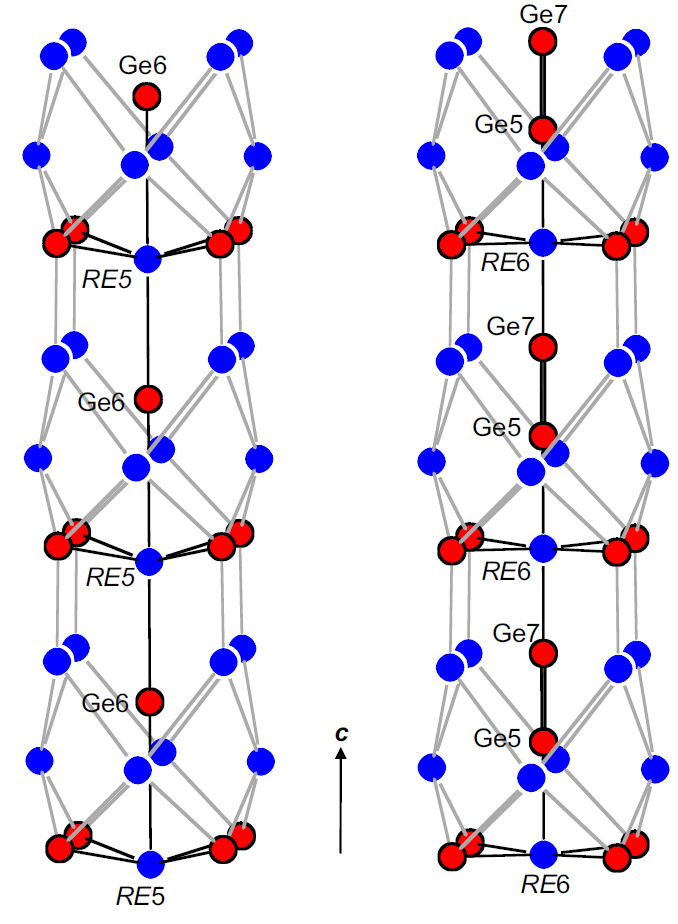
4. Rare-earth manganese germanides RE2+xMnGe2+y (RE=La, Ce) built from four-membered rings and stellae quadrangulae of Mn-centred tetrahedra
Anton O. Oliynyk, Arthur Mar
JOURNAL OF SOLID STATE CHEMISTRY  ·  2013  ·  doi:10.1016/J.JSSC.2013.07.025

A novel RE2+xMnGe2+y phase reported, featuring local ordering arrangements through split positions
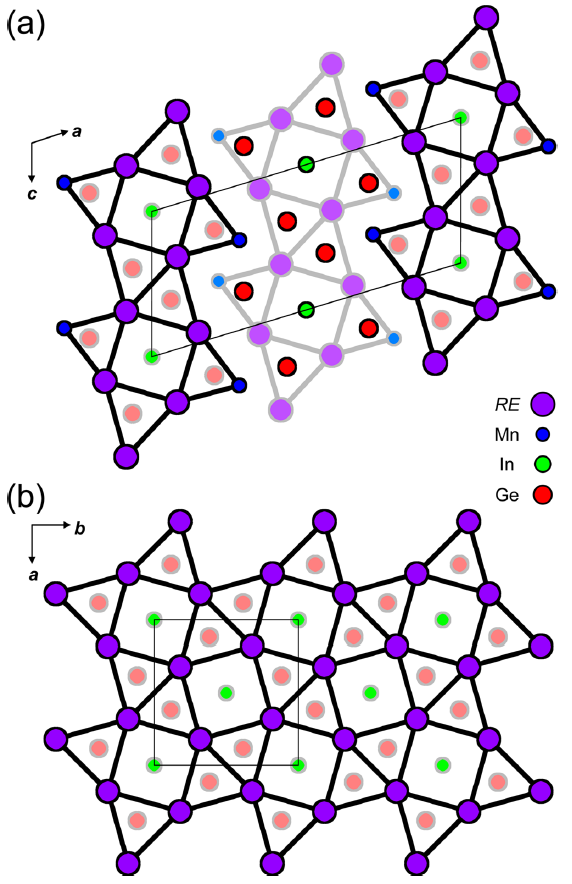
3. Quaternary Germanides RE4Mn2InGe4 (RE = La-Nd, Sm, Gd-Tm, Lu)
Anton O. Oliynyk, Stanislav S. Stoyko, Arthur Mar
INORGANIC CHEMISTRY  ·  2013  ·  doi:10.1021/IC401171V

Novel RE4M2InGe4 phases were discovered and the structure formation was explained with the slab shift in RE2InGe2 phases, when the transition metal M introduced
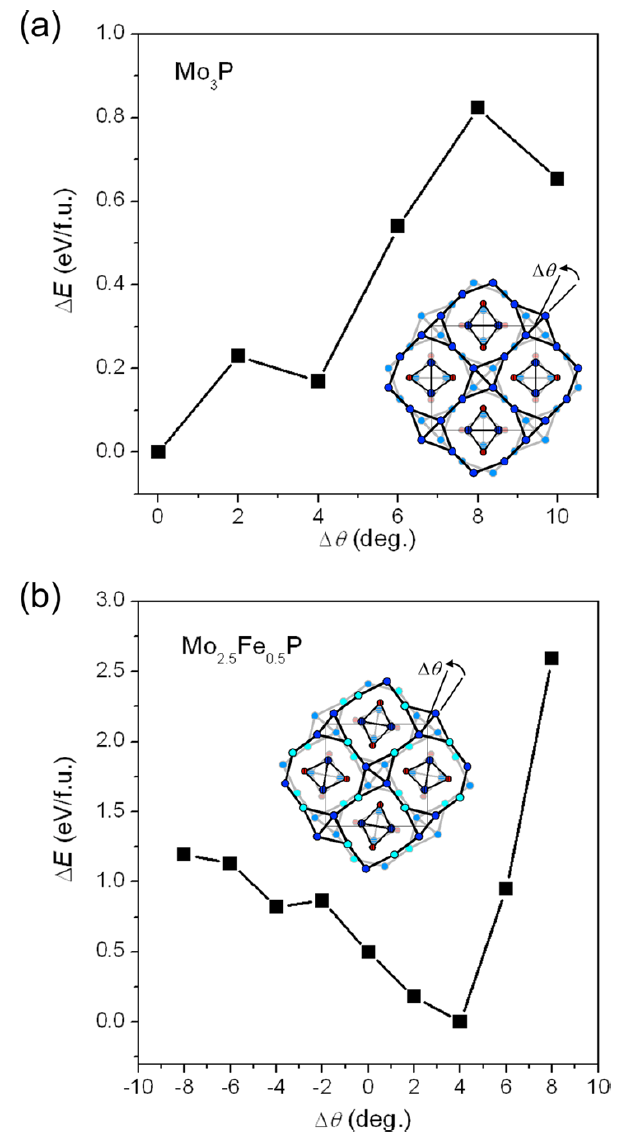
2. Phase Equilibria in the Mo-Fe-P System at 800 °C and Structure of Ternary Phosphide (Mo1-xFex)3P (0.10 ≤ x ≤ 0.15)
Anton O. Oliynyk, Yaroslava F. Lomnytska, Mariya V. Dzevenko, Stanislav S. Stoyko, Arthur Mar
INORGANIC CHEMISTRY  ·  2013  ·  doi:10.1021/IC302243P

Besides the phase diagram (Mo–Fe–P) investigation, we experimentally studied the structure transformation (Mo1−xFex)3P (0.10 ≤ x ≤ 0.15), supported with DFT calculations
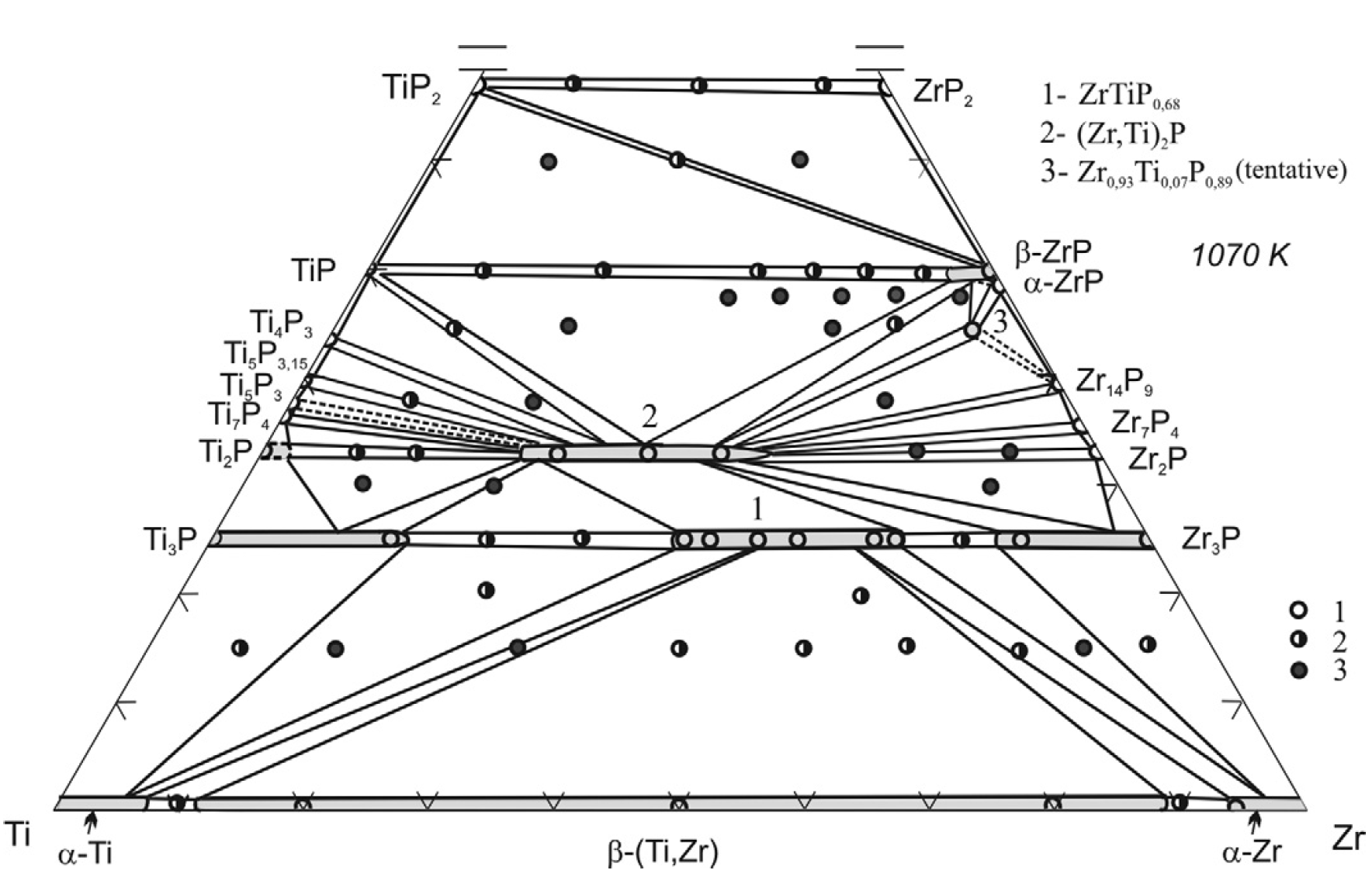
1. New compounds and phase equilibria in the Zr-Ti-P system
A.O. Oliynyk, S.V. Oryshchyn, Ya.F. Lomnytska
JOURNAL OF ALLOYS AND COMPOUNDS  ·  2012  ·  doi:10.1016/J.JALLCOM.2012.08.016

The phase diagram (Zr–Ti–P) study with a focus on equiatomic phases and their structures